
This past month marked the 10-year anniversary of one of the worse consumer recalls in American history: the Melamine Pet Food Recall of 2007. Among our core values at JustFoodForDogs, we strive to be relentless advocates for pets and drive change in the industry. For this reason, we thought it would make sense to review what changes, if any, have occurred in our industry since this historic event.
By April 2007, at least one online database reported as many as 3,600 deaths thought to be related to the recall, caused by the presence of melamine, an industrial chemical (an adulterant) that leads to kidney failure when consumed. The FDA would eventually report that several thousand dogs and cats were likely affected. With these many families affected, we’d hope that by now, a decade later, the industry would have learned and grown so that those deaths would not be in vain.
The Evolution Of Dog Food
After the 2007 recall, Congress developed the Food and Drug Administration Amendments Act (FDAAA). It included laws that required the FDA to improve the safety of pet food. There was significant concern from Congress that some of the ingredients currently allowed in pet food were not Generally Regarded As Safe (GRAS). Congress set the deadline for the FDA to complete these tasks at 2 years. They should have all been completed by September 2009. To date, only one has ever been completed.
Per the FDAAA, the FDA was required to:
- Establish an improved pet food adverse event reporting system – completed.
- Establish improved pet food ingredient definitions and ingredient standards (the standards part is significant) – not completed to date.
- Establish improved pet food labeling, providing the consumer more and better information on labels – not completed to date.
To date, the only improvement to result directly from the recalls is a reporting system for when adulteration or contamination is suspected. Beyond that, from a legal standpoint, very little has changed.
Melamine Testing Today
It may surprise you to learn that melamine testing, even today, is not mandatory in pet food. Immediately after the pet food recall of 2007, melamine testing was made mandatory in human baby food, due to the fact that in China (the source of the melamine outbreak) melamine was found in baby food and human food products. Nevertheless, it is not required in pet food.
Perhaps as a result, in April of 2014, melamine and its derivative, cyanuric acid, were found (by a Hong Kong consumer agency) in US pet foods being imported to Hong Kong. Some of the brands included were considered premium US brands.
Higher Standards
Probably the only lasting result of the 2007 melamine recalls has been pet parents (and some vets) seeking better alternatives for feeding their pets than kibble and canned food. Raw foods boomed, initially, as more wholesome alternatives.
While some of these initial raw diets may have been made with superior ingredients, as the raw category has grown, it has become more like kibble and canned food as the raw industry has embraced the use of feed-grade ingredients, common in traditional pet food.
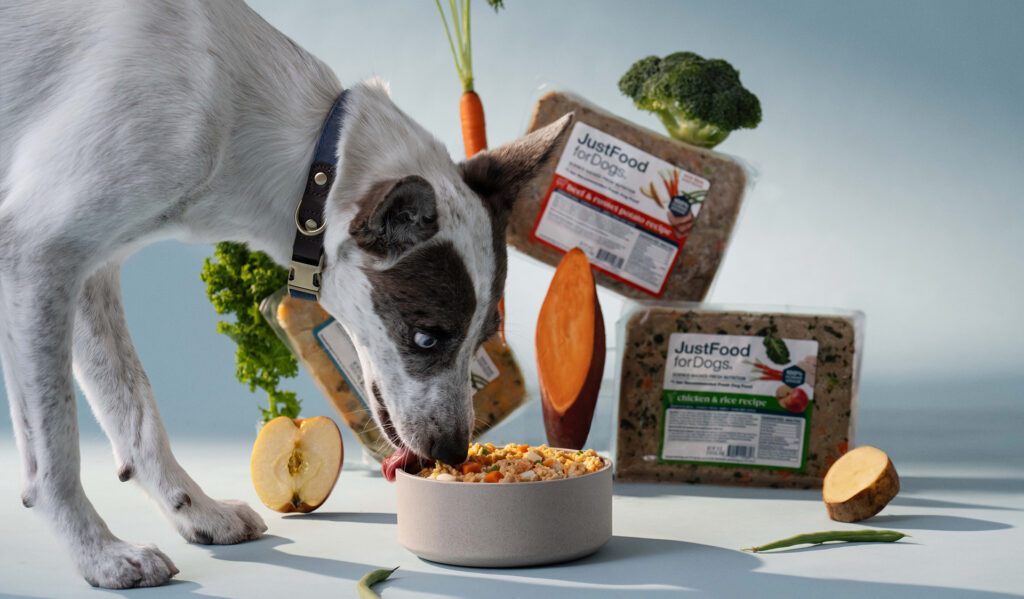
This concern in ingredient quality, compounded by the risk of bacterial contamination, has led more people toward the concept we created: lightly cooked, human edible ingredients, the same quality people would eat, but made in our own kitchens, for pets.
JustFoodForDogs is thrilled to be the inventor of the category of lightly cooked fresh, whole food for pets. Thanks to your commitment to health for your pets, our movement has grown into a bona-fide category in the industry. Perhaps the only meaningful, lasting impact that we can credit the 2007 melamine recalls with (and honor its many victims) is that now people no longer have to feed pet food. They can now feed them real, healthy food – for pets. A subtle, but very important difference.