- Yes, dogs can eat eggs — but only fully cooked and served plain, with no butter, oil, salt or seasonings.
- Eggs offer protein, healthy fats, vitamins and minerals, making them a good occasional treat or food topper.
- Portion by size: from about ¼ egg for extra-small dogs up to 2 eggs for extra-large dogs, once or twice a week.
- Skip raw eggs — they carry a Salmonella risk and can interfere with biotin absorption. Cooking eliminates both concerns.
Safety note: If your dog eats a raw egg or shows vomiting, diarrhea or lethargy after eating eggs, contact your veterinarian.
Poached, fried, scrambled. You might wonder: Can dogs eat eggs? Yes, dogs can eat fully cooked, plain eggs in moderation.
Whether you cook your dog’s meals at home or occasionally add a topper to his or her regular food, eggs can provide protein, healthy fats, vitamins and minerals.
However, how you prepare and portion eggs matters. Raw eggs can expose dogs to harmful bacteria, while added butter, oil, salt and seasonings can introduce unnecessary fat or ingredients your dog doesn’t need.
Here’s what pet parents should know about the benefits and risks of eggs for dogs, how much to serve based on your dog’s size, and the safest ways to prepare them.
Can dogs eat eggs?
Yes, dogs can eat eggs as long as they are fully cooked and served plain, without butter, oil, salt or seasonings. Eggs can be a nutritious occasional treat or food topper for most healthy dogs.
In this article, we’re talking specifically about chicken eggs. Other types of eggs may differ in size and nutritional content, which can affect appropriate portions.
If your dog has existing health conditions or eats a vegetarian-based diet as directed by your veterinarian, check with your vet before adding eggs or other new foods to her or his meals.
Are eggs good for dogs?
Eggs can be good for dogs when served as part of a balanced diet. Eggs provide protein, fats, vitamins and minerals that support healthy body functions.
Protein
Eggs are a source of high-quality protein and contain essential amino acids, which dogs need to get from their diets. Protein helps maintain muscles and other body tissues and supports many normal functions throughout the body.
Healthy fats
Egg yolks contain healthy fats that provide energy and help the body absorb fat-soluble vitamins. However, the fat and calories in the yolk are also one reason to keep portions moderate, especially for dogs who need to maintain or lose weight.
Vitamins
Eggs contain several vitamins, including vitamin A and B vitamins, such as riboflavin and biotin (vitamin B7). These nutrients play roles in normal vision, skin and coat health, metabolism, and energy production.
Minerals
Eggs also provide minerals, including selenium, phosphorus and iron. These nutrients support functions ranging from healthy bones and teeth to oxygen transport and normal immune function.
While eggs offer nutritional benefits, they shouldn’t replace a complete and balanced dog food. Think of a plain cooked egg as an occasional extra rather than the foundation of your pooch’s diet.
Risks of feeding eggs to dogs
Although cooked eggs are safe for most dogs, they aren’t the right choice for every pup. Serving too many or introducing eggs too quickly can cause problems, particularly for dogs with certain health conditions.
Digestive upset
Adding any new food to your dog’s diet can cause digestive upset, including gas, diarrhea or vomiting. Start with a small amount of cooked egg, and watch for any changes in your dog’s digestion.
High fat content
Egg yolks contain fat and are relatively calorie-dense. Too many eggs can contribute to excess calorie intake and weight gain. Dogs who need a low-fat diet may need to avoid eggs or eat smaller portions.
Food allergies
Dogs can develop food allergies to proteins in their food, including eggs. Signs of a food allergy may include itchy skin, recurrent ear or skin problems, or gastrointestinal symptoms. If you suspect your dog has a food allergy, talk to your veterinarian before eliminating or adding foods to their diet.
If your dog has existing health issues or eats a vegetarian-based diet as directed by your veterinarian, check with your vet before feeding your dog eggs.

Can dogs eat raw eggs?
Veterinarians generally recommend that dogs eat cooked rather than raw eggs. No safe quantity of raw egg has been established for dogs, and cooking eggs reduces risk without taking away their value as an occasional treat.
One concern is exposure to bacteria, such as Salmonella. Raw or undercooked eggs can contain harmful bacteria that may make dogs sick and can also pose a risk to people who handle contaminated food or come into contact with an infected dog.
Raw egg whites also contain avidin, a protein that binds to biotin (vitamin B7) and can interfere with its absorption. While an occasional raw egg is unlikely to cause a biotin deficiency in an otherwise healthy dog, regularly feeding raw egg whites may increase the risk.
Fully cooking eggs is the safer choice.
How many eggs can a dog eat?
Eggs should be treated as an occasional extra rather than a major part of your dog’s diet. Treats and other foods outside your dog’s complete and balanced meals should make up no more than about 10 percent of their daily calories.
A large chicken egg contains roughly 70 calories, so an entire egg may be too much for a small dog. As a general serving guide, you can serve your dog cooked, plain egg once or twice a week in the following amounts:
- Extra-small dogs (2–10 pounds): About ¼ egg
- Small dogs (11–20 pounds): About ½ egg
- Medium dogs (21–50 pounds): Up to 1 egg
- Large dogs (51–90 pounds): 1½ eggs
- Extra-large dogs (91 pounds and up): 2 eggs
How much egg your dog can have depends on your dog’s total calorie needs, activity level, body condition, regular diet and any health conditions. When in doubt, start with a smaller portion, and ask your veterinarian how treats like eggs fit into your dog’s individual nutrition needs.

Egg yolks, whites and shells: What to know
Different parts of an egg offer different nutrients, but they don’t all carry the same benefits and risks for your dog.
- Egg yolks: The yolk contains many of an egg’s vitamins and minerals, along with protein and fat. Because yolks are higher in fat and calories than egg whites, portion size matters.
- Egg whites: Cooked egg whites provide protein with less fat than the yolk. Always cook egg whites before serving them to reduce food safety risks and eliminate concerns about avidin interfering with biotin (vitamin B7) absorption.
- Eggshells: Eggshells contain calcium, but that doesn’t mean your dog needs them as a calcium supplement. Pieces of shell can have sharp edges and may pose choking or injury risks.
- Calcium supplementation: Adding eggshells to a homemade diet without veterinary guidance can disrupt its nutritional balance. If your dog needs additional calcium, work with your veterinarian or a veterinary nutritionist to determine the appropriate source and amount.
For most dogs, sticking with the cooked egg itself is the simplest and safest option.
How to prepare eggs for your dog
Always cook eggs thoroughly before feeding them to your dog, and serve them plain. Skip butter, oil, salt and other seasonings, which can add unnecessary fat or sodium and may include ingredients that aren’t safe for dogs.
Hard-boiled eggs
Hard-boiled eggs are an easy option because they require no added fat. Remove the shell, chop the cooked egg into appropriately sized pieces and serve the right portion for your dog.
Scrambled eggs
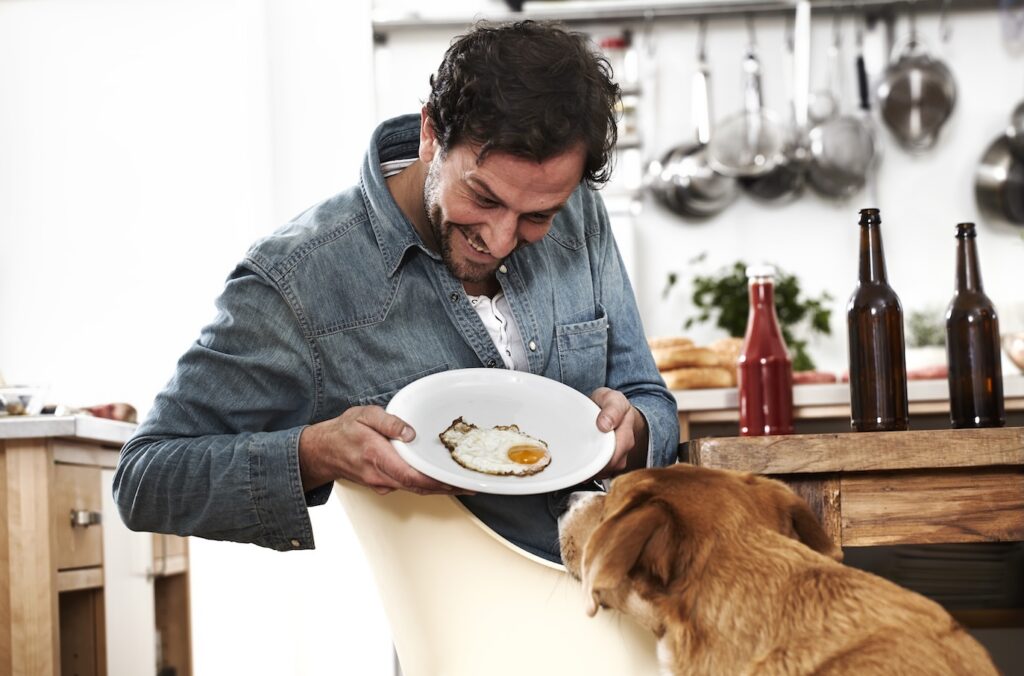
Can dogs eat scrambled eggs? Yes. Dogs can have cooked eggs that are scrambled as long as you prepare them without butter, oil, milk, salt or seasonings.
Poached eggs
Plain poached eggs are another option. Make sure both the white and yolk are fully cooked, not runny, before serving.
Serving and storage tips
Let cooked eggs cool before giving them to your dog. You can serve a small portion on its own as a treat or add it to your dog’s regular food as a topper.
Refrigerate leftover cooked egg promptly in a covered container, and discard it if it has been left at room temperature for more than two hours.
Where treats like eggs fit in complete and balanced nutrition
Eggs can be a nutritious treat or topper, but they shouldn’t replace your dog’s complete and balanced meals. Your dog’s regular diet should provide the appropriate amounts and proportions of the essential nutrients dogs need to support their overall health.
This is especially important if you prepare your dog’s meals at home. A collection of healthy ingredients doesn’t necessarily add up to a nutritionally complete diet. Homemade recipes should be formulated or reviewed by a veterinarian or veterinary nutritionist to make sure they meet your dog’s nutritional needs.
For most healthy dogs, a little plain, fully cooked egg can be a tasty addition to an already balanced diet. Keep portions appropriate, avoid raw eggs and added seasonings, and talk to your veterinarian if you’re unsure whether eggs belong in your pooch’s bowl.
Can puppies eat eggs?
Yes, puppies can eat small amounts of fully cooked, plain eggs. Because puppies have specific nutritional requirements for growth and development, eggs should only be an occasional treat or topper and shouldn’t replace their complete and balanced puppy food. Introduce eggs gradually, and start with a small portion to see how your puppy tolerates them.
What should I do if my dog ate a raw egg?
If your dog eats a raw egg, monitor him or her for signs of illness, such as vomiting, diarrhea, loss of appetite or lethargy. Raw eggs can contain bacteria such as Salmonella, although eating one doesn’t necessarily mean your dog will become sick.
Contact your veterinarian if your dog develops symptoms, has an existing health condition or you’re concerned about the amount your dog ate. Learn more about the potential risks of feeding dogs a raw diet.
Do eggs help a dog with an upset stomach?
Plain, fully cooked eggs may be easy for some dogs to digest, but they aren’t a treatment for an upset stomach. Digestive problems can have many causes, and adding a new food may make symptoms worse for some dogs.
If your dog has ongoing diarrhea, vomiting, loss of appetite or other signs of illness, contact your veterinarian rather than relying on eggs or another food as a home remedy.