Some consider the Fourth of July to be the most fun holiday of the summer, but for many of our four-legged friends, it’s a living nightmare. It can be stressful and even heartbreaking to see your beloved pet quiver in fear during thunderstorms and fireworks season. As dog owners, we want our pets to feel safe and happy, not anxious or scared.
Not only do they cause your pets to get fearful or anxious, but loud noises like fireworks are a serious threat to wildlife. Birds, for example, may abandon their nests to flee the noise, never to return. Others simply run away so far that they get orphaned from their habitats or run into a road to be hit by a car.
Firework anxiety is very real, so it’s important for pet parents to prepare a safe space for their dog or cat during the festivities.
How to Calm Your Dog During Fireworks
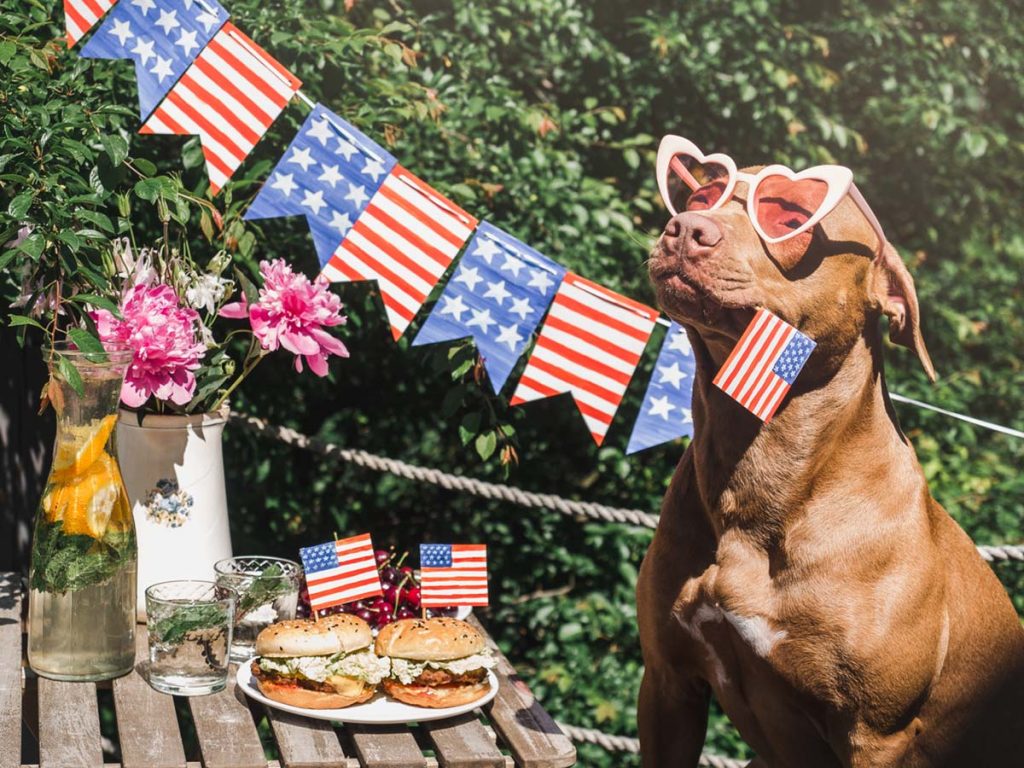
There are a number of methods you can use to calm an anxious dog on the 4th of July. Consider combining several of the options below.
1. Natural calming supplements
Keeping your pooch calm during firework day actually starts a couple of days before the big event. If you use a calming supplement, give the recommended dosage to your pup every 12 hours starting a day or two before the 4th.
Some pet parents also try CBD or other calming chews. They are typically formulated and balanced to bind the calming GABA receptors located in the brain to relax the canine nervous system.
Calming supplements are also great for instances of separation anxiety, car travel, vet visits, thunderstorms, and of course, fireworks.
2. Create a safe space
Before the booms begin, make sure your dog has a kennel or room to go in where they feel safe. Play some white noise or classical music (there are dog-specific playlists on Spotify), give them their favorite toys, and turn on a pheromone diffuser or essential oil with naturally calming scents like lavender. Anything you can do to make your dog more comfortable in his own quiet space, the better.
3. Long-lasting dog treats & scent games
For a pup with a fear of fireworks, many dog trainers recommend distracting them with nose work using a frozen Kong or food puzzle. Dogs love to work for their food — the activity provides lots of valuable mental stimulation and tires them out rather quickly. Sprinkle some treats or kibble around the room for your doggy to find. Sniffing around is what dogs do best!
4. Medication
If you’ve tried everything from desensitization to thundershirts, but your pet’s anxiety shows no sign of improvement, talk to your DVM about anti-anxiety medication. For some pets, anxiety and fear are truly debilitating. Medications can provide much-needed short or long-term relief.
5. Keep them inside
This one is a very important and often overlooked step. Make sure you take your dog on a nice long walk before the loud sounds begin. As mentioned, animals panic and take off at the sound of something loud and unexpected. Do not let them out of the house or yard off-leash during the 4th or New Year’s Eve when the booms are in full swing. July 5th is one of the busiest days of the year for animal shelters due to dogs running away and getting lost on the 4th.
Even if your dog is unaffected by loud noises like fireworks, make sure they have a microchip and wear an ID tag at all times in case they get lost.
Why Dogs Have Firework Anxiety
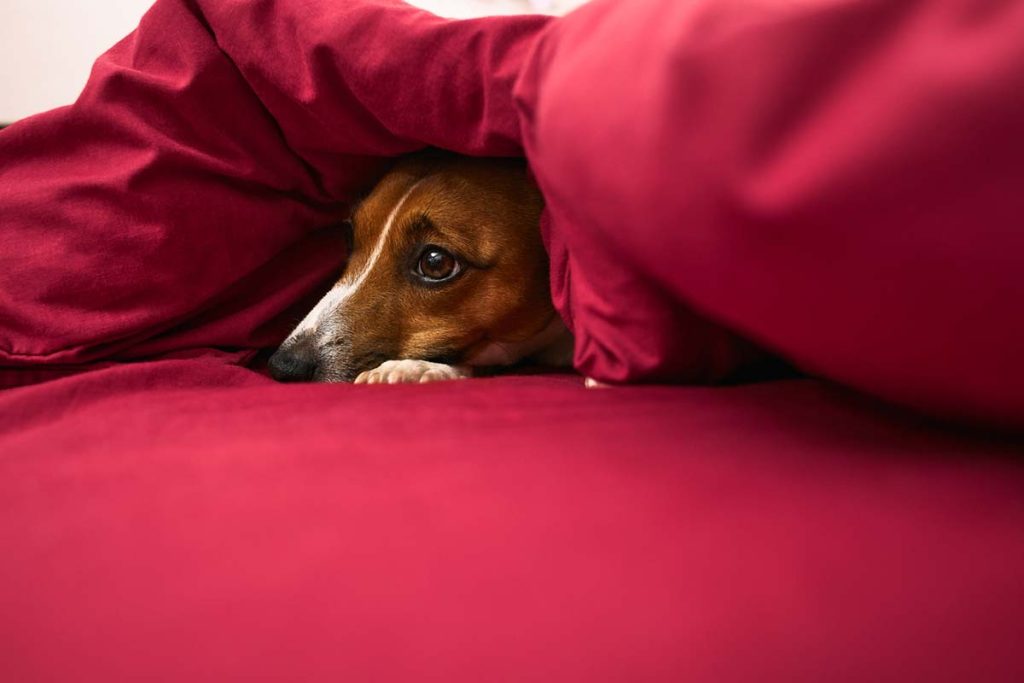
Fireworks phobia in dogs is very common. When fireworks are shot into the sky to boom and burst, dogs have no idea what’s going on. In general, dogs with noise phobia are afraid of sudden loud and unpredictable noises. While a fireworks display is celebratory for us humans, your dog feels panicked at the sound of fireworks.
Pet owners should pay close attention to their dog’s behavior and body language. A fearful dog’s ears will be pulled back, the dog may pant, salivate, tremble, hide, and whine. They may dig at the ground, snap at another dog in the household, or chew something that’s not a toy.
A dog’s anxiety takes many forms. As a loving pet parent, it’s important to recognize the signs in order to calm your dog down effectively. They will thank you in the long run for promoting their overall safety and well-being for any type of event.
How to Desensitize Your Dog to Fireworks
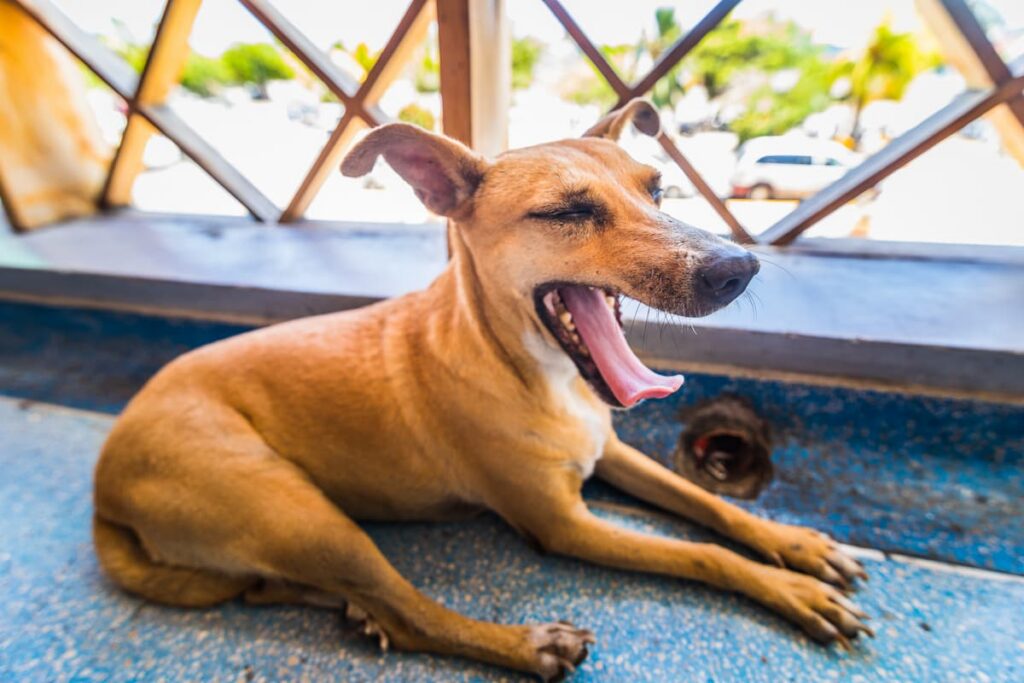
Desensitization is one of the most effective long-term solutions for noise phobia. It requires patience and consistency. The goal is to gradually rewire your dog’s emotional response to loud sounds, so that over time, fireworks go from “terrifying” to “no big deal.”
The key word is gradually. Flooding your dog with loud noises all at once will make things worse. The process works by pairing a very low-intensity version of the scary sound with something your dog loves — treats, play, praise — so their brain begins to associate the trigger with something positive instead of something threatening. This is called counter-conditioning, and it almost always goes hand-in-hand with desensitization.
Step-by-Step: How to Do It at Home
1. Start weeks (or months) before fireworks season. This is not a last-minute fix. Ideally, you’d begin in April or May for a July 4th event. The longer you have, the better the results.
2. Find a fireworks or thunderstorm sound recording. YouTube and Spotify both have hours-long tracks specifically designed for this purpose. Search “fireworks sounds for dog desensitization” to find ones that start low and gradually increase in intensity.
3. Begin at barely audible volume. Play the recording so quietly that your dog can hear it but shows zero reaction. This is your starting point. If your dog is already tense or alert at the lowest volume, it’s still too loud (tip: try playing it from another room).
4. Pair the sound with something your dog loves. The moment the sound plays, start offering high-value treats. Stop the treats when the sound stops. The message you’re sending: sound = good things happen.
5. Gradually increase the volume over days and weeks, not hours. Only turn the volume up when your dog is completely relaxed at the current level. If they show any signs of stress (ears back, panting, freezing, yawning, looking away), you’ve moved too fast. Drop back down and slow the pace.
6. Introduce visual cues if possible. Fireworks aren’t just loud — there’s a flash of light too. Once your dog is comfortable with the sounds, you can use a camera flash or strobe at low intensity to simulate this while continuing the treat pairings.
Signs You’re Moving Too Fast
- Ears pinned back
- Panting or drooling
- Yawning or lip licking (stress signals, not tiredness)
- Refusing treats (a dog that won’t eat is a dog that’s too stressed to function normally)
- Trying to leave the room
If you see any of these, pause the session entirely. End on a calm, positive note and try again the next day at a lower intensity.
When to Work with a Professional
Desensitization works well for mild to moderate noise sensitivity, but if your dog’s phobia is severe — destructive escapes, self-injury, complete shutdown — a veterinary behaviorist or certified applied animal behaviorist (CAAB) is worth consulting. They can combine behavior modification with medication for cases where anxiety is too high for the dog to learn anything in that state. Fear that’s too intense actually blocks learning, so in severe cases, medication isn’t a crutch — it’s what makes the training possible.
What not to do when your dog is scared of fireworks

Knowing what to avoid is just as important as knowing what helps. Some well-intentioned responses can actually make your dog’s anxiety worse.
Don’t punish fearful behavior. Scolding, yelling, or physically correcting a scared dog doesn’t teach them that fireworks are safe — it teaches them that being scared also gets them in trouble. This can intensify anxiety and erode trust between you and your pet.
Don’t force them to “face their fear.” Dragging your dog outside or forcing them to sit near the noise in hopes they’ll “get used to it” can backfire badly. Without proper, gradual desensitization guided by a professional, forced exposure tends to make phobias worse, not better.
Don’t give your dog human anxiety medication. It’s tempting to reach for what’s already in your medicine cabinet, but medications like Xanax, Benadryl, or melatonin are dosed very differently for dogs — and some are outright dangerous. Always consult your veterinarian before giving your dog any medication not prescribed for them.
Don’t reinforce panic. There’s an outdated belief that comforting a scared dog “rewards” their fear and makes it worse. Current behavioral science doesn’t support this. You can’t reinforce an involuntary fear response. Calmly sitting with your dog, speaking softly, and offering gentle contact is fine. Just avoid matching their frantic energy, which may escalate the situation.
Don’t wait until July 4th to prepare. Calming supplements, desensitization training, and vet consultations all take time to work. If you start the night of, you’ve already missed the window for most interventions to be effective.
This content is for informational use only and does not replace professional nutrition and/or medical advice, diagnosis, or treatment. It is not a substitute for and should not be relied upon for specific nutrition and/or medical recommendations. Please talk with your veterinarian about any questions or concerns.