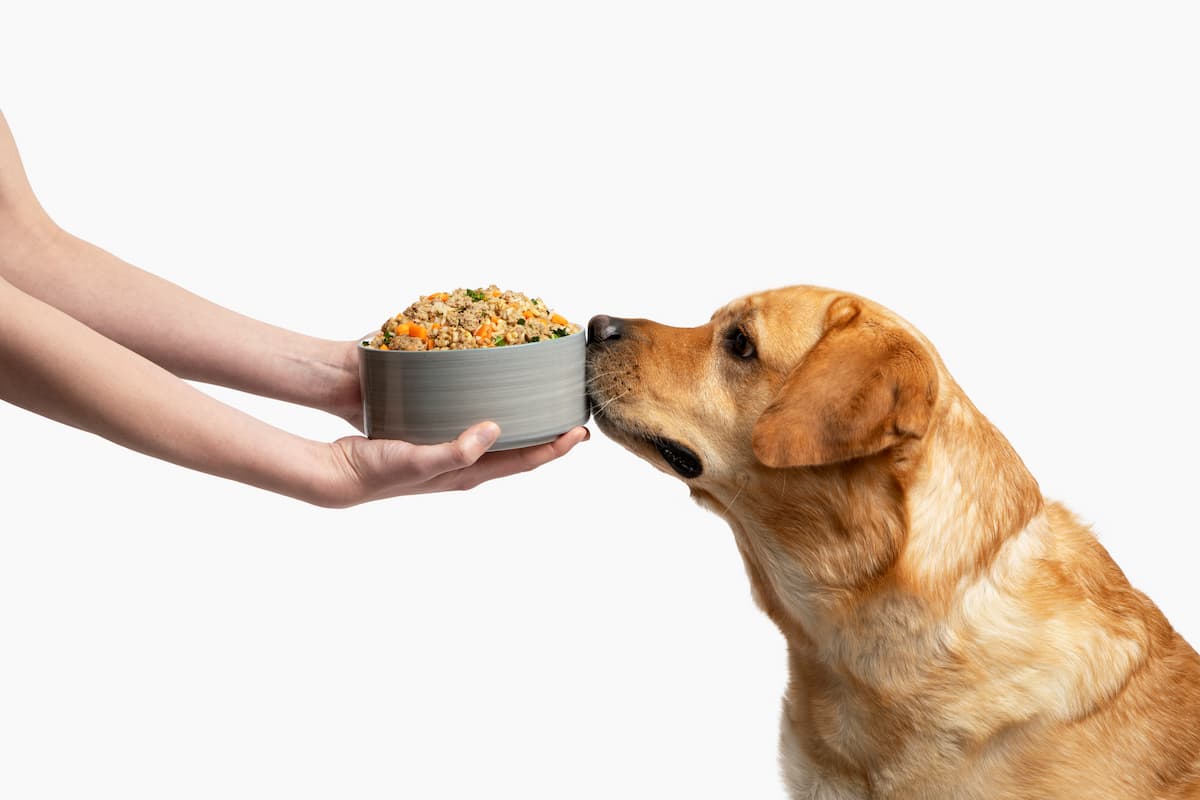
Potty training (housetraining) is one of the first and most important skills your puppy will learn—and if this is your first puppy, you’ll probably be learning right alongside them! But don’t worry, with the right approach, patience, and positive reinforcement, you’ll both conquer this milestone with ease.
In this guide, we’ll explore the importance of potty training, provide a list of tips to help you learn how to house train your puppy, and address common questions and concerns from pup parents like you.
Good puppy potty training is no accident; it all starts with a plan. Let’s get started!
Why is potty training so important for puppies?
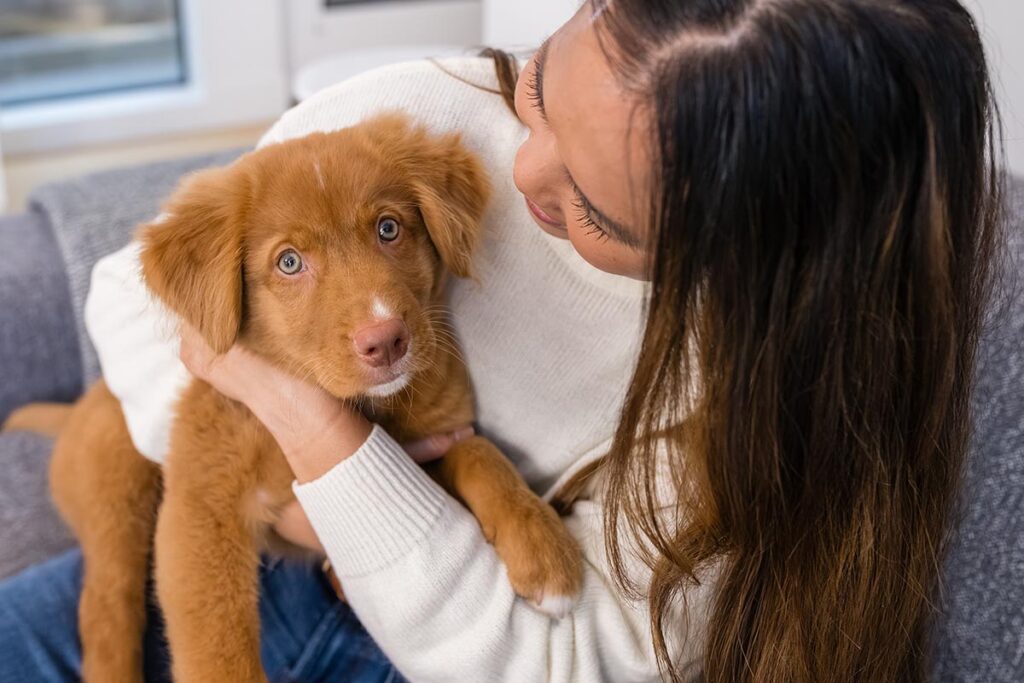
Whether you want your puppy to go potty outside or on a designated spot, such as puppy pads or a litter box, potty training is an important life skill.
Potty training benefits include:
- Establishing a routine — Routines help puppies and adult dogs feel safe and build confidence by creating a predictable structure. They’re also the key to housetraining success!
- Keeping a clean environment — Consistent potty training reduces accidents in your home, making cleanup easier and creating a healthier, more hygienic space for everyone.
- Building a positive relationship — Clear expectations and positive reinforcement help your puppy or dog understand what you want. This strengthens trust and communication between you and your pup. Punishment, such as scolding or corrections, should never be part of training puppies, as it can harm the relationship and training progress.
Remember, housetraining success depends on staying positive, even when your puppy has an accident (and they will!). When it comes to how to train a puppy to pee outside, focus on repetition and positive reinforcement to build good habits.
What are some tips for puppy potty training?
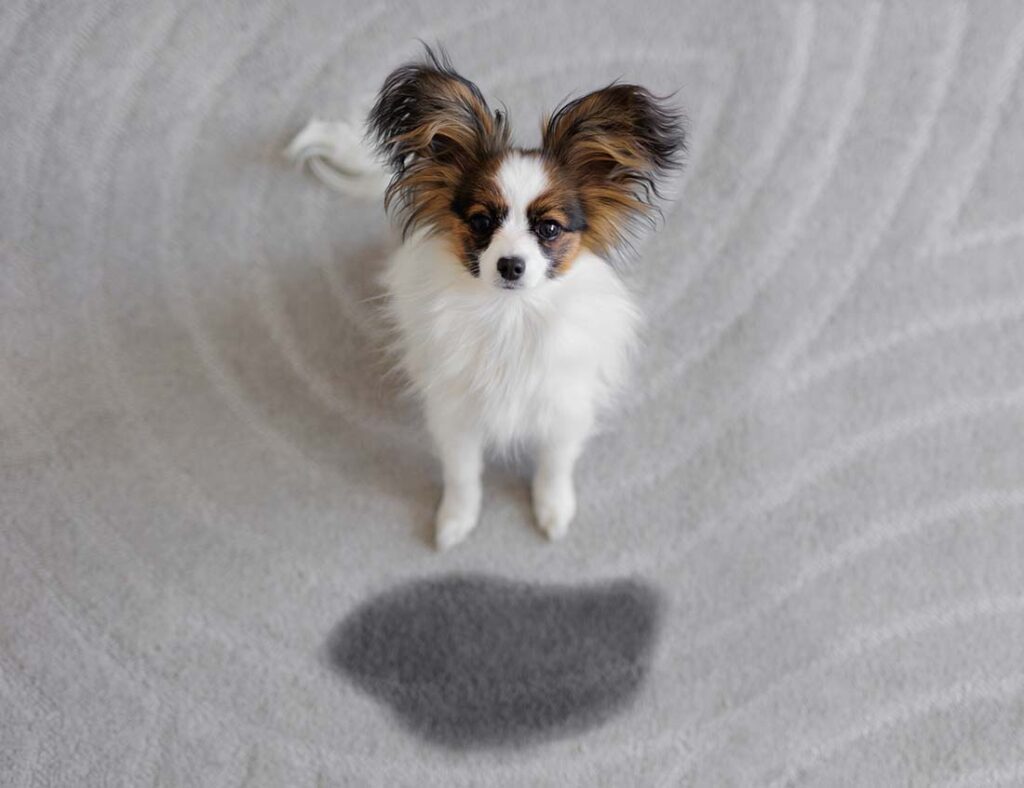
Learning how to house train your dog or puppy can be overwhelming. Here are eight easy care tips to make the journey more manageable.
#1: Set a consistent potty schedule
Take your puppy to their designated potty spot at predictable times every day. This should include:
- Immediately after waking up from a nap
- Immediately after eating or drinking
- Immediately after indoor play
- Immediately after being released from their crate or confined space
- Before bedtime
- 10–20 minutes after an unsuccessful attempt
New puppies may also need nighttime trips. Feeding at consistent times will also help predict when and how often your puppy will need to poop.
#2: Take your puppy out frequently (and at key moments)
Want to know how to train your puppy to pee outside? When in doubt, take them out! Regular trips reinforce where they should go and reduce accidents.
Always watch for signs your puppy needs to go, such as sniffing, circling, wandering away, stopping play, whining, or heading to the door. If you see these behaviors, calmly carry them to their potty area. You may use a leash instead, but know they may go before you get there!
#3: Use a consistent cue word
Potty training tips for puppies #3: cue words. A cue tells your puppy what to do. Over time, they’ll link the word (like “go potty”) with the action of peeing or pooping. Make sure everyone in the household uses the same cue!
#4: Supervise your puppy closely (and restrict access when you can’t)
Puppies move fast! Monitoring their behavior can help you anticipate their needs and avoid accidents. If you can’t watch your puppy, place them in a crate or a confined, puppy-proof area such as a small bathroom.
While accidents can and will happen, minimizing them will help prevent bad habits.
#5: Use crate training as a support tool, not punishment
Your puppy’s crate should be a safe and pleasant place for them to rest. Introduce the crate gradually and positively—using treats, praise, and comfort. This helps your puppy learn to see it as their own cozy space, not a place for punishment or isolation.
#6: Reward your puppy immediately after successful potty trips
Praise and reward your puppy immediately after they go in the correct spot—not while they’re squatting. Keep small, healthy treats on hand to reinforce the behavior instantly. Timing is key!
#7: Keep potty trips focused
Stay neutral when you take your puppy to their spot. Give the cue and wait patiently. Don’t praise them or play until they finish. Once they’re successful, celebrate! This teaches puppies to focus and speeds up potty success over time.
#8: Use puppy pads thoughtfully and when appropriate
Puppy pads can help if outdoor access is limited, such as in high-rise apartment buildings or cold weather. But if you don’t plan to use them long-term, they may confuse your puppy by mixing indoor and outdoor habits.
To transition from pads to outside, place pads near the door to guide your puppy toward the correct spot.
Puppy potty training key considerations
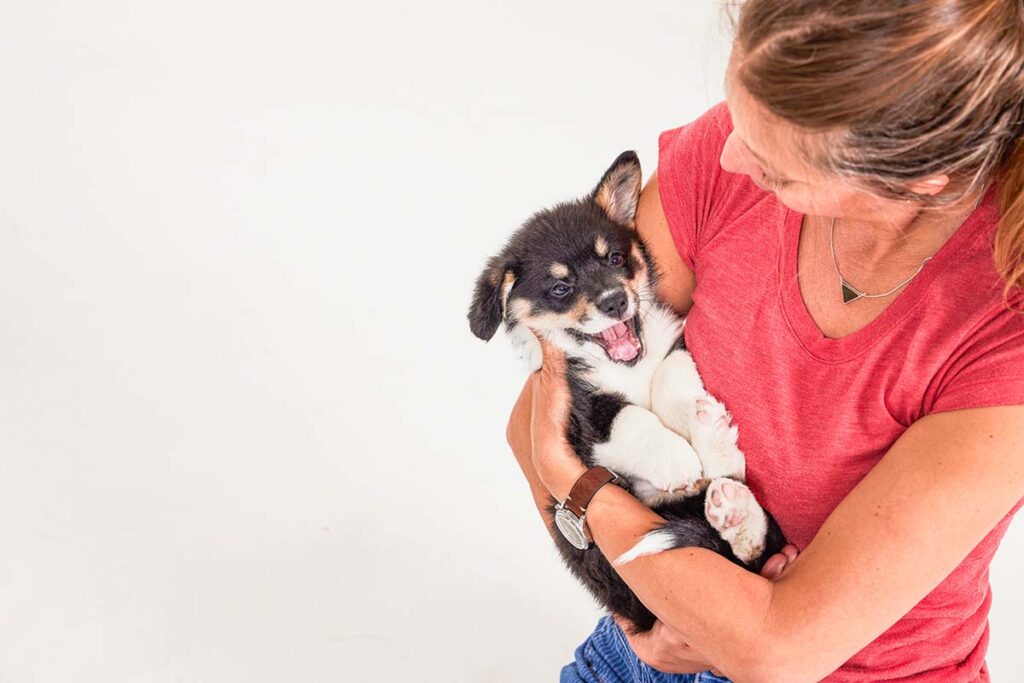
While it’s easy to make a list of tips, we can’t lose sight of the fact that puppies are young, developing, and uniquely individual animals trying to learn how to live in our world.
As you learn how to potty train your puppy, keep these factors in mind.
Puppies can’t always hold it (and it’s not their fault)
Puppies don’t have full control of their bladder muscles until around 4 to 6 months of age. As a general rule, puppies can be expected to hold it for one hour per month of age, starting at eight weeks old. For example, a four-month-old puppy should be able to hold it for four hours. However, this is not guaranteed. Always err on the side of caution and give your puppy plenty of breaks.
Know how you’ll manage potty breaks when you’re away
Your schedule and consistency have a big impact on potty training success. If you can’t be there to take your puppy out regularly, plan ahead. Options include:
- Having a dog sitter or family member stop by
- Providing puppy pads or a litter box
Never punish your puppy for accidents. Simply clean the area thoroughly and give your puppy more opportunities to go in the right spot.
Puppy pads and papers can be confusing
Inconsistent use of puppy pads or papers can make potty training more difficult. If you choose this method, have a clear plan to transition your puppy off the pads or make sure they’re always clean and placed in the same location.
Frequent accidents can have a medical cause
If your puppy has a training setback, unexplained pee or poop accidents, or changes in their behavior or pottying schedule, there may be a medical cause. If you notice a pattern of accidents or concerning changes, seek veterinary care. If your veterinarian doesn’t find a physical cause, contact a trainer.
Make potty training easier with the right rewards
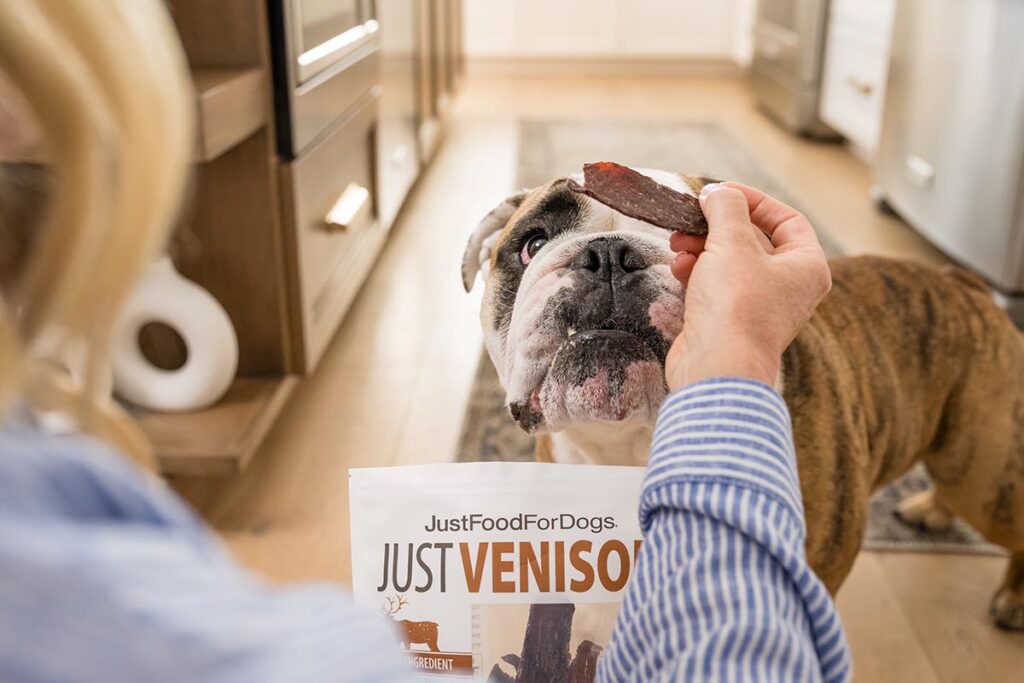
House training your new puppy is about more than teaching them where to go potty—it’s an opportunity to learn together, build a strong lifelong bond, and show your puppy that learning can be fun and rewarding.
Along with a clear plan, patience, and consistency, you’ll need a pocketful of treats! The best rewards for potty training a puppy are small and soft, and can be given quickly, so your puppy always knows why they’re being rewarded. Choosing treats made with healthy ingredients also ensures your pup’s reward won’t upset their diet, routine, or training progress.
JustFoodForDogs treats are crafted with real, nutritious ingredients that are both flavorful and easy to digest—so you can feel good about every reward, and your puppy can enjoy every success! Explore our range of limited and single-ingredient treats. Happy training!