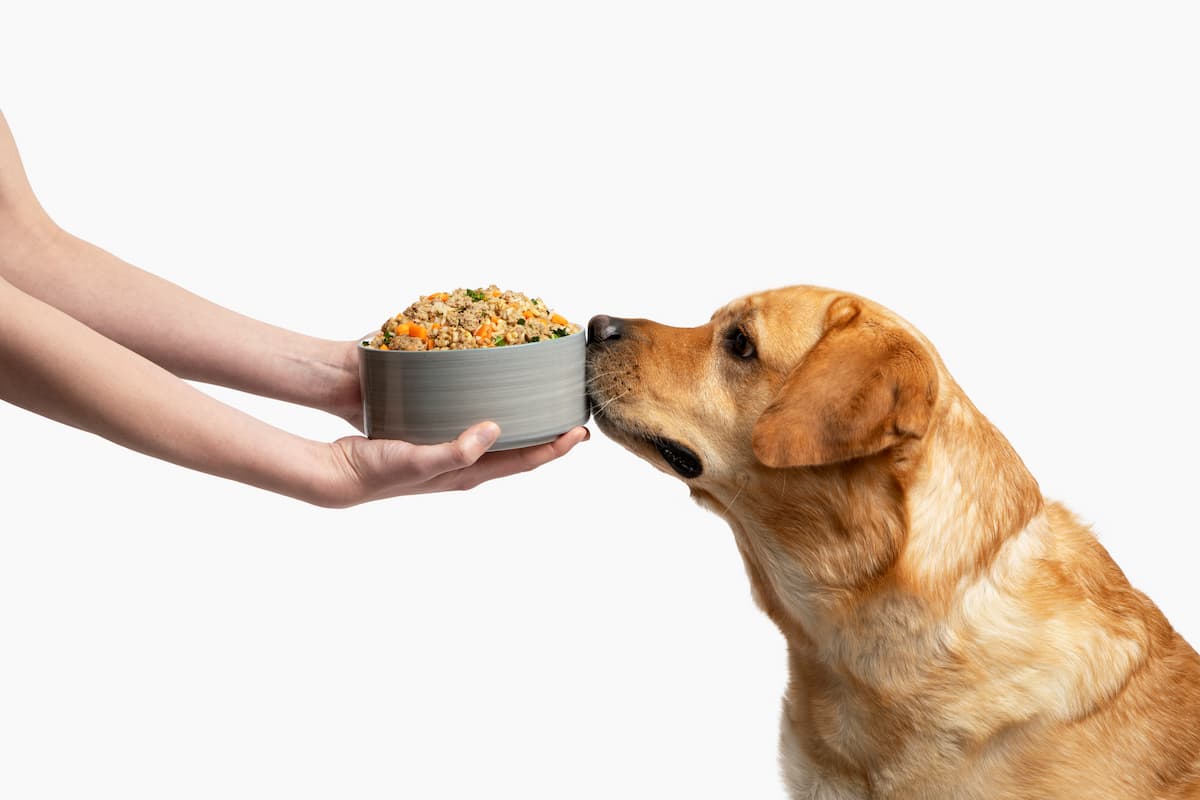
There are times in your dog’s life when it’s necessary to soften their food, such as after a dental procedure or oral surgery, or to make meals more appetizing for picky eaters, puppies, seniors, or dogs with sensitive digestion.
Understanding how to correctly store, serve, and soften dog food will help you dish up success, ensuring a full stomach and happy tail wags at every meal.
Use the following information as a guide on how to soften dog food.
Why Softening Dog Food Can Be Beneficial
While dry food (kibble) is a popular dog food formulation for many dog owners because of its convenience and shelf-stable design, soft dog food—or wet food—can have significant health advantages, including:
- Improved digestion — Soft dog food has a higher moisture content than kibble, which supports healthy hydration, improves gut function, and makes food easier to digest. Dogs may also eat soft dog food more slowly, which can aid in better digestion.
- Easier to eat — Soft dog food has a tender texture that is gentle on a pet’s teeth and gums. It requires less chewing and is easier to pick up and swallow. This is key for dogs with dental disease or those recovering from a tooth extraction or oral procedure. Contrary to popular belief, regular dry dog food does not provide dental health benefits for dogs.
- Enhances flavor and hydration — Most dogs find wet food tasty and more palatable than dry dog food. Plus, the high water content of wet, fresh, and softened dog food boosts overall hydration. High-moisture foods are especially good for senior dogs with certain health conditions, like kidney disease.
- Complements dog nutrition — Adding soft dog food formulas or wet food to a kibble-based diet is an excellent way to boost overall nutrition at every mealtime.
- Supports low-stress recovery — Softened food can be comforting for dogs recovering from illness or injury. Often more appealing than kibble, soft food can stimulate the appetite, be used to hide medication, and reduce stress when spread on a lick mat or inside a hollow toy.
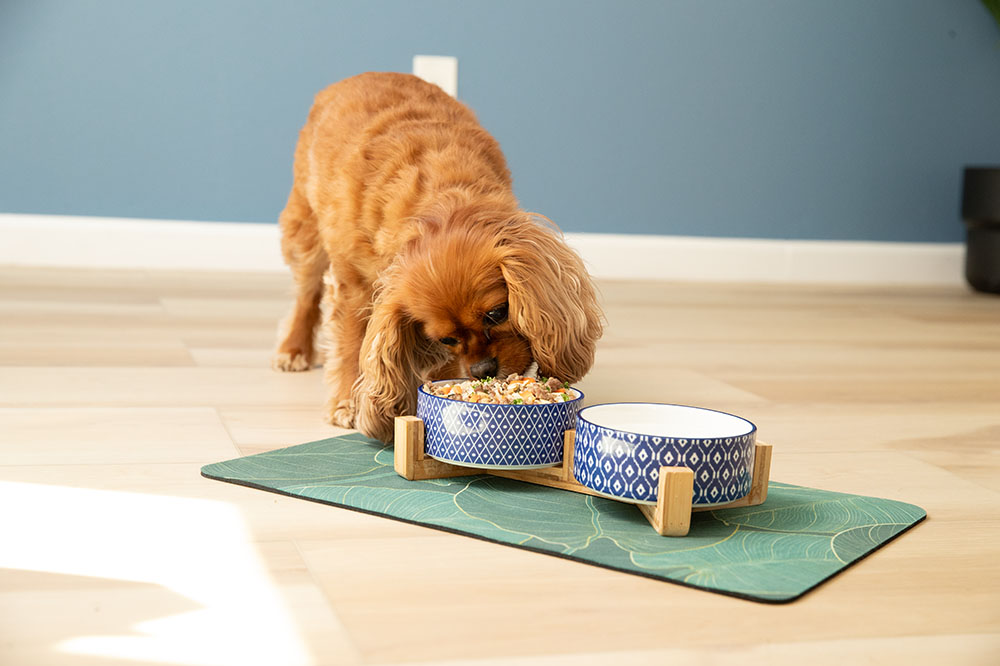
When to Consider Switching to Soft Dog Food
Your dog’s behavior can tell you when it might be time to switch from kibble to soft food. Look for signs like:
- Loss of appetite
- Slow eating
- Difficulty picking up or chewing food
- Dropped food
These changes may also be linked to health issues like dental disease. If that’s the case, simply softening your dog’s food won’t fix the problem. Have your dog checked by a veterinarian before making any diet changes.
Certain scenarios or life events may also require switching to soft dog food or softening your pup’s dry dog food.
Dogs with dental issues
Dental disease causes chronic pain. This can cause dogs to eat less or stop eating altogether. Until your dog can receive necessary veterinary dental care, or if senior dogs can’t safely undergo anesthesia because of other health issues, soft dog food or moistened dry food may make meals easier and less painful.
Dogs recovering from dental procedures
If your dog has had teeth removed (extracted), your vet will likely recommend feeding soft food for 10 to 14 days. This is because dry dog food can damage sutures and sensitive gingival tissue as dogs chew. Soft dog food or moistened dry food is easier to swallow and safer for fragile incisions.
Puppies transitioning to solid food
Around the time of weaning, puppies are started on solid food. This is usually kibble that is moistened and made into a mash or gruel. Softening the food is necessary because it creates a gradual transition from milk to dry food and is easier for puppies to digest.
Dogs with sensitive stomachs or reduced appetites
Picky eaters and dogs with sensitive stomachs may prefer soft food because of its texture, aroma, novelty, and better digestibility. Dogs who are recovering from illness or receiving medication may also find a soft food diet more appealing.
How to Soften Dry Dog Food or Kibble
What’s the best way to soften dog food? Softening dog food doesn’t require much effort, but choosing the proper technique based on your dog’s preferences, age, and health can be the difference between a bowl that’s licked clean and one that’s untouched.
Here are some of the best ways to soften dog food. These methods are appropriate for adult dogs and puppies.
Add warm water
Sometimes it’s really this easy! Add warm, never hot, water to your dog’s dry food and allow it to soak until softened. Depending on the kibble, this may take as little as 10 minutes. If desired, mash up the softened food with a fork.
Mix with low-sodium broth
Low-sodium broth (e.g., chicken, beef, vegetable, or bone broth) lets you add flavor and moisture to your dog’s meal. Use it like water and let the food soak and absorb the broth. Note: Check the broth label to ensure it doesn’t contain seasonings, onion, or garlic.
Combine with wet dog food
Wet dog food (e.g., canned dog food, fresh food, or rehydrated diets) moistens dry food while increasing palatability. Combine kibble and wet foods gradually, starting with a small amount of wet food and warm water, to prevent digestive upset.
Let your dog’s food soak before feeding
If you’re wondering how to soften dog food quickly, there isn’t really a shortcut. Your hungry dog might not like this step, but it is key to softening dog food! Soaking time gives dry food a chance to soak up the added moisture and reach a tender consistency, and gives warm water a chance to cool. If your pup can’t wait, try taking a walk or playing with their favorite toy until their meal is ready.
If you need to soften dog food quickly, you can microwave it after adding liquid or wet dog food. Always allow the food to cool completely and check for hot spots before serving.
How to soften puppy food
Now, how can you moisten puppy food? Puppy milk replacer or goat’s milk are great options for softening dry puppy food. Use a generous amount and stir the softened food into a gruel or mash. If your puppy is older and you want to moisten their food, you can use any method outlined here.
Tips on How To Safely Feed Soft Dog Food
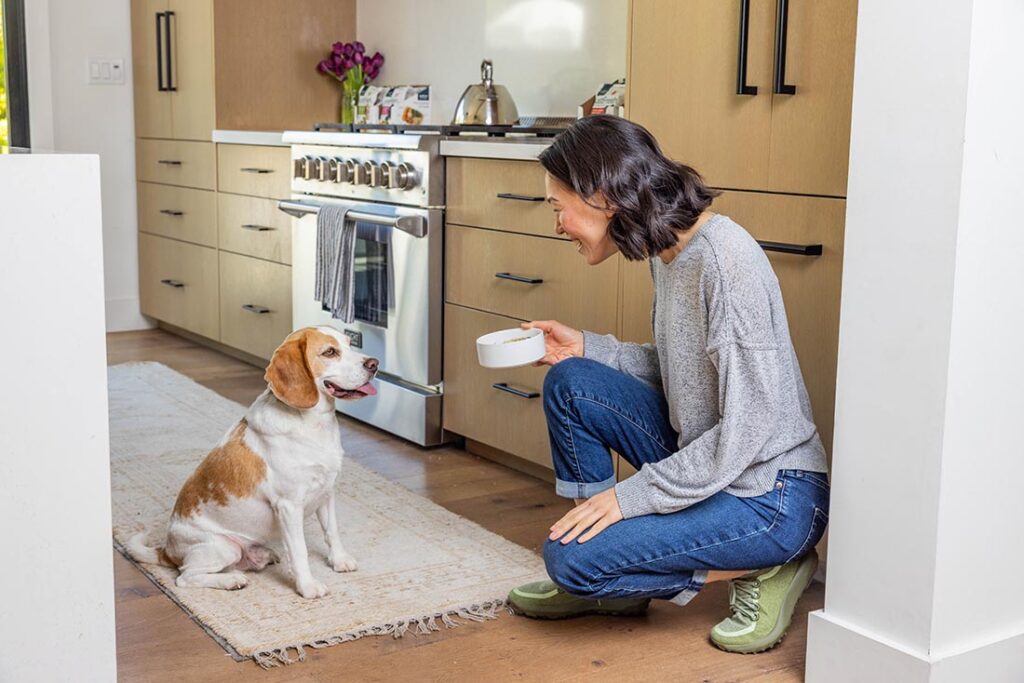
Prep time isn’t the only thing you’ll need to consider when feeding your pup softened dog food. Here are a few tips to help you serve up meals that are healthy, hearty, and howlingly good.
- Make a gradual transition — Any change to your dog’s diet or mealtime routine should be made gradually rather than all at once. While adding water is perfectly safe, introducing new ingredients like low-sodium broth or wet food can cause digestive upset if done too quickly.
- Feed only fresh ingredients — Broth, wet dog food, and other mix-ins should always be fresh. Since these items are perishable, pay close attention to expiration dates and the product’s color, smell, and appearance.
- Monitor your dog’s response — Observe your dog’s appetite, behavior, and poop. If you notice discomfort, lack of appetite, loose stool or diarrhea, or other concerning signs, contact your veterinarian.
- Remove uneaten soft food — Wet food, softened dog food, and any ingredient with added moisture will spoil without refrigeration. Remove and discard any uneaten portions within a few hours after serving.
Support Your Dog’s Feeding Approach With JustFoodForDogs
Softening your dog’s food is a simple way to support their comfort and encourage a strong appetite while delivering key nutrients for overall health.
While just adding water is easy, we’ve got a better way: JustFoodforDogs meals are fresh, vet-formulated, and naturally easy to chew and digest. They deliver all the benefits of softened food while providing complete, balanced nutrition made from human-grade, whole-food ingredients, without unnecessary fillers.
Whether you’re feeding a puppy, an adult, a senior dog, or a canine with health needs, JustFoodforDogs provides balanced, high-quality nutrition that supports overall well-being, healthy skin and coat, and comfortable digestion. Discover how easy it is to feed fresh, wholesome soft dog food by exploring our vet-designed custom dog food and shelf-stable recipes.