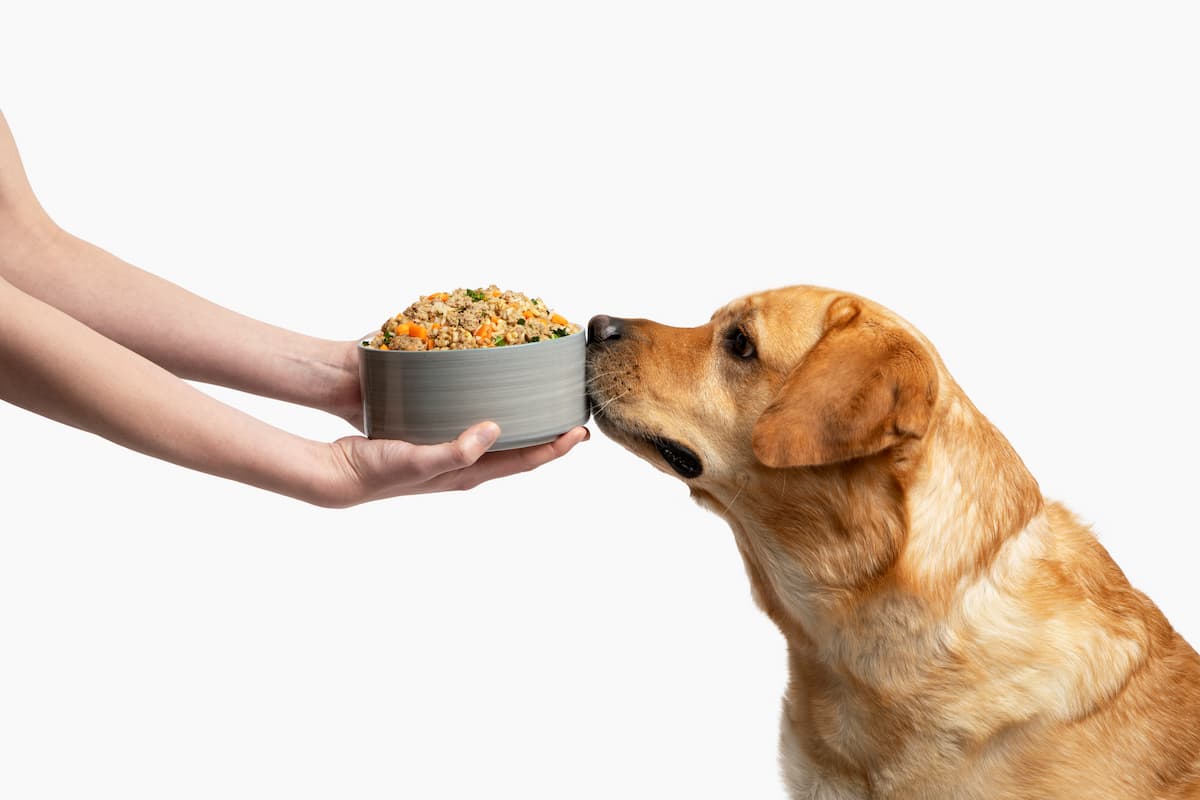
As more pet parents look for ways to make mealtime tastier, hydrating, and tailored to their dog’s needs, wet dog food has become an attractive option in many modern feeding routines. But with so many choices on the shelf, it can be hard to know what kind of wet food is the right fit for your dog.
This article breaks down the pros, cons, and key considerations of wet food so you can make an informed decision about what goes in your dog’s bowl. Read on to learn whether wet food could be a smart addition to your dog’s diet.
Benefits of wet dog food

There are some benefits to canned dog food or the kind that comes in pouches. Here are a few of them.
Taste
Perhaps the biggest benefit to wet pet foods is that pets seem to like the taste better. This might be because it smells more strongly, but it could also be that it tastes stronger as well. Additionally, the palatability of the food encourages those picky eaters to eat at mealtime.
Softness
Wet food is chewy and softer than kibble, and that may make a difference with respect to your dog’s ability to chew it. Older dogs with fewer teeth may have an easier time eating canned food as compared to dry food. That translates into health benefits when you consider that a dog who is missing teeth may not eat as much.
Easier to Administer Medications
If you’ve ever had to give your dog oral medication or even something like a supplement, such as a probiotic, you know it can be tricky. But, in the case of canned dog food, it’s much easier to slip a pill into the food, and your dog will likely gulp it down without ever even knowing it was there.
Helps with Hydration
Wet dog food has higher water content, which means it can help your buddy stay adequately hydrated. While there is not enough water in the wet food to replace his water bowl, it helps add to what he’s getting from other sources. This higher moisture content is even more important for active dogs and senior dogs for better health and wellness.
More Similar to Natural Diets
From a nutritional standpoint, there are few differences between wet and dry food with respect to protein and fat content. However, there is a significant difference when it comes to carbohydrates. Dry dog food has a much higher carbohydrate content than wet dog food.
Researchers looking into the palatability of cat food suggest that cats might prefer wet foods because they can more strongly taste the amino acids that make the food more similar to their natural diets. The same may be true for dogs. The ability to taste the amino acids more strongly is related to the lower carbohydrate content in wet pet food.
Drawbacks of Wet Dog Food
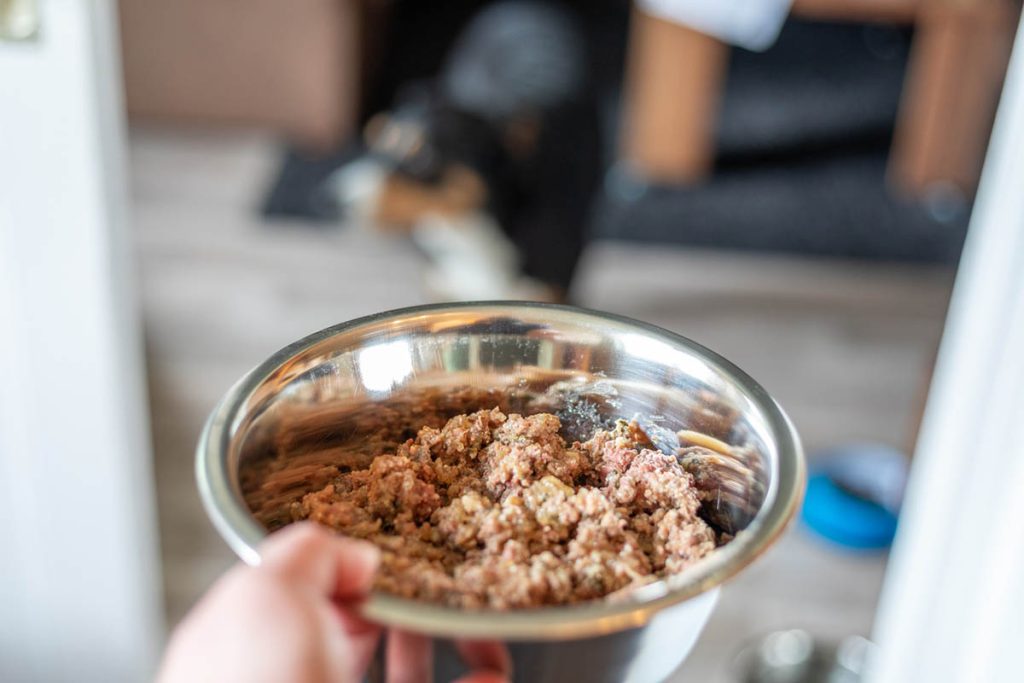
While there are some positive aspects of feeding wet pet food, there are drawbacks.
Dental health
Because wet food is soft, it doesn’t help chip away at the tartar buildup on your dog’s teeth in the same way that kibble might. However, it’s important to know that even kibble doesn’t do the job well. It might help with scraping tartar off teeth, but not where it really counts–the gumline.
Shorter shelf life once opened
Because of the way dry food is made and packaged and the preservatives it contains, it has a very long shelf-life. Canned food, once opened, requires refrigeration, and even then, it doesn’t last very long.
The carrageenan factor
Carrageenan is a plant-based product of Irish moss, an edible seaweed. It is an additive that helps loaf-like wet pet food hold its shape. Test results of food-grade carrageenan carried at least 5 percent degraded carrageenan. Degraded carrageenan is a known carcinogen. It’s even used to induce inflammation in animal studies.
Researchers found that it can trigger your dog’s body to produce a molecule called Tumor Necrosis Factor-alpha, or TNF-⍺. This molecule stimulates inflammation and causes cell death, which promotes cancer.
Researchers also found that your dog’s digestive process can convert carrageenans to dangerous poligeenan. Poligeenan can then cause problems related to chronic inflammation, like irritable bowel disease (IBD), for both dogs and cats. This type of additive is used in wet dog food but is not usually added to dry food.
Increased Palatability and Obesity
For overweight animals, the increased palatability of wet dog food could make them eat more. This may increase any problems related to obesity and associated health issues like diabetes.
Shelf life
Any leftovers go in the fridge. If the dog doesn’t eat it promptly, you have to throw it out. That makes them more wasteful and costly.
Finally, because wet dog food doesn’t have the preservatives found in dry dog food, it can more easily go rancid. Don’t leave any wet food in your dog’s bowl to gather bacteria, and wash his bowl after every feeding.
Wet food vs. dry food: What’s the difference?
Shelf life
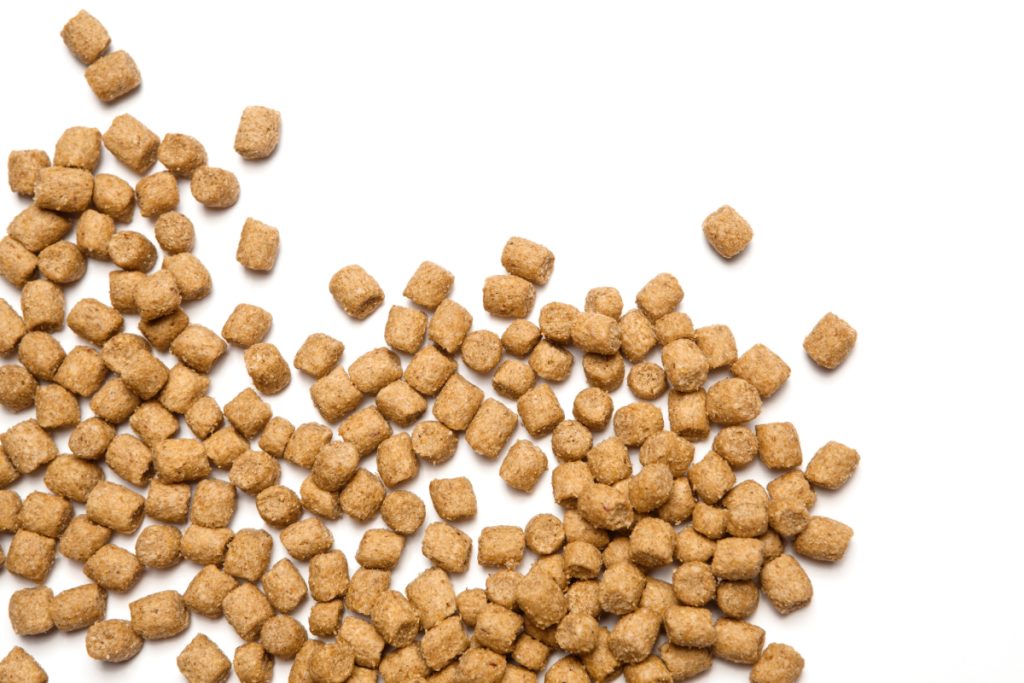
Purina was the first company to produce dry dog and cat kibble in the late 1950s and early 1960s. Shelf life is arguably the longest benefit of using dry food in your dog’s diet vs. wet food. It does not spoil rapidly. That means a kibble diet can be bought in bulk, and it is less expensive per calorie to feed.
Storage
Dry kibble has a lower volume and weight than canned dog food, which makes it easier to store. Additionally, refrigeration is not required after opening, like with wet puppy food. Both of those factors make it more convenient for dog owners than canned food.
Mental Enrichment Opportunities
Another benefit of dry kibble is that it can be combined with bowls designed to slow your dog’s chew speed. These devices can offer mental stimulation for your dog. Wet food may be more difficult to spread about a slow feeder bowl, but many can be used on lick mats.
Picky Eaters
If you’ve got a picky eater on your hands, it can be difficult to get them to eat dry food. Studies do show that both adult dogs and cats like to mix it up when it comes to their food. Just like with humans, they want some variety, so just feeding dry dog food all the time gets boring.
Moisture content
Dry dog food is highly processed and cooked at extreme temperatures. Dogs that eat dry food may need to drink a lot more water than they would on wet or fresh food to supplement their hydration. Pet parents sometimes add moisture to dry food by mixing water or gravy/broth.
Quality Ingredients
Finally, there is the question of the quality of the ingredients in dry kibble. While the percentages do meet the requirements for pet food, manufacturers may be using lower-quality food products (“feed grade”), like fillers and meat by-products, like chicken beaks.
How and when to switch your dog to wet food
Before making significant changes to your dog’s diet—especially if your dog has health conditions or special nutritional needs—talk to your veterinarian. In addition to veterinary guidance, here are a few transition tips to keep in mind:
- Consider life-stage or lifestyle changes: Wet food can be helpful during transitions such as aging or during periods of increased activity, illness recovery, or dental changes that make chewing harder.
- Transition gradually: Mix a small amount of wet food into your dog’s current dry food, then slowly increase the proportion over 7–10 days. This gradual approach helps minimize digestive upset.
- Monitor appetite and stool quality: Pay close attention to how your dog responds. Healthy appetite, normal energy levels, and well-formed stools are good signs that the transition is going well.
- Maintain consistent feeding times: Serve meals at the same times each day to support healthy digestion and reinforce routine, even as you introduce new textures or flavors.
- Adjust portions appropriately: Wet food has a different calorie and moisture content than dry food, so be sure total daily calories remain balanced to avoid unintentional weight gain.
Support Your Dog’s Health with Fresh, Frozen or Shelf-Stable Meals
What are the benefits of feeding fresh dog food to your dog or puppy compared to kibble or even canned dog food?
- More Hydration: Like wet food, fresh dog food is higher in moisture than other types of dog food.
- More Digestible: One study showed that fresh dog food was 40% more digestible than kibble because the moisture aids in breaking down the food, making it easier for your dog to absorb those nutrients.
- Tastes Better: Fresh food is also more appealing to your best friend than highly processed foods like kibble and most canned dog foods. If it’s tastier, your picky puppy is much more likely to eat it up!
- Smaller, Fewer Poops: A study published in the Journal of Animal Science found that dogs who were fed a fresh whole-food diet were able to absorb more nutrients and subsequently produced up to 66% fewer stools as compared to a premium-grade dry food diet. They also found that dogs fed human-grade fresh whole-food diets produced 41% fewer poops than those dogs fed a feed-grade, fresh processed brand.
FAQ
Mixing wet and dry food can offer the best of both worlds, added hydration and palatability from wet food with the dental and calorie-control benefits of dry kibble.
Whole, fresh dog food combines the benefits of wet food and whole food nutrition, offering a balanced alternative for pet parents. Fresh food typically refers to dog foods that have the following characteristics:
Human Grade Nutrition: Made from USDA ingredients safe for human consumption. That also means they are manufactured and packaged per federal regulations.
Whole Foods: Nutritionally, these are the same kinds of foods that you would feed yourself, including vegetables, grains, and meats.
Gently Cooked: Fresh dog food is cooked at lower temperatures, which aids in reducing the breakdown of nutrients like proteins, vitamins, and carbohydrates. These dog foods tend to be more nutrient-dense and digestible as a result.
No Preservatives: Fresh dog food does not contain preservatives.
Wet food is often more aromatic and flavorful (just as fresh dog food), which can help encourage eating in picky dogs.
JustFoodForDogs’ fresh and shelf-stable meals are an alternative that offers similar texture and nutrition without the preservatives or highly processed components.
Sources
Do, Sungho, Thunyaporn Phungviwatnikul, Maria R C de Godoy, and Kelly S Swanson. 2021. “Nutrient Digestibility and Fecal Characteristics, Microbiota, and Metabolites in Dogs Fed Human-Grade Foods.” Journal of Animal Science 99 (2). https://doi.org/10.1093/jas/skab028.
Oba, Patrícia M, Pamela L Utterback, Carl M Parsons, and Kelly S Swanson. 2019. “True Nutrient and Amino Acid Digestibility of Dog Foods Made with Human-Grade Ingredients Using the Precision-Fed Cecectomized Rooster Assay1.” Translational Animal Science 4 (1): 442–51. https://doi.org/10.1093/tas/txz175.
Wang, Guo-Dong, Weiwei Zhai, He-Chuan Yang, Lu Wang, Li Zhong, Yan-Hu Liu, Ruo-Xi Fan, et al. 2015. “Out of Southern East Asia: The Natural History of Domestic Dogs across the World.” Cell Research 26 (1): 21–33. https://doi.org/10.1038/cr.2015.147.
Watson, Tim. 2011. “Palatability: Feline Food Preferences.” Vet Times. 2011. https://www.vettimes.co.uk/article/palatability-feline-food-preferences/.
Bhattacharyya, Sumit, Pradeep K. Dudeja, and Joanne K. Tobacman. 2010. “Tumor Necrosis Factor α-Induced Inflammation Is Increased but Apoptosis Is Inhibited by Common Food Additive Carrageenan.” Journal of Biological Chemistry 285 (50): 39511–22. https://doi.org/10.1074/jbc.m110.159681.
Bhattacharyya, Sumit, Haiying Liu, Zhenqing Zhang, Murielle Jam, Pradeep K Dudeja, Gurvan Michel, Robert J Linhardt, and Joanne K Tobacman. 2010. “Carrageenan-Induced Innate Immune Response Is Modified by Enzymes That Hydrolyze Distinct Galactosidic Bonds.” Journal of Nutritional Biochemistry 21 (10): 906–13. https://doi.org/10.1016/j.jnutbio.2009.07.002.
Rofe, P. C., and R. S. Anderson. 1970. “Food Preference in Domestic Pets.” Proceedings of the Nutrition Society 29 (2): 330–35. https://doi.org/10.1079/pns19700064.
This content is for informational use only and does not replace professional nutrition and/or medical advice, diagnosis, or treatment. It is not a substitute for specific nutrition and/or medical recommendations. Please talk with your veterinarian about any questions or concerns.