
‘Tis the season of the flea! And flea hot spots on dogs. Although we have fleas year-round in Southern California, the flea burden is highest in the warmer months. That, coupled with seasonal allergies and other factors, makes this time of year great for fleas, and an itchy one for our furry best friends.
Flea bite wounds outlive the fleas that caused them by about three weeks. The reason is that most dogs that develop wounds are allergic to flea saliva, which stays on the dog’s skin for about three weeks after the bite. Here is a guide on how to heal the wounds from start to finish.
What causes hot spots on dogs?
Hot spots are red, inflamed skin lesions that can appear anywhere on your dog’s body. Also known as acute moist dermatitis, these lesions can be accompanied by oozing, hair loss, itchiness, scabs, crusting, and odor in the affected area.
Common causes of hot spots on dogs include:
- food allergies
- flea allergy dermatitis
- ear infection
- insect bites
- mites
- underlying skin conditions
In order to treat hot spots effectively, pet parents must first determine the underlying cause.
How to treat a hot spot on a dog
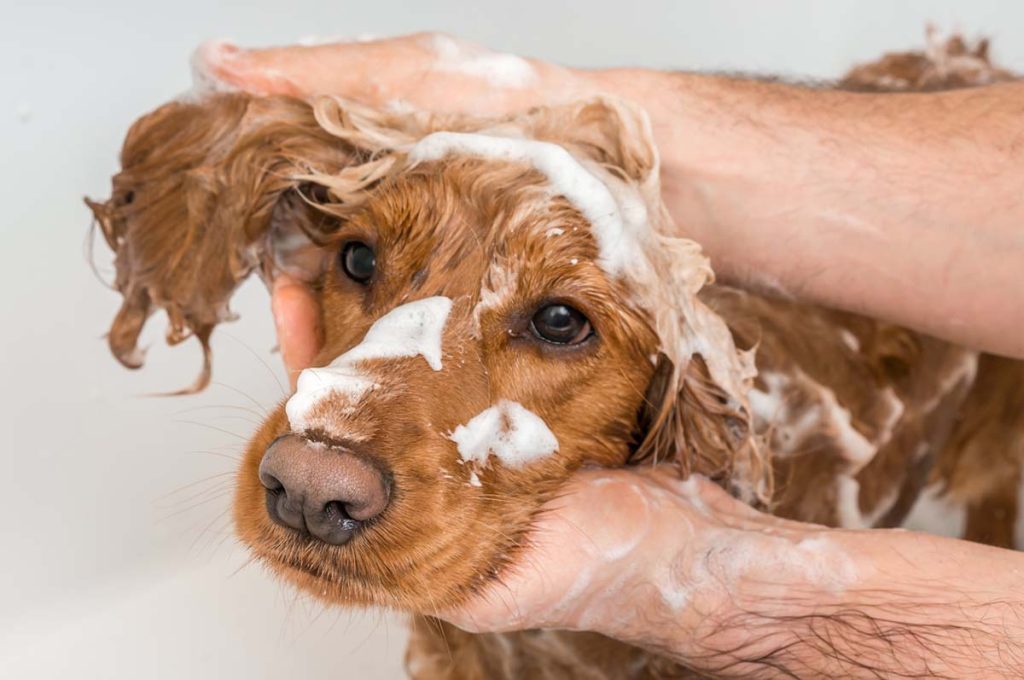
After you have determined the cause of your dog’s skin irritation and/or have visited your DVM, try the following hot spot treatments.
1. Kill all current fleas and prevent new infestations
Kill all current fleas and prevent any new ones from infesting the dog. Flea control is done by using an effective topical or systemic flea medication. Personally, I prefer topical applications because the dog doesn’t have to ingest the medication for it to be effective.
Don’t skimp on flea prevention! Be careful, as there are many over-the-counter copy-cats or generic products that may not be effective. Make sure you use something that is recommended or sold by your vet. As a rule of thumb, you should be spending $10-15 a month (per dose) on flea treatment/prevention, whether topical or oral.
2. Oral or topical antibiotics
To heal the skin in case of bacterial infection, your vet may have to send home either a) oral antibiotics if the skin infection is severe, or b) a topical antibiotic shampoo, cream, or ointment. Topical is preferred when we can get away with it (in cases of mild infection), as again it avoids medicating your dog systemically.
3. Protect the skin while it is healing
Skin heals, but not overnight (remember: 3 weeks), so we must protect it while it is healing. Whether the treatment of choice is antibiotic pills or shampoos, neither will work unless your dog stops creating new wounds by scratching or biting. For this reason, we must restrict accessibility to the open wound with an Elizabethan collar (e-collar). Home remedies like weekly baths with mild chlorhexidine shampoo are also soothing.
4. Control itching
The skin will remain itchy for up to three weeks due to flea saliva even after all the fleas have died! For this reason, shampoos and conditioners containing antihistamines, anti-inflammatory properties, or corticosteroids can be very helpful.
In more severe cases, your vet may prescribe steroid pills or administer a long-lasting injection. Steroids are very effective at stopping itching but can cause side effects, so it’s best to prevent getting to this point in the first place.
How to prevent hot spots on dogs
Finally, once the infection on your dog is under control and the skin is healing, we must prevent future bites in order to prevent hot spots on dogs. Ongoing flea treatment (monthly) is recommended because just one future bite can elicit a similar outbreak in allergic dogs.
In mild climates like Southern California, fleas can remain in the environment year-round, so you really should not be “letting up” on the prevention. This also includes treating the environment with sprays and powders, as 95% of the flea’s life cycle is spent in the environment (not on the dog). Fleas larvae and eggs live in dark areas like under furniture, dog bedding, or in closets.
Wishing you and your pets a flea-free summer!