
Noticing hair loss on your dog can be unsettling. One week, their coat looks thick and glossy, and the next, you may notice increased shedding, uneven patches, or small bald spots forming along their back or tail. For many pet owners, these changes immediately raise concerns about serious health issues such as alopecia in dogs, hormone imbalances, or chronic disease. While those conditions can certainly play a role, sometimes the underlying cause is far more common and far easier to overlook.
This is a practical, educational guide for dog owners who are wondering, “Why is my dog losing hair?” or “Could fleas be the reason, even if I don’t see them?” We’ll explore how fleas affect the skin, highlight common symptoms you can observe at home, and outline supportive steps that may help protect your dog’s skin and coat health. It’s important to understand that this content is intended for informational purposes only and should not be considered as a substitute for professional veterinary advice, diagnosis, or treatment.
Can fleas cause hair loss in dogs?
Why is my dog losing hair? Can fleas cause hair loss in dogs? Yes, they can, and they are one of the most frequent yet underestimated contributors to dog hair loss. Fleas are tiny, fast-moving parasites that often go unnoticed, especially in dogs with thick fur or dark coats. Many dogs groom themselves frequently, removing fleas before their owners ever see them. Despite this, even brief exposure to flea saliva can trigger irritation, inflammation, and significant itching.
In some dogs, flea bites cause mild discomfort. In others, particularly those with a flea allergy, the reaction can be intense. Hair loss may begin subtly, with thinning areas or excessive hair loss, which can then progress to visible bald patches if the irritation continues. Because flea-related hair loss can closely resemble other skin conditions, such as ringworm, mites, food allergies, environmental allergies, hypothyroidism, or Cushing’s disease, fleas are not always the first suspected cause. But they can definitely be the cause of your dog’s hair loss.
How fleas lead to hair loss in dogs
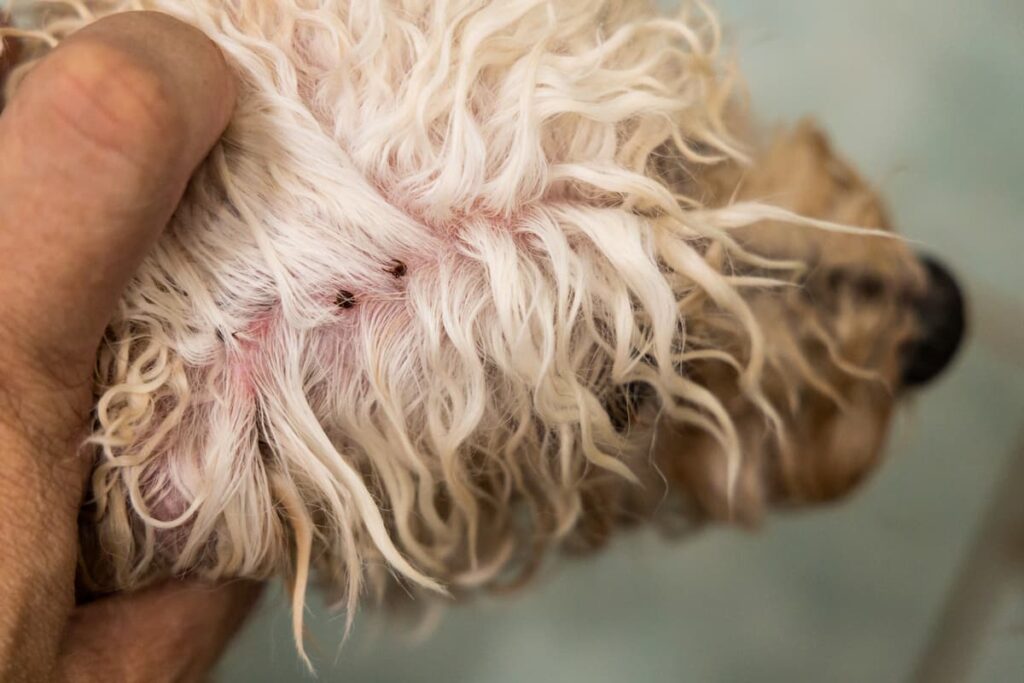
Fleas may be small, but their impact on the skin and hair follicles can be significant, especially when exposure happens repeatedly. Below are the most common ways fleas contribute to hair loss in dogs.
- Excessive scratching, chewing, and licking: Flea bites are extremely itchy, often provoking an immediate response. Dogs instinctively attempt to relieve the discomfort by scratching, chewing, or licking the affected areas. Over time, this constant friction damages the hair shafts and weakens hair follicles. The result is thinning fur, broken hairs, and eventually noticeable bald spots.
- Skin inflammation and irritation: Flea saliva contains compounds that irritate the skin. Even dogs without diagnosed allergies may experience redness and inflammation after repeated flea exposure. Inflamed skin disrupts the normal hair growth cycle, making it harder for hair to remain anchored and increasing the risk of dog hair loss.
- Flea allergy dermatitis (FAD): A flea allergy in dogs occurs when a dog’s immune system overreacts to flea saliva. This allergic reaction may cause intense itching, redness, scabbing, and widespread alopecia, sometimes from only one or two flea bites. FAD is one of the most common causes of alopecia seen in dogs and often leads to chronic skin issues if exposure continues.
- Secondary skin damage from ongoing irritation: Persistent scratching and inflammation weaken the skin’s protective barrier. This makes the skin more vulnerable to skin infections, which may worsen irritation and extend hair loss beyond the original flea-affected areas. Secondary infections often delay regrowth and complicate recovery.
While fleas are a frequent trigger, they are not the only potential cause. Other parasites, such as mites, as well as fungal infections like ringworm, endocrine conditions, or hormone imbalances, may produce similar symptoms. Because these conditions can overlap visually, a veterinarian or vet is best positioned to provide an accurate diagnosis.
5 Common signs of flea-related hair loss
Flea-related hair loss often presents with recognizable patterns and behaviors. While these signs alone cannot confirm a specific condition, they can help pet owners recognize when fleas may be involved.
- Patchy hair loss, especially near the tail or back
One of the most common patterns of flea-related hair loss appears near the tail base, hips, and lower back. These areas are frequent feeding spots for fleas. Hair may thin unevenly or fall out in clusters, leaving visible patches or bald spots.
- Red, inflamed, or irritated skin
Inflammation often accompanies flea irritation. The skin may appear red, warm, or sensitive to touch. In lighter-colored dogs, this redness may be more obvious, while in darker coats it may require closer inspection.
- Frequent scratching, chewing, or licking
Dogs experiencing flea discomfort often focus intensely on certain areas of their body. Persistent scratching, chewing, or licking is not only a sign of irritation but also a direct contributor to losing hair.
- Scabs or hot spots
Repeated trauma to the skin can result in scabs, crusty areas, or moist hot spots. These lesions may ooze, develop odor, or expand quickly, and are often associated with both itching and secondary skin infections.
- Flea dirt or visible fleas
Flea dirt, tiny black specks resembling pepper, may be found on the skin or bedding. Fleas themselves may be briefly visible as they move through the fur, though they are easy to miss.
What to do if fleas are causing your dog’s hair loss

If you suspect fleas may be contributing to your dog’s hair loss, there are several supportive steps that may help reduce irritation and protect the skin. These actions are not intended to replace professional care.
Consult a veterinarian for evaluation
Because flea-related hair loss can resemble other conditions, such as food allergies, environmental allergies, or hormone disorders, a veterinary professional can help determine the underlying cause and discuss appropriate treatment options.
Check for fleas and flea dirt regularly
Using a flea comb, gently inspect areas such as the neck, shoulders, back, and tail base. Regular checks increase the likelihood of spotting flea activity early, even if only a few fleas are present.
Improve your dog’s health with better feeding and supplements
Nutrition plays a central role in skin repair and coat strength. Diets that provide adequate protein, essential fatty acids, and key micronutrients support healthy hair follicles and may help the skin recover more efficiently from irritation. Additionally, certain plant-based supplements may help to control moderate flea infestations.
Address fleas in the dog’s environment
Fleas do not live exclusively on dogs. Eggs and larvae can be found in bedding, carpets, furniture, and outdoor areas. Cleaning these environments helps reduce repeated exposure and ongoing irritation.
Reduce scratching triggers
Avoid harsh grooming tools and overbathing, which can dry the skin further. Some dogs may benefit from gentle or medicated shampoos, though these should be used cautiously and under professional guidance.
Supporting your dog’s coat and skin through proper nutrition
Healthy skin and a resilient coat depend heavily on nutrition. When dogs experience flea-related irritation or prolonged itching, their nutritional needs may increase as the body works to repair damaged skin and hair follicles.
Gently cooked, whole-food meals can provide highly digestible nutrients that support immune balance, help support a healthy inflammatory response, and encourage hair regrowth. These meals often contain natural sources of omega fatty acids, antioxidants, and amino acids that help maintain skin integrity and promote a healthier coat over time.
For pet owners seeking thoughtfully prepared options, JustFoodForDogs offers vet-approved, gently cooked meals formulated to support overall wellness. Their Vet-Prescribed Diets and targeted Supplements, including Allergy Chews designed to support skin health, may be beneficial when recommended by a veterinary professional.
Final thoughts
So, can fleas cause hair loss in dogs? Yes, skin fleas on dogs can play a significant role in hair loss, especially when itching, inflammation, or flea allergy dermatitis is involved. By recognizing early symptoms, supporting skin health through proper nutrition, and working with a trusted veterinary professional, dog owners can help protect their pet’s comfort and encourage healthy coat recovery over time.
Sources
Massardi, Elena, Germano Gaudenzi, Silvia Carra, Monica Oldani, Ilona Rybinska, Luca Persani, and Giovanni Vitale. 2025. “Cushing’s Disease in the Animal Kingdom: Translational Insights for Human Medicine.” International Journal of Molecular Sciences 26 (17): 8626–26. https://doi.org/10.3390/ijms26178626.
Cadiergues, Marie-Christine, Caroline Cabaret-Mandin, and Chloé Solatges. 2014. “Comparison of Two Techniques for the Detection of Flea Faeces in Canine and Feline Coat Brushings.” The Scientific World Journal 2014: 1–4. https://doi.org/10.1155/2014/292085.
Moog, Fabien, Gaetan Vetea Plichart, Jean-Louis Blua, and Marie-Christine Cadiergues. 2020. “Evaluation of a Plant-Based Food Supplement to Control Flea Populations in Dogs: A Prospective Double-Blind Randomized Study.” International Journal for Parasitology: Drugs and Drug Resistance 12 (April): 35–38. https://doi.org/10.1016/j.ijpddr.2020.02.001.