Dog grooming isn’t just about having a clean, nice-smelling dog. Regular grooming at home helps keep the coat, skin, paws, nails, ears, and eyes in good condition. It also allows pet parents to notice changes they might otherwise miss.
If your dog is new to grooming, start slowly and use treats, praise, and other positive reinforcement to help them become comfortable with being handled. Grooming needs vary by breed, size, and coat type, and some dogs still need professional clipping, dematting, or other specialized care.
This article will share practical tips for brushing, bathing, nail care, ear and eye care, dental care, paw care, and handling your dog calmly during grooming.
Brushing your dog’s coat
Regular brushing removes loose hair, dirt, and debris. It also helps control shedding and can help prevent tangles and mats. Brushing is also a chance to inspect your dog’s skin and coat for burrs, scrapes, possible hot spots, or other changes. Brush all the way through the coat rather than simply skimming the surface, especially for dogs with double coats or mat-prone coats.
Smooth and short coats
A short coat still benefits from regular brushing because it releases dirt, loose hairs, and debris. A soft bristle brush, rubber brush, or grooming mitt can work well.
Short, dense coats
Dogs with double coats have a topcoat and a softer undercoat that can trap loose fur. An undercoat rake can help remove loose fur, especially during “blow coat” season when some breeds shed much of their undercoat.
Long, silky coats
Long-haired dogs often benefit from daily brushing to keep their hair from becoming tangled or matted. Look for a brush or comb that can reach through their long coat without pulling it and work through the hair in small sections, paying special attention to tangle-prone areas like behind the ears and under the legs.
Frequently matted coats
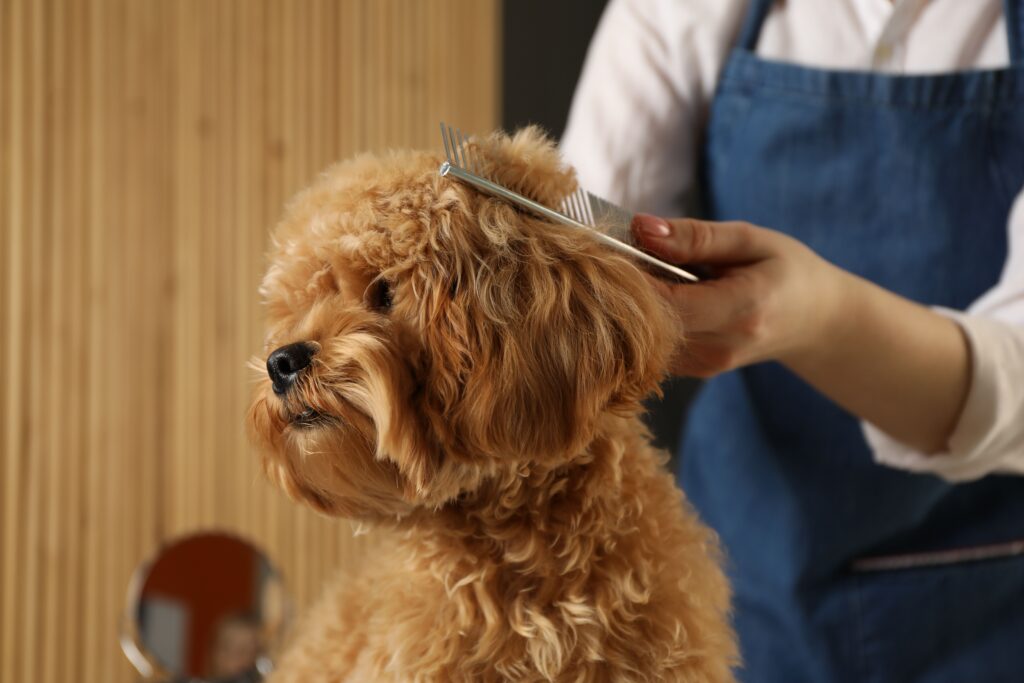
Curly coats like Poodles or Doodles require frequent brushing all the way through the hair to prevent mats. A slicker brush followed by a comb can help find and remove small tangles before they tighten into mats. If your dog has extensive or tight matting, leave it to a professional groomer rather than trying to cut out mats yourself with scissors.
Bathing your dog
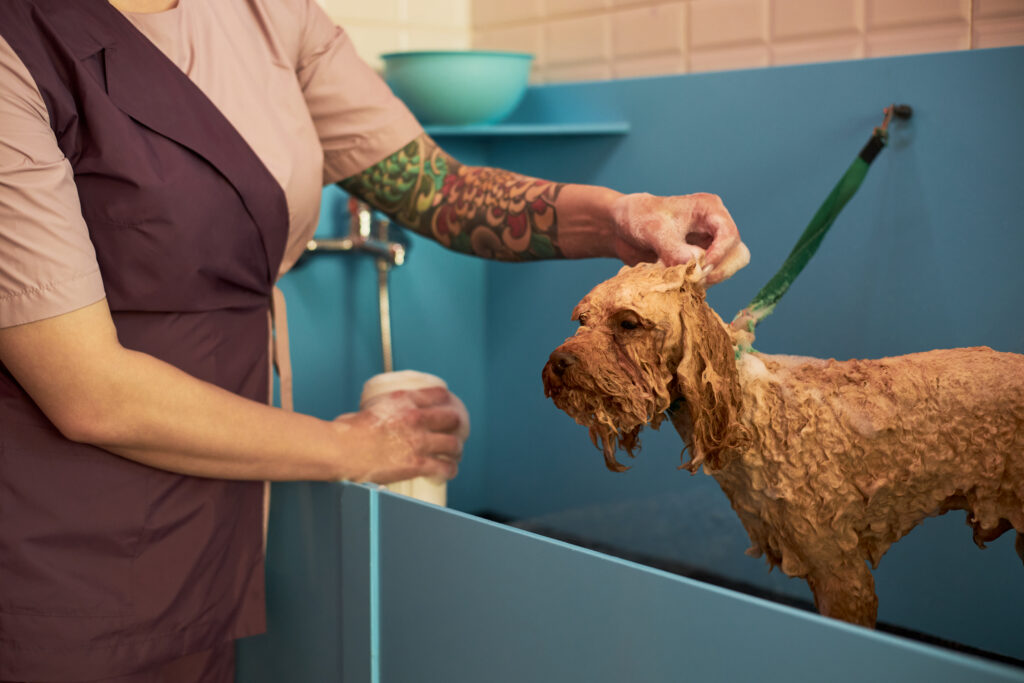
How often your dog needs a bath depends on their coat, activity level, skin health, and how dirty they get. A dog who spends weekends splashing through mud puddles will probably need the tub more often than a pooch who prefers the couch.
Here’s how you can get the most out of your bathtime:
- Brush before bathing
Remove loose hair, debris, and tangles before wetting your dog. Water can make existing mats more difficult to remove. - Use lukewarm water
Keep water out of their eyes and ears and use a damp cloth to clean around your dog’s face gently. - Lather up with a dog-safe shampoo
Work shampoo through your dog’s coat down to the skin. Pay extra attention to the paws and paw pads. Dogs with facial folds need extra care. You can wipe between their facial folds with a soft cloth, and make sure you dry them afterward so the moisture doesn’t remain trapped against the skin.
- Rinse well
Shampoo left behind can irritate your dog’s skin, so rinse until the water runs clear and you no longer feel shampoo in the coat.
- Towel-dry your dog
Gently blot or squeeze water from your dog’s coat with a towel rather than rubbing long or tangle-prone hair. Make sure skin folds, paws, and other areas where moisture can collect are dry.
For many dogs, a bath every few months may be enough, while active dogs and those with certain coat types may need more frequent baths.
Stick with shampoos formulated specifically for dogs. Human shampoos are designed for human skin and may contain ingredients, fragrances, or formulations that aren’t appropriate for your dog’s skin. If your dog has sensitive, itchy, or irritated skin, ask your veterinarian which shampoo is appropriate.
Trimming your dog’s nails
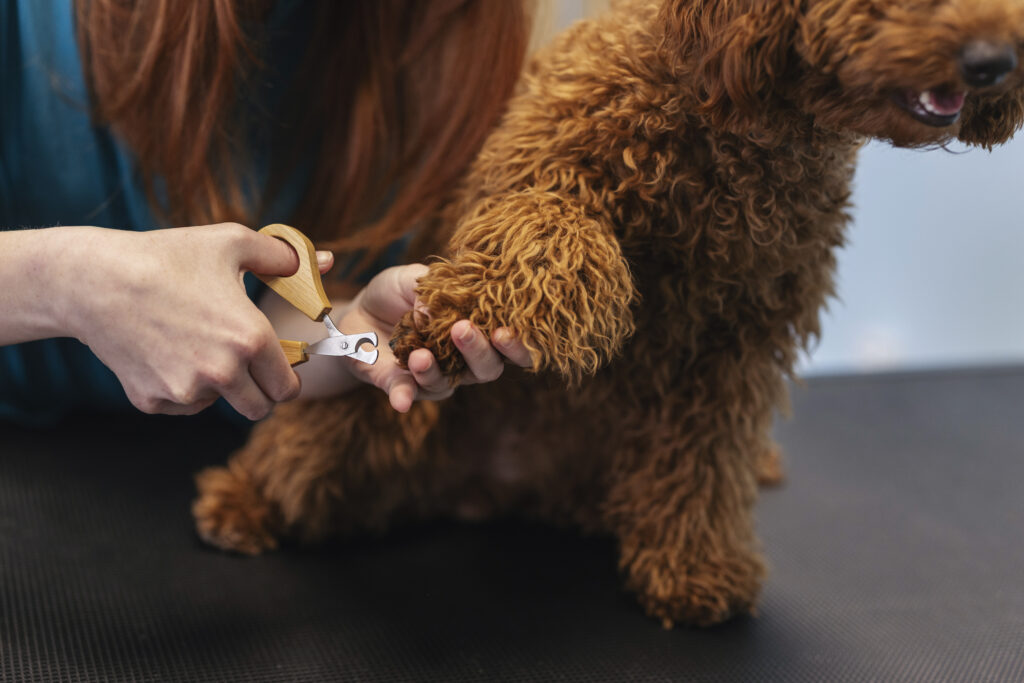
Regular nail trims help keep your dog comfortable when walking and prevent overgrown nails from interfering with normal paw placement. Nails grow at different rates, but if you hear them clicking on hard floors or notice they touch the ground when your dog is standing, it may be time for a trim.
Dog nail grooming starts with getting your dog comfortable with having paws touched.
Before introducing nail clippers, practice gently touching and holding your dog’s paws and individual toes. Let your dog sniff the clippers or grinder, and reward calm behavior with praise or treats. You don’t have to trim every nail in one session.
Choose the right tool
Use dog nail clippers or a grinder. If using a grinder, introduce the sound and vibration gradually so they don’t startle your dog, preferably before you try to trim your dog’s nails.
Trim a small amount at a time
Hold the paw securely without squeezing and remove only a small amount from the end of each nail.
Watch for the quick
The quick contains blood vessels and nerves and is easier to see in light-colored nails than dark ones. If you can’t tell where the quick ends, trim conservatively rather than guessing.
Handle a nicked quick calmly
Even experienced pet parents occasionally nick the quick. If it happens, stay calm and use styptic powder to help stop the bleeding. Contact your veterinarian if the bleeding doesn’t stop or you’re concerned about the injury. Soothe your pet afterward with a favorite treat.
Many dogs need their nails trimmed every few weeks. When you hear them clicking on the floor, it’s time for a trim. If your dog struggles or becomes anxious, ask your veterinarian or a professional groomer to handle the nail trims.
Cleaning your dog’s ears
Your dog’s ear shape, activity level, skin and ear health, and tendency to develop wax or debris can all affect how often cleaning is appropriate.
1. Gather a vet-approved ear cleaner or a damp cotton ball
If your dog needs an ear cleaning, use a veterinarian-recommended ear-cleaning solution and follow the product directions. Avoid hydrogen peroxide, alcohol, or other products that can irritate the ear.
2. Gently wipe the outer ear and visible folds
Massage the base of the ear to help loosen wax and debris. Let your dog shake their head, then use gauze or a cotton ball to wipe away material you can easily reach from the outer ear and visible folds.
3. Avoid inserting anything into the ear canal
Never insert cotton swabs or other objects deep into your dog’s ear. Doing so can push debris farther into the canal or injure sensitive structures.
4. Watch for redness, odor, or discharge
Redness, swelling, a strong or unusual odor, discharge, obvious discomfort, frequent scratching, or repeated head shaking can signal an ear problem. Contact your veterinarian rather than repeatedly cleaning the ear or trying to treat the problem yourself.
Healthy ears may need little cleaning, and overcleaning can irritate the ear canal. Ask your veterinarian how often your dog’s ears need to be cleaned.
Caring for your dog’s eyes
Your dog’s eyes generally don’t require much routine grooming, but checking them regularly can help you notice discharge, irritation, or other changes. For dogs that develop normal tear residue or debris around the eyes, gentle cleaning can help keep the surrounding fur clean.
Use a damp, soft cloth or cotton ball with warm water to wipe your dog’s eyes if needed. Wipe outward from the inner corner of the eye and avoid touching the eyeball. Look for squinting, cloudiness, persistent redness, or other changes.
Brushing your dog’s teeth
Dental care is another important part of your dog’s grooming routine. Accumulated plaque can lead to periodontal disease, and regular home dental care combined with professional cleanings can help protect your dog’s teeth and gums.
Start by getting your dog used to having their mouth handled. You’ll need to lift their lips and insert a toothbrush, but you can start with lifting their lips and touching their teeth.
Use a dog-specific toothbrush and toothpaste. Many dogs like specially flavored dog toothpaste. Avoid human toothpaste as it has ingredients that aren’t safe for dogs. Squirt a little of the toothpaste on the toothbrush and brush in small circular motions along the outer teeth. Daily brushing is ideal, but even several times a week can help prevent plaque buildup.
Professional groomer Elaina Bushee, owner of Texas-based Dog Heart Grooming, emphasizes starting dental care early. “The best thing you can do for your dog’s teeth is start them young,” she says. Consistent brushing with a dog-safe enzymatic toothpaste can help maintain oral hygiene.
Brushing doesn’t replace professional veterinary dental care. Your veterinarian can check for tartar, gum inflammation, broken teeth, and other dental problems that brushing at home can’t address.
Handling and safety tips for grooming sessions
Good dog grooming starts with knowing what you can safely do at home and when your dog needs professional help. Grooming tutorials and YouTube channels can help you see techniques such as brushing, nail prep, and introducing clippers, but look for instruction from veterinarians, experienced professional groomers, or reputable grooming schools. Online courses can provide more structured instruction if you want to learn beyond basic maintenance.
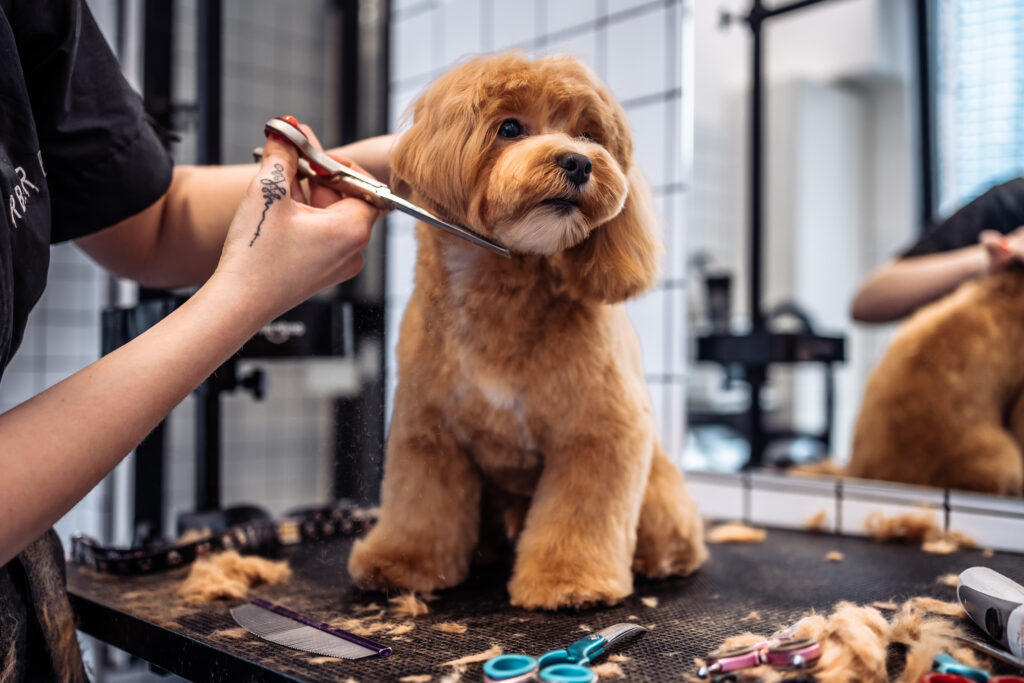
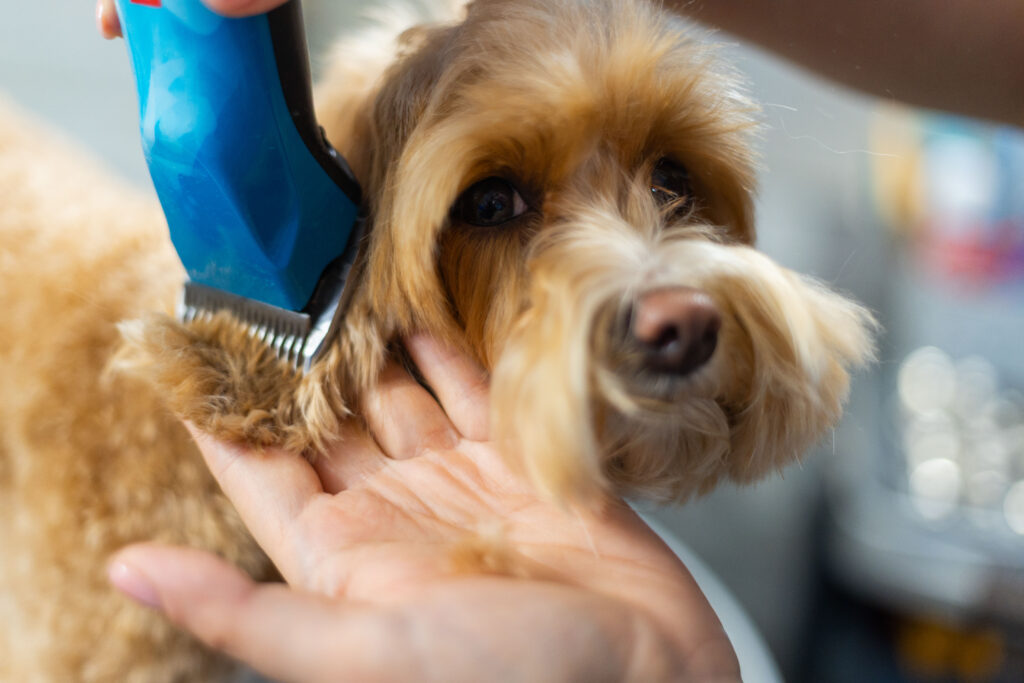
Some jobs require more skill, such as how to cut dog hair like a professional groomer. Groomers learn techniques for using scissors or clippers around a moving dog, removing tight mats, or creating breed-specific cuts. If you don’t know the proper technique, you risk injury. Poodles, Shih Tzus, and other dogs with continuously growing or high-maintenance coats may need regular professional grooming in addition to what you do at home.
Your at-home grooming routine
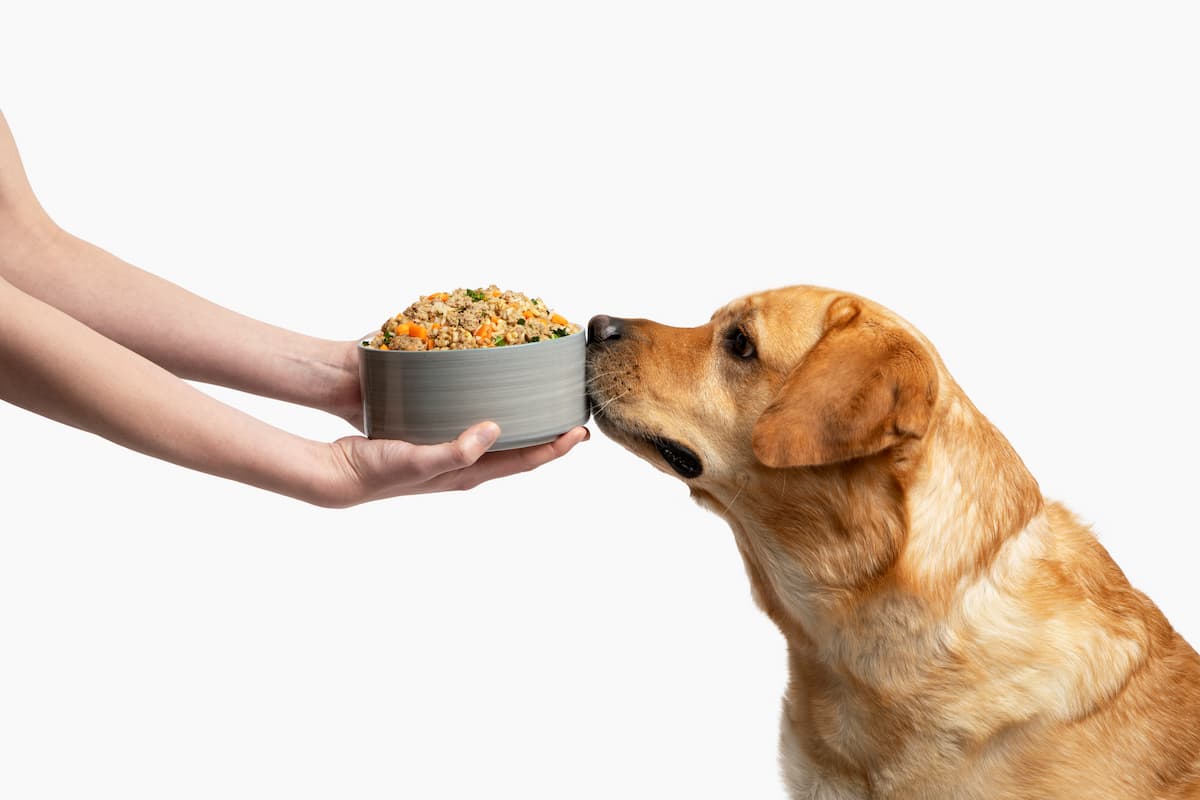
Regular brushing and checks of your dog’s eyes, skin, teeth, and paws can quickly become part of your daily routine. One of the most important parts of dog grooming at home is the chance for you to notice the details of your dog’s appearance. Multiple factors, including genetics and nutrition, influence your dog’s overall health. A complete, balanced diet supplies the nutrients your dog needs to support healthy skin and coat as part of their overall health.
JustFoodforDogs offers targeted diets to support your dog’s health from the inside out, including nutrition for sensitive skin.