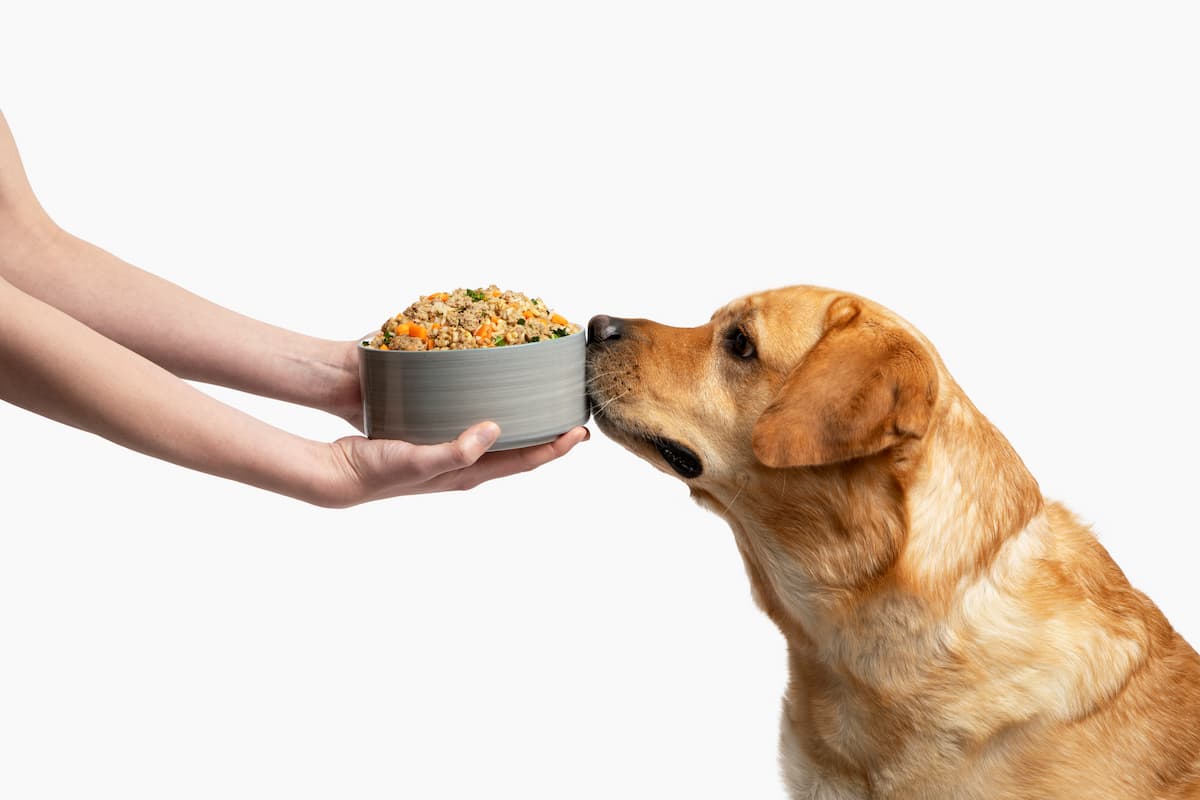
Choosing the right food and water bowl might seem like a small decision, but it can affect a dog’s comfort, posture, eating habits, and overall feeding experience. Walk down any pet store aisle, and you’ll notice raised feeders sitting next to traditional floor-level bowls, each claiming to offer a better mealtime for your pup.
This guide breaks down whether elevated bowls are better for dogs by covering the potential benefits and drawbacks, which dogs may benefit most from a raised setup, and how to choose the right feeder safely. It’s a topic that comes up often among dog owners, and the debate isn’t always straightforward, so this article aims to lay out what the research actually says. The information here is especially helpful for owners of senior dogs, large breeds, or dogs with mobility concerns, since these groups often have the most to gain, or lose, from a change in bowl height.
What are elevated dog bowls?
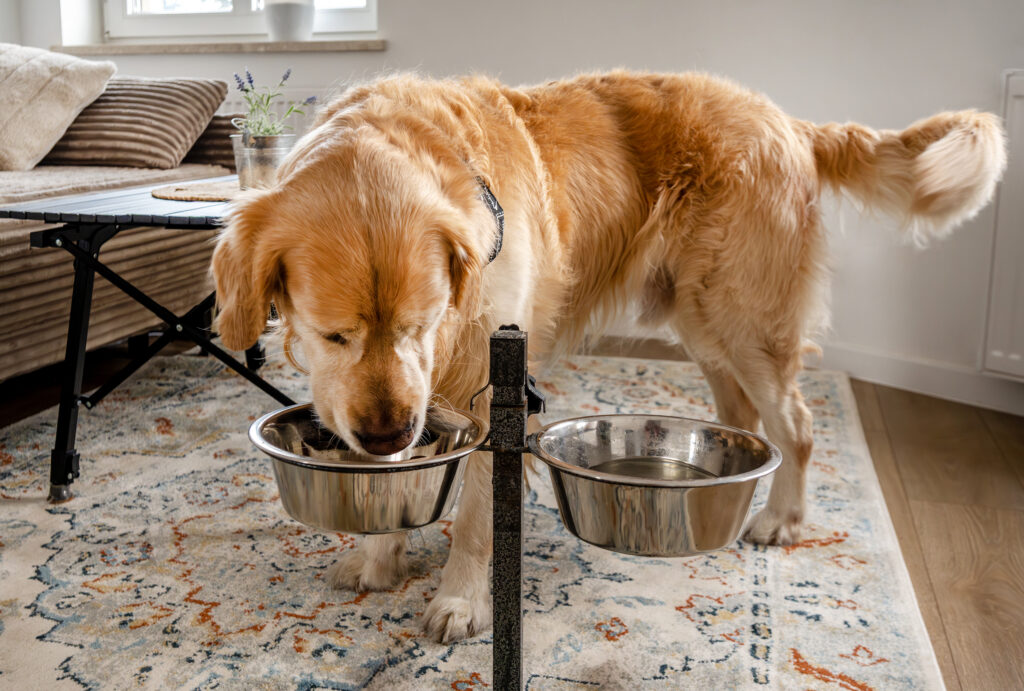
Elevated dog bowls are feeding stations raised off the ground on a stand or platform to help position food and water closer to a dog’s eating height. Instead of bending down to floor level, a dog can eat and drink while standing in a more natural posture, with less need to lower its head and neck. Gravity and a dog’s own body shape play a role here too, since a deep-chested dog reaching down to ground level uses a different posture than a small, compact breed does.
Elevated bowls differ from traditional floor-level bowls mainly in how they’re supported. Floor-level bowls sit directly on the ground, while raised versions use a stand, riser, or frame to lift the bowl anywhere from a few inches to over a foot high. Common designs include fixed stands with a set height and adjustable feeders that let owners raise or lower the platform as a dog grows or as needs change. Some elevated dog feeder models also include removable bowls for easier washing, and many double as a combined food bowl and water bowl unit.
When comparing options, bowl height, stability, and ease of cleaning are all important considerations. A feeder that wobbles during meals or traps grime in hard-to-reach corners can undo any comfort benefits it might otherwise offer.
What are the benefits of elevated bowls for dogs?
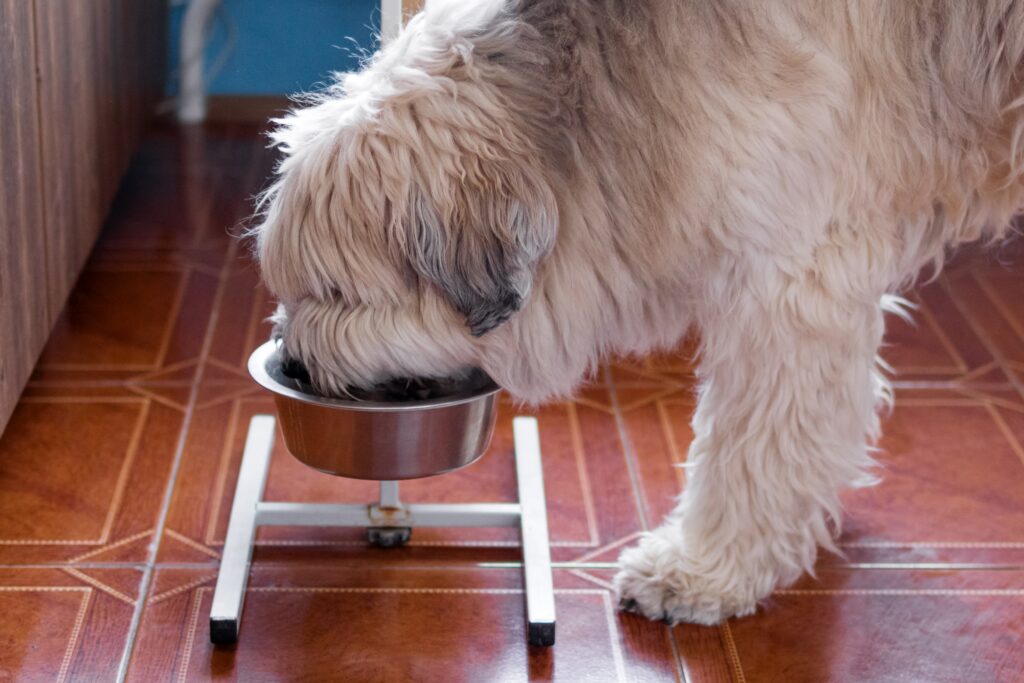
So, what are the benefits of elevated dog bowls? For the right dog, a raised feeder can make mealtime more comfortable and practical in several ways.
Improved comfort while eating
Dogs that have to lower their head and neck significantly to reach a floor bowl may experience strain over time, particularly larger or older dogs. Raising the bowl to a height closer to the dog’s natural stance can reduce that bend and make eating feel more comfortable, and many owners suggest their dog appears more comfortable with the raised bowls.
Easier access for senior dogs
Older dogs, especially those with arthritis or other joint issues, often struggle to lower themselves comfortably to the floor for every meal. Dogs with severe arthritis, in particular, may find it painful to hold a lowered position long enough to finish a meal. An elevated bowl can reduce the need to bend, which may ease strain on aging joints and make mealtimes less physically demanding for senior dogs.
Cleaner feeding areas
Bowls placed on the floor tend to collect kibble crumbs, spilled water, and drool nearby. Raised feeders, particularly those with a stable frame, can help contain messes and keep the surrounding floor cleaner.
Better feeding posture for large breeds
Large and giant breed dogs, including tall dogs with long legs, sometimes have to stretch further down to reach a floor-level bowl than smaller and medium-sized dogs do. An elevated setup may allow these dogs to eat with their neck and back in a more neutral position rather than bending sharply downward, which may promote a more neutral posture during meals, though this claim isn’t universally proven.
More convenient feeding experience for pet owners
Raised feeders can also simplify feeding routines for owners. Refilling a bowl at a higher height means less bending for people, too, and many elevated designs make it easy to add or swap bowls without disturbing the whole setup.
Are there risks or concerns with elevated dog bowls?
Elevated bowls are not ideal for every dog and should be chosen carefully based on size, breed, health status, and veterinary guidance. What works well for one dog may pose real concerns for another, and the risk factors involved are worth understanding before making a switch.
Not all dogs need elevated bowls. Small and medium dogs without mobility issues typically eat comfortably from the floor and don’t need a raised setup. For these dogs, an elevated bowl may not offer any meaningful benefit.
Bloat concerns for fast eaters. This is one of the most important concerns to understand. Bloat, or gastric dilatation volvulus (GDV), is a life-threatening condition in which the stomach fills with gas and can become enlarged, twisting on itself and cutting off blood flow. It occurs most often in deep-chested, large and giant breed dogs such as Great Danes, German Shepherds, Rottweilers, Standard Poodles, Weimaraners, and Boxers, particularly those with a narrow breastbone and a deep lower chest.
A widely cited study led by researcher Larry Glickman at Purdue University found that dogs fed from a raised feeder had a significantly higher risk of GDV than dogs fed from the floor, and the study findings showed the effect was more pronounced in giant breed dogs. Researchers found similar patterns in later research, and the general takeaway is that no study to date has shown that raised feeding actually reduces bloat risk.
Because fast eaters tend to gulp air along with their food, a behavior known as aerophagia, some veterinarians believe raised feeders may allow certain dogs to eat too quickly, compounding a dangerous outcome for an already vulnerable eater. Given this evidence, owners of deep-chested, large or giant breed dogs should consult a veterinarian before switching to an elevated feeder. They may also want to pair any bowl choice with a slow-feeder bowl or slow-feed insert to reduce gulping, regardless of bowl height.
Stability and tipping issues. A poorly made or lightweight elevated feeder can tip or shift while a dog is eating, which may startle the dog or create a mess. Enthusiastic eaters need a sturdy, well-balanced stand that won’t slide across the floor.
Not a universal fix for neck or back pain. While raised bowls are sometimes marketed as a solution for neck strain and neck and back pain, the evidence isn’t conclusive for every dog, and posture needs vary by breed and body type.
Limited benefit for healthy, average-sized dogs. For most healthy adult dogs without joint or breed-specific concerns, floor-level feeding remains perfectly safe and effective, and switching to a raised bowl isn’t a necessary upgrade.
How to choose the right elevated bowl for your dog
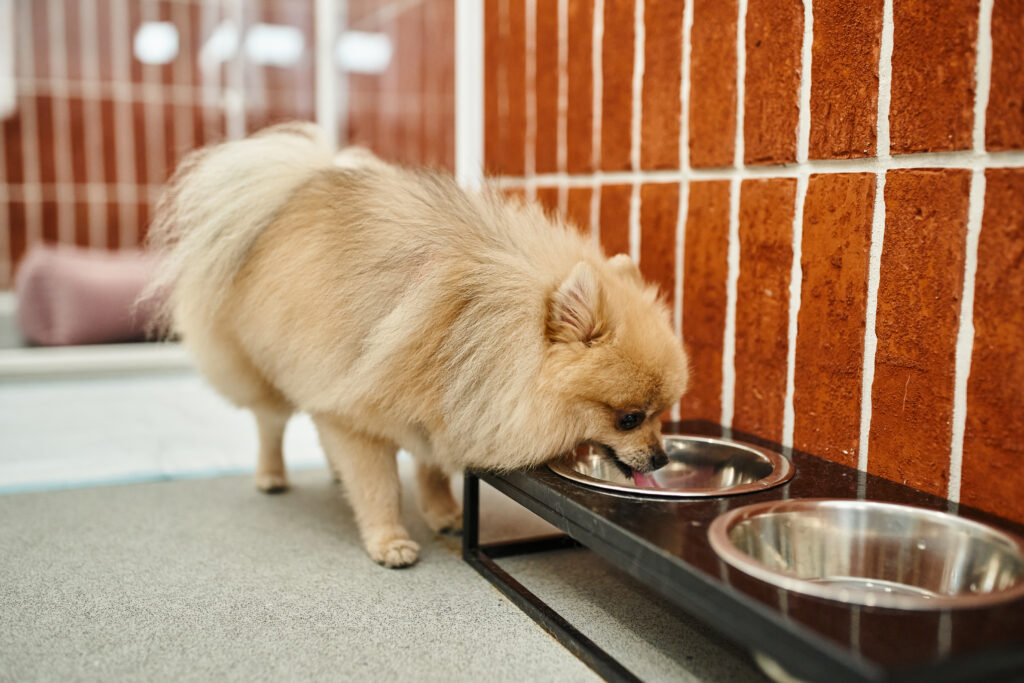
If a veterinarian confirms that an elevated bowl is a reasonable option for your dog, keep these factors in mind:
- Choose the correct bowl height. Measure the distance from the floor to your dog’s shoulder or lower chest, then select a stand that lets your dog eat without excessive stretching or hunching.
- Prioritize sturdy, stable designs. Look for a feeder with a wide base and solid construction that won’t tip or slide during active eating.
- Select easy-to-clean materials. Stainless steel bowls resist scratching, don’t hold odors, and are simple to sanitize between meals.
- Match the bowl size to your dog. A too-small bowl can crowd a large dog’s face, while an oversized bowl may be awkward for a smaller dog to use.
- Consider removable bowls. Feeders with removable inserts make daily cleaning and dishwasher use far more convenient.
- Reassess as your dog ages. A growing puppy or a dog with a changing health condition may need a different height over time, so adjustable stands can be worth the investment as your dog’s needs change over time.
Support Healthier And More Comfortable Mealtimes for Your Dog
Every dog is different, and paying attention to eating habits comfort level, and feeding setup can help you make a more informed decision about bowls and feeding accessories. The right bowl height, material, and design may help improve daily routines and create a more comfortable mealtime experience for some dogs, even though no single setup works universally for every dog. Explore trusted dog feeding products and everyday care essentials designed to support your dog’s comfort, cleanliness, digestive health, and overall well-being.
Final thoughts
Elevated bowls aren’t universally better or worse for dogs. The bottom line is that the right choice depends on your dog’s size, breed, age, and health history. Senior dogs and dogs with certain mobility or medical conditions may benefit from a raised feeder, while deep-chested large and giant breeds prone to bloat generally do better sticking with floor-level bowls. When in doubt, talk to your veterinarian about what’s safest for your individual dog before making a switch.