A heart disease diagnosis raises many questions for pet parents, including what to feed their dog. A dog’s diet is one of the most important elements of his overall health care.
As a result, many pet parents have become increasingly interested in grain-free diets and grain-free dog food. But, as a result of this interest, many veterinarians and pet owners are worried about the link between grain-free diets and heart disease, namely dilated cardiomyopathy (DCM).
This post is an educational guide covering what heart disease is, what causes it, how it presents, and what nutritional factors veterinarians typically consider.
What is heart disease in dogs?
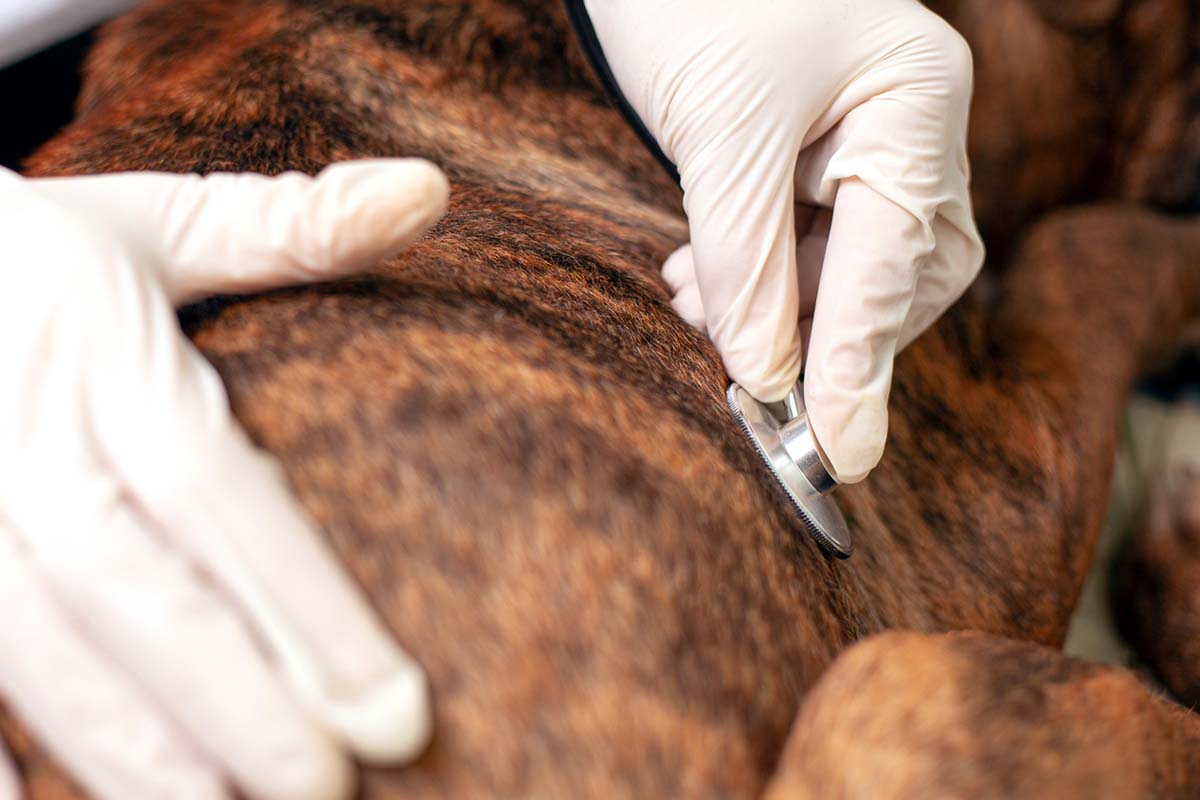
Heart disease a broad term covering several conditions that affect the heart’s ability to pump blood efficiently. It tends to develop gradually, often over years. The two most common forms of heart disease are degenerative mitral valve disease (MVD) and dilated cardiomyopathy (DCM). While some dogs are genetically predisposed, the condition can affect any breed or age, and early detection is central to long-term management.
What causes heart disease in dogs?
There are several potential causes of heart disease in dogs, including:
- Degenerative Valve Disease: The most common cause of heart disease in dogs, this condition occurs when heart valves gradually thicken and fail to close properly, allowing blood to leak backward with each heartbeat.
- Dilated Cardiomyopathy: DCM causes the heart muscle to weaken and thin. As the heart works harder to pump blood, pressure on the heart walls causes the chambers to enlarge, or dilate. This gives the heart an overall enlarged, rounded appearance. It’s quite common, and in fact, DCM is the second most common canine heart disease.
- Congenital Heart Defects: Some dogs are born with structural abnormalities that disrupt normal blood flow from birth. Some dogs live normally with mild defects, while others require early surgical intervention.
- Heartworm: Transmitted through mosquito bites, heartworm infection causes inflammation of the heart and pulmonary arteries, leading to scarring, increased cardiac workload and lasting damage. It is largely preventable with consistent veterinary-recommended preventatives.
- Arrhythmias and Electrical Dysfunction: Some dogs develop abnormal heart rhythms that impair pumping efficiency even without structural damage. If left unmanaged, it can accelerate cardiac decline.
What are some common signs of heart disease in dogs?

Coughing or Labored Breathing
A persistent cough may signal fluid buildup in or around the lungs as the heart weakens. You may also notice faster or more labored breathing than usual.
Exercise Intolerance
A dog who tires quickly, lags on walks, or loses interest in activities they once loved may not be getting enough oxygen-rich blood to their muscles — a hallmark of reduced heart function.
Abdominal Swelling
Poor circulation can cause fluid to accumulate in the abdomen, making the belly appear bloated or distended even without much food intake.
Irregular Heartbeat or Fainting
Abnormal heart rhythms can cause sudden episodes of weakness, collapse, or brief fainting.
Unexplained Weight Loss or Reduced Appetite
Heart disease puts significant stress on the body, leading to muscle loss and weight drop even without dietary changes. A reduced interest in food often compounds the problem.
If your dog is showing any of these signs, do not wait to see if they improve on their own. These symptoms should prompt an immediate consultation with a veterinarian.
Ingredients and dietary factors to be mindful of

Veterinarians commonly address the following nutritional factors and dietary considerations for dogs with heart conditions.
Protein quality and sources
Dogs with heart disease need high-quality, digestible protein from whole meat sources to combat muscle wasting. Vague by-products and fillers are best avoided in favor of named ingredients like chicken, beef, or salmon.
Omega-3 fatty acids
EPA and DHA from fish oil and algae oil in heart-healthy dog food may help reduce inflammation, support heart rhythm, and slow muscle loss. Many veterinary cardiologists recommend fish oil supplementation even alongside a cardiac diet for dogs.
Taurine and L-carnitine
One of the first causes suspected in diet-associated DCM was taurine deficiency. If a deficiency is found, taurine supplements may be used in conjunction with carnitine (an amino acid) to treat heart disease like DCM. (Other medications used include pimobendan, diuretics, ACE inhibitors, and cardiac glycocides.)
Sodium levels and processed ingredients
Excess sodium levels cause fluid retention, adding strain to a weakened heart. Salty treats, processed human foods, and high-sodium commercial kibbles should be avoided. Make sure your pet is on a low-sodium diet.
Grain-free diets
In one study conducted by the College of Veterinary Medicine at North Carolina State University, dogs fed a grain-free diet showed that part of their heart was consistently larger than dogs fed a grain-based diet. A potential link between grain-free diets high in peas, lentils, or legumes and increased DCM risk has prompted many veterinary cardiologists to advise caution. Dogs on these formulas are often transitioned to more traditional diets or cardiac dog food as a precaution.
How nutrition fits into your dog’s lifelong wellness
As a loving pet parent, you want to keep your best furry friends safe from harm. Heart disease in dogs is a complex, progressive condition with multiple forms and causes; recognizing signs early may lead to better outcomes. Nutrition is a meaningful way to support a dog’s overall health and comfort at every stage of life.
Remember: a veterinarian is the essential partner in both understanding the condition and determining an appropriate dietary approach for the individual dog.
Citations
Bakke, Anne Marie, Joshua Wood, Carina Salt, David Allaway, Matt Gilham, Gail Kuhlman, Tiffany Bierer, Richard Butterwick, and Ciaran O’Flynn. 2022. “Responses in Randomised Groups of Healthy, Adult Labrador Retrievers Fed Grain-Free Diets with High Legume Inclusion for 30 Days Display Commonalities with Dogs with Suspected Dilated Cardiomyopathy.” BMC Veterinary Research 18 (1). https://doi.org/10.1186/s12917-022-03264-x.
Singh, Pawanpreet, Sydney Banton, Shari Raheb, James R. Templeman, Jennifer Saunders-Blades, Darcia Kostiuk, Janelle Kelly, et al. 2023. “The Pulse of It: Dietary Inclusion of up to 45% Whole Pulse Ingredients with Chicken Meal and Pea Starch in a Complete and Balanced Diet Does Not Affect Cardiac Function, Fasted Sulfur Amino Acid Status, or Other Gross Measures of Health in Adult Dogs.” The Journal of Nutrition, March. https://doi.org/10.1016/j.tjnut.2023.03.027.
Fischer, Kara E, John E Rush, and Lisa M Freeman. 2023. “Pit Bull–Type Breeds with Dilated Cardiomyopathy Eating Nontraditional Diets Improve after Diet Change (2015–2022).” Javma-Journal of the American Veterinary Medical Association, April, 1–9. https://doi.org/10.2460/javma.23.01.0025.
Bakke, Anne Marie, Joshua Wood, Carina Salt, David Allaway, Matt Gilham, Gail Kuhlman, Tiffany Bierer, Richard Butterwick, and Ciaran O’Flynn. 2022. “Responses in Randomised Groups of Healthy, Adult Labrador Retrievers Fed Grain-Free Diets with High Legume Inclusion for 30 Days Display Commonalities with Dogs with Suspected Dilated Cardiomyopathy.” BMC Veterinary Research 18 (1). https://doi.org/10.1186/s12917-022-03264-x.
Adin, Darcy, Teresa C. DeFrancesco, Bruce Keene, Sandra Tou, Kathryn Meurs, Clarke Atkins, Brent Aona, Kari Kurtz, Lara Barron, and Korinn Saker. 2019. “Echocardiographic Phenotype of Canine Dilated Cardiomyopathy Differs Based on Diet Type.” Journal of Veterinary Cardiology 21 (February): 1–9. https://doi.org/10.1016/j.jvc.2018.11.002.
Smith, Caren E., Laurence D. Parnell, Chao-Qiang Lai, John E. Rush, and Lisa M. Freeman. 2021. “Investigation of Diets Associated with Dilated Cardiomyopathy in Dogs Using Foodomics Analysis.” Scientific Reports 11 (August). https://doi.org/10.1038/s41598-021-94464-2.