Puppies seem to have endless energy when they’re awake, but they’re also champion sleepers. One minute they’re chewing on a toy, and the next they’re dozing off mid-squeak. If you’re a new puppy parent unsure about what’s normal and what’s not, you might wonder, how much do puppies sleep?
Like human babies, puppies need lots of sleep to support the growth and development of their brains and bodies. However, it’s important to understand your puppy’s sleep needs. Here is our guide to answer the question: How long do puppies sleep?
We’ll also address why puppies sleep so much, how sleep needs change over time, and how to craft a simple puppy sleep schedule to ensure your pup gets the rest they need.
Why do puppies sleep so much?
Sleep is your puppy’s superpower. While they doze, a puppy’s body and brain are busy developing. All of that work takes energy, so puppies need more rest and calories than adult dogs to keep up.
Sleep supports a healthy immune system, rapid growth, and continuous learning. Frequent naps also help puppies consolidate and commit to memory the experiences they have while awake, especially socialization and training.
How many hours should a puppy sleep?
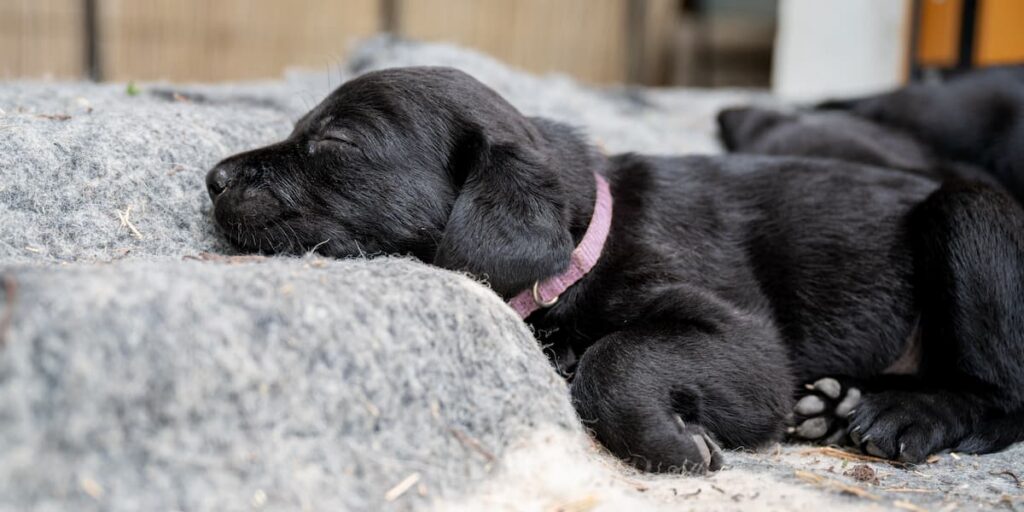
A puppy’s sleep needs depend on age, size, and energy level. Generally, the younger the pup, the more sleep they need. Here’s a guideline for how long puppies sleep at different ages and development stages.
8–10 weeks old
When a new puppy first comes home, they may sleep 18 to 20 hours a day. Puppies tend to fall asleep immediately after a high-energy activity, such as play, eating, or going potty. Naps are spread out throughout the day, and puppies usually wake several times each night.
11–14 weeks old
By this age, puppies still sleep around 18 hours per day, but they can sleep in longer stretches and have fewer overnight awakenings as bladder control improves. Your puppy’s sleep and nap needs usually become more predictable, helping you create and stick to a schedule and routine.
15–20 weeks old
At 4 to 5 months old, puppies sleep 12 to 16 hours per day, including sleeping through most of the night when you stick to a consistent bedtime and late-evening potty routine. When your pup sleeps longer at night, they have more energy in the early morning and may not nap until the late morning or afternoon.
24 weeks and older
By 6 months, most puppies approach adult sleep schedules, around 12 to 14 hours per day, which is more than some adult dogs but less than very young pups. Most naps are consolidated to nighttime sleep, with only two to four short naps during the day.
Puppy sleep schedule
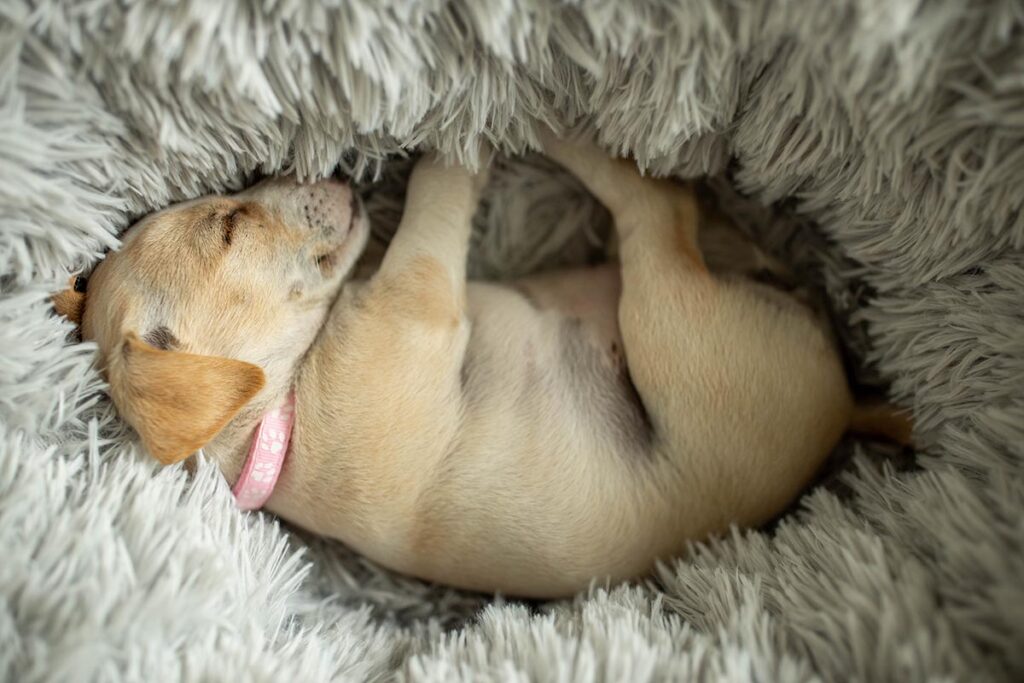
A pup’s exact sleep schedule depends on factors like breed, energy level, and personality, but it also changes predictably as pups age.
Every puppy is different, but here’s a simple example of what a puppy sleep schedule might look like for a pup in a typical household:
Early morning (6–8 a.m.)
Your puppy will wake up, go outside for a potty break right away, eat breakfast, have a short play or training session, then take a nap in their crate or pen while you get ready to leave the house.
Daytime (8 a.m.–4 p.m.)
While you and the family are at work or school, your puppy will spend most of the day asleep in a safe crate or playpen. A family member, friend, or dog walker should visit at least once during this time, ideally two to three times, for planned potty and stretch breaks as well as a midday meal. It’s recommended for puppies to eat three times daily.
Late afternoon and evening (4–8 p.m.)
When you get home, your dog will need another potty break right away, followed by dinner, another short training session, and some “free time” with play or supervised exploration. Most pups take another nap after dinner and have a quick burst of energy before they’re ready for bedtime sleep.
Nighttime sleep (8–10 p.m. until morning)
The evening can be the puppy’s “witching hour,” so encourage calm, quiet activities during this time. A simple bedtime routine includes a final potty break, then retiring to a safe sleeping area at a consistent time. Initially, plan a potty break four to six hours after bedtime. As pups grow, many can handle a full eight hours of sleep with fewer wake-ups.
Tips to help your puppy sleep
A few simple habits can help take the stress out of planning for healthy puppy sleep. Here are four practical ways to support your pup’s sleep schedule:
- Establish a consistent bedtime: Put your puppy to sleep at roughly the same time every night. A predictable bedtime and wake-up time help their body settle into a regular sleep routine.
- Create a quiet sleeping space: Choose a spot for your puppy to sleep, usually a crate or pen in a quiet corner or bedroom. Add comfortable bedding and tough chew toys to make the area inviting and help your pup learn to love it. Choose a ballistic nylon or vinyl-covered crate pad if your puppy likes to chew or shred fabrics.
- Avoid overstimulation before bed: Swap wrestling and games for quiet activities like puzzle play, easy training, or a simple cuddle, to encourage your puppy to drift off to sleep instead of “fighting it.”
- Ensure enough daytime exercise: Frequent, regularly scheduled play and exercise sessions provide your pup with an appropriate outlet for energy during the day and help them rest soundly at night.
Supporting healthy growth and restful sleep
Puppies are naturally good sleepers, as they need more naps and overall sleep than adult dogs to support their rapid growth. But age alone isn’t enough; puppies also need a steady routine, physical activity, and consistent nutrition to sleep well.
Complete and balanced puppy food gives your pup the energy and nutrients they need to build a strong, healthy body while they sleep. JustFoodForDogs is a great option for pet parents looking to support that growth with a trusted, whole-food, veterinarian-backed canine nutrition brand.
Check out our puppy-friendly options, including Pantry Fresh Chicken, Fresh Frozen Chicken and Rice, Fresh Frozen Fish and Sweet Potato, and select health and wellness supplements, or contact us to learn more about ways we can help your pup live a long, healthy life.