- Dogs have excellent low-light vision but can't see in total darkness. They still need some ambient light to navigate.
- Three features give them the edge: the tapetum lucidum (a reflective layer behind the retina), a rod-dominated retina and larger pupils.
- That reflective layer is also why a dog's eyes seem to glow in photos or flashlight beams. It's reflected light (eyeshine), not a real glow.
- Dogs trade some things for their night vision: Humans see more colors, finer detail and judge depth better, even though dogs win in the dark.
Have you fumbled for the light switch while your dog bounds off the couch to greet you? The room is dark, but your bundle of fur has no problem running through it. It can make you wonder: “What do dogs see at night?”
It’s true, your pup’s eyesight is better than yours in the dark, but that’s not the whole story.
This article looks at how canine night vision works, how it differs from yours and why your dog’s eyes can appear to glow in the dark.
Do dogs have night vision?
Dogs have excellent low-light vision, but they can’t see in complete darkness. Unless there’s a power outage, your home probably has ambient light from moonlight, streetlights or even the glowing effect of your electronics. These light sources can help your pup navigate with ease.
It makes sense when you consider canine evolution. Dogs’ wild ancestors were most active around dusk and dawn, when light levels were lower so they could track and catch prey. Your pooch doesn’t need to hunt for its food, but your dog has retained the same low-light adaptations.
How a dog’s eye works in low light
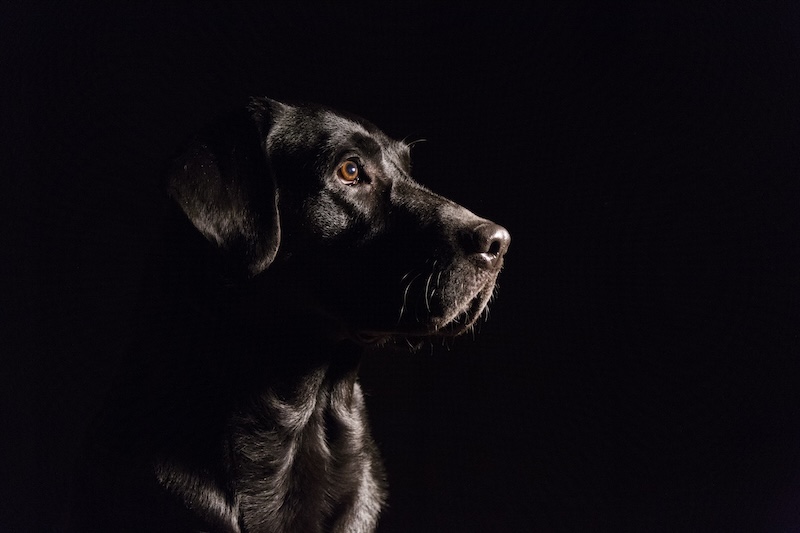
How do dogs see in the dark when you don’t?
A dog’s eyes are designed a little differently. Light enters your dog’s eye through the pupil and reaches the retina, a light-sensitive eye layer. The retina contains photoreceptor cells called rods and cones.
These photoreceptors respond to light differently. Rods help with vision in low light, and cones work better in brighter light.
Human eyes are similar.
Canine night vision includes these advantages:
Tapetum lucidum, the light-reflecting layer
Unlike humans, dogs have a reflective layer behind the retina. Called the tapetum lucidum, it reflects light through the retina, giving the eye another chance to use the light.
This helps dogs see in low-light conditions and can cause your dog’s eyes to glow at night.
A rod-dominated retina
Both humans and dogs have rods and cones, but dogs have a higher proportion of rods. These light-sensitive cells help dogs detect shapes and motion in low light.
Larger pupils
Both dogs and humans have pupils that expand and contract to allow light in, but dogs’ pupils are larger. That lets in more light and helps dogs see better in the dark.

Can dogs see better in the dark than humans?
If there’s available light, dogs can see better in the dark than humans. Their larger pupils, rod-dominated retinas and tapetum lucidum make better use of limited light. But better night vision doesn’t mean better vision overall.
Where dogs have the advantage
Dogs aren’t nocturnal, but their eyes are well-adapted to seeing with limited light.
- Spotting movement at a distance in dim conditions: Your dog may notice a rabbit darting across the yard at dusk before you can make out the movement.
- Seeing with less available light: Dogs need some light to see, but moonlight or other sources of ambient light may give your dog enough visual information when you’re struggling to distinguish objects.
- Navigating familiar spaces at dusk and dawn: Dogs’ low-light adaptations make it easier for them to see at dusk and dawn. This may explain why your pup is comfortable exploring the backyard at dusk when you can’t see well.
Where human vision is stronger
Yes, your dog can see better than you at night, but human vision is better in other ways. People see more colors and details, and our forward-facing eyes help us judge depth and distance.
- Seeing a wider range of colors: Humans have three types of color-detecting cone cells, while dogs have two. Dogs primarily see shades of blue and yellow and don’t distinguish between colors the same way people do. (Discover more about what colors dogs can see.)
- Fine detail and sharpness: Human visual acuity is usually sharper than canine vision. What looks crisp and detailed to you may appear blurrier to your dog, especially at a distance.
- Depth perception: Humans have a large area of overlap between the visual fields of our two eyes. This helps us judge distances and perceive depth. Dogs also have this visual overlap, but it can vary depending on the dog’s head shape and eye position.
- Field of view and vantage point: A dog’s field of view also varies with head shape and eye placement. A bull Terrier’s more side-positioned eyes provide a wider field of view, while a German shepherd’s more forward-facing eyes provide more overlap between what each eye sees. Humans have an even narrower field of view, but greater overlap, which helps us judge depth and distance.
Why do dogs’ eyes glow in the dark?
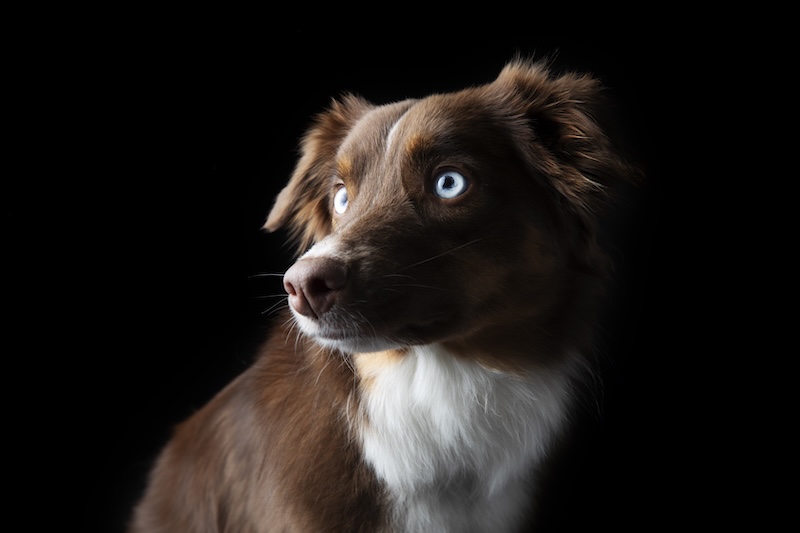
Have you ever taken your dog’s picture in a low-light setting and noticed that your dog’s eyes look like they’re glowing? That’s the tapetum lucidum, the reflective layer you’re seeing.
Your dog’s eyes aren’t really glowing from inside. (Thank goodness!) Instead, they’re reflecting light from a camera flash or another light source, like a flashlight or headlights.
That light enters your dog’s eye, and the tapetum lucidum bounces the light through the retina and gives your dog’s light-sensitive cells another chance to use it. Some of that reflected light appears as a glow.
This reflected light is called eyeshine and can appear green, yellow or red. Your dog’s age, eye color, breed and the angle of the light can affect the color you see.
Puppies can have a different eyeshine color than they will as adults because their eyes are still developing.
If your dog’s eyes look red or irritated when light isn’t reflected off them, that’s a different matter. (Find out more about common causes of red eyes in dogs and when to talk to your veterinarian.)
Should you leave a light on for your dog at night?
Most healthy dogs can see fairly well in low-light conditions … so ambient light from a hallway or outside may be enough for your dog. However, dogs can’t see in complete darkness.
A nightlight may be helpful if you have blackout shades or your dog needs to navigate stairs.
Older dogs can have vision changes as they age and may benefit from more light. Pay attention to how your pup gets around in low-light situations. If your dog starts bumping into things or moving hesitantly, talk to your veterinarian.
How everyday nutrition supports your dog’s overall health
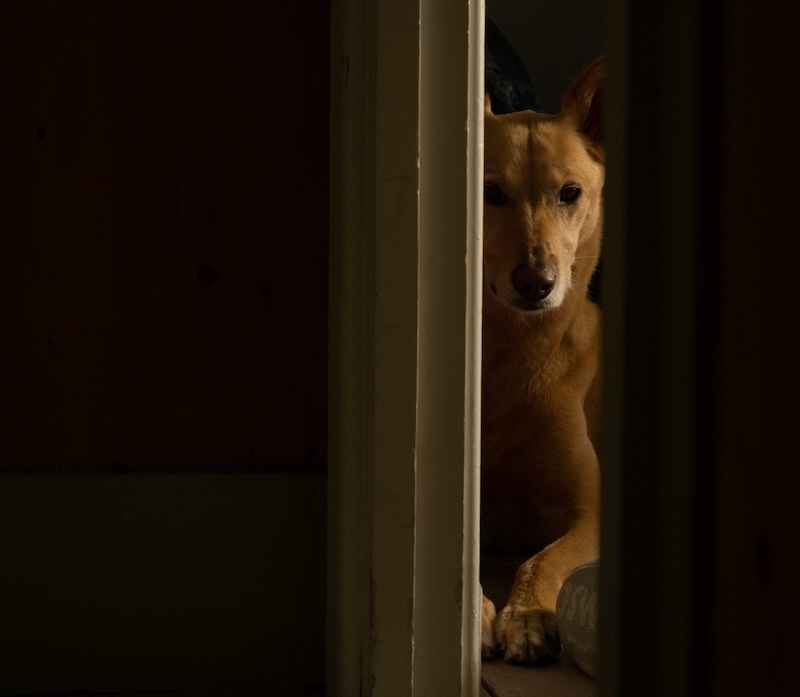
Most healthy dogs can see better in low-light conditions than humans. As a pet parent, you can watch how your dog navigates the world and notice changes in your dog’s movement or behavior over time.
Along with regular exercise, veterinary care and plenty of enrichment, such as sniffing and exploring, good nutrition is an important part of your dog’s health and overall wellness. A complete and balanced diet provides the protein, fats, carbohydrates, vitamins, minerals and essential nutrients your dog needs.
Your veterinarian can help you plan a balanced feeding routine for your individual dog based on its age, activity level and overall health.
Frequently asked questions
Can dogs see better than cats at night?
No. Although dogs have excellent low-light vision, cats see even better in the dark. Cats are more sensitive to light, and their tapetum lucidum reflects even more light than a dog’s. Plus, the vertical slits of their pupils can open wider to let in more light at dusk and dawn, all the better for hunting.
Can dogs see glow-in-the-dark toys?
Probably. Dogs can likely see glow-in-the-dark toys, though the color may look different to them than it does to you or me. Dogs see a more limited range of colors.
Why do some dogs' eyes look red in photos instead of green?
Not every dog has the same eyeshine. Some dogs, particularly those with blue eyes, may lack a tapetum lucidum. Without that reflective layer, light from a camera flash can reflect from blood vessels and tissues at the back of the eye instead, creating a red appearance similar to the “red-eye” effect in human photos.