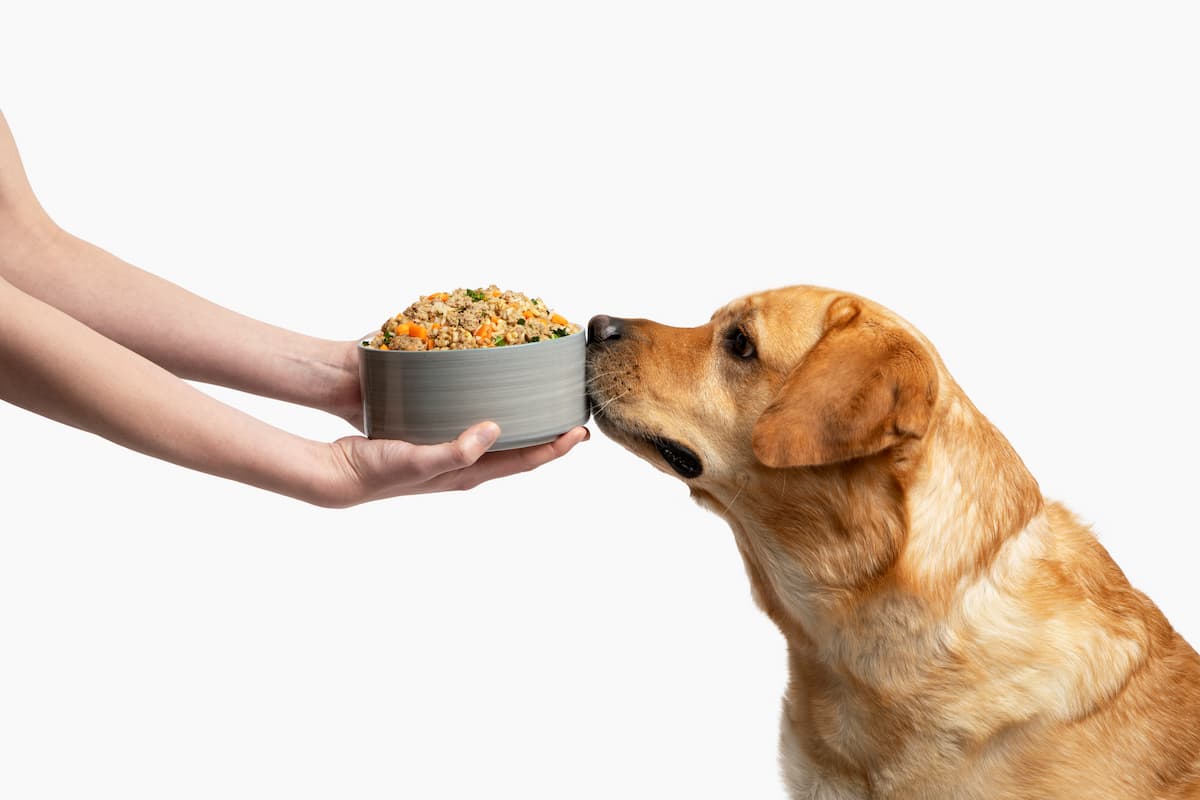
Dogs love food, and many seem to be hungry all the time. If your pup stares at the table during every meal, acts like they haven’t eaten in days, or begs when you open the fridge, it’s easy to wonder, “Why is my dog always hungry?”
Many dogs who seem hungry all the time are just really fond of food. But newly increased hunger in a dog can point to an issue with their diet, routine, or health. Our guide to hungry pups will help you figure out the cause of your dog’s increased appetite and what you can do about it.
What it means when your dog is always hungry
Veterinarians use the term polyphagia to describe excessive hunger or an increased appetite in dogs. Feeling hungry all the time can be a sign of a medical issue, but that’s not the case for every dog.
So, why do dogs love food so much? Some are enthusiastic eaters by nature, while others may carry genes that affect how their brains process signals of fullness. Recent studies in the U.K. found that 12% of Labrador retrievers and 60% of flat-coated retrievers carry at least one copy of a gene that makes them hungry all the time while also burning fewer calories.
If your dog loves food and always has, it’s likely that this is simply a feature of their personality and nothing to worry about, although you may need to work with your vet to ensure your dog doesn’t gain weight. On the other hand, if your dog suddenly starts to eat and beg a lot more than usual, it’s time to schedule a visit with your vet to check for an underlying problem.
Signs your dog’s hunger may be health-related
How can you tell if your dog’s hunger is related to a health problem? Usually, dogs with medical causes of polyphagia also have other signs and symptoms, like changes in thirst or activity levels.
Monitoring your dog’s other daily habits and keeping an eye out for any changes can help you and your vet determine if your pup’s increased hunger is caused by a treatable medical issue.
Here are some signs that may accompany an increased appetite and indicate a potential health issue you should bring to your vet’s attention.
Increased thirst and frequent urination
Polyuria (urinating more) and polydipsia (drinking more) often go hand-in-hand with polyphagia. When all three are present, the most likely causes are diabetes mellitus or Cushing’s disease (hyperadrenocorticism, or excess cortisol).
Weight loss or gain
When hungry dogs eat more yet lose weight, they may have a gastrointestinal (GI) issue such as inflammatory bowel disease or exocrine pancreatic insufficiency, which causes a lack of digestive enzymes. Diabetes is also possible, as it prevents glucose from reaching the cells where it’s needed.
When hungry dogs eat more and gain weight, low thyroid or Cushing’s disease may be to blame.
Changes in appearance
Dogs with Cushing’s disease sometimes develop distinctive changes in their appearance, including:
- A pot-belly
- Hair loss
- Darkened skin
- Skin infections
- Loss of lean muscle
Stomach upset
Vomiting or changes in stool quality, along with an increased appetite, are strong indicators of a gastrointestinal condition, a parasite infection, or a food sensitivity. Dogs with these issues may eat more because they can’t absorb enough nutrients from their meals.
Eating non-food items
A dog who starts chewing on or swallowing non-food items, such as fabric, rocks, or paper, may have a condition called pica. This behavior can be a sign of nutritional deficiencies, gastrointestinal upset, stress, or boredom. However, eating non-food items is also common in dogs and puppies without pica.
Common reasons dogs never seem satisfied

If your dog always seems hungry, one or more of these causes could be behind the change:
- Genetics and breed: Some breeds are hardwired to eat more. Researchers have found that some retrievers carry a gene mutation that affects appetite regulation, satiety, and metabolic rate. Hound breeds are also known for their food-focused nature.
- Learned behavior: If begging gets your dog a table scrap or extra treat some of the time, they’ve learned that the behavior pays off. Over time, dogs can become very convincing actors, insisting they are starving to get more of what they want.
- Stress, anxiety, and boredom: Just like in people, eating helps some dogs cope with negative emotions. Adding daily enrichment activities, such as puzzle toys, a snuffle mat, training sessions, or a trip to doggy daycare, can help dogs channel their nervous energy in a healthier way.
- Low-quality food: Dogs who eat low-protein, low-fiber, or otherwise nutrient-deficient food may not feel satisfied after meals. If your dog’s kibble is less nutrient-dense, they may need to eat more to meet their calorie needs.
- Aging and metabolic changes: An older dog who is suddenly hungry all the time could have a hormonal condition, such as diabetes, hypothyroidism, or Cushing’s disease, which can alter metabolism and appetite. They may also suffer from a slower metabolism or muscle loss with age.
- Medications: Dogs taking certain prescription drugs, including corticosteroids and some anti-seizure medications, may experience a dramatic increase in appetite.
- Health concerns: Other health issues that may contribute to changes in a dog’s appetite include gastrointestinal disorders, cancer, and cognitive dysfunction.
Ways to manage an insatiable appetite in dogs

Once you’ve consulted with your vet to rule out or address any health issues, these practical strategies can help you manage a hungry dog to avoid long-term weight gain.
Adjust portion size and meal frequency
Check with your vet to determine your dog’s daily calorie needs according to their current weight, activity level, and goal weight. Then, use the nutrition label on the food bag to determine how much food your dog should eat in a day. Use a kitchen scale to weigh the food and try splitting the daily portion into three or four smaller meals so your dog feels fuller throughout the day.
Try a different diet
For some dogs, feeding a nutrient-dense, high-calorie dog food can help them feel full after meals due to its high protein and fat content. Other dogs feel less hungry while eating a lower-calorie diet with high protein, high fiber, and lower fat. Check with your vet to see if a therapeutic, custom-designed, or commercial diet could help support your pup’s appetite and weight.
Add low-calorie veggies
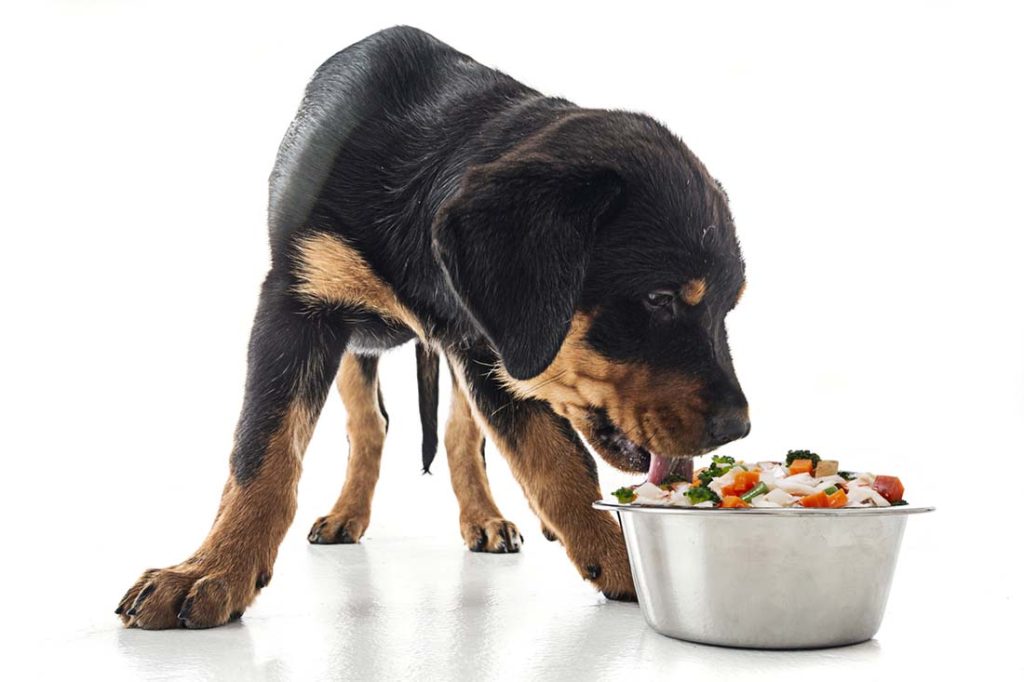
You can help your dog feel full without adding excessive calories by mixing vegetables into their daily food portions to provide fiber and food volume. You can also use veggies to replace higher-calorie treats in your pup’s diet. Green beans are a popular addition to food, while carrots, cucumbers, sweet peppers, and even broccoli make good treats.
Introduce new veggies gradually to avoid stomach upset or gas, and never feed your pup raisins, grapes, onions, or garlic, which are toxic to dogs.
Use enrichment feeding tools
Slow-feeder bowls, puzzle toys, and food-dispensing feeder toys encourage slower eating and provide mental stimulation. Fill puzzle toys with part of your dog’s daily food portion to keep them busy and help them register fullness sooner.
Keep a consistent feeding routine
Dogs thrive on routine. Feeding measured portions at set times each day helps you monitor how much your dog eats and whether they feel full afterward. Avoid free feeding (leaving food out all day), which makes it harder to track calorie intake and can encourage overeating. Keep treats to less than 10% of your dog’s daily calorie allowance.
The role of good nutrition in managing your dog’s appetite
Dogs who eat nutritionally complete, highly digestible meals may be more likely to feel satisfied after eating than dogs who eat a lower-quality diet or one that doesn’t meet their unique needs. Low-quality food high in fillers can leave any dog feeling hungry.
Feeding your dog a whole-food, balanced diet that delivers the right amounts of protein, fiber, fat, and essential nutrients may support satiety, stable energy, and long-term health in pups who seem to be hungry all the time.