By Elizabeth Kowalski, CVT, FFCP
Vitamin A is an essential nutrient for many parts of your dog’s body, from their eyes to their immune system. Dogs need adequate vitamin A at every life stage, from puppyhood through their senior years, to stay healthy and thrive.
Most dogs get enough of this fat-soluble vitamin from a well-formulated diet, but problems with getting too little or too much can be serious for dogs eating homemade food or taking supplements and treats containing vitamin A.
Here’s what you should know about what vitamin A does for dogs, sources of Vitamin A, how much dogs need per day, and how both deficiency and toxicity can affect your dog.
What does vitamin A do for dogs?
Vitamin A, also known as retinol, is a fat-soluble vitamin, which means dogs store it in their liver and fat cells. It helps maintain the function of several organ systems. It also supports your dog’s cell function and, subsequently, their overall health.
Here are some of the key functions this essential nutrient performs.
Vision and eye health
Dogs rely on vitamin A for good vision, especially in low light. A light-sensitive pigment called rhodopsin, which the body makes from vitamin A, helps the retina detect light and movement. Without it, dogs can develop night blindness or other vision problems.
Skin and coat health
Retinol supports skin cell turnover and helps the skin act as a protective barrier against bacteria and infection. This is why retinol is a key ingredient in over-the-counter and prescription human skin care products. Dogs with a vitamin A deficiency may have dry, flaky skin or a dull, thinning coat.
Immune system support
Vitamin A helps support immune function by helping cells maintain healthy mucosal surfaces in the respiratory and digestive tracts, which are the body’s first-line defenses. Your dog also needs retinol to produce white blood cells that help fight infections.
Bone development and cell growth
Dogs need vitamin A for normal bone growth and cellular differentiation. This is the process by which cells change from generic stem cells into specialized cell types throughout the body. This is especially important in puppies, whose bones and organs are forming rapidly during growth and development.
Reproductive and fetal development
Vitamin A supports reproductive function in dogs, with females needing adequate levels for ovulation and healthy pregnancies. Developing puppies in utero depend on this vitamin for normal brain and skeletal formation.
Natural food sources of vitamin A for dogs
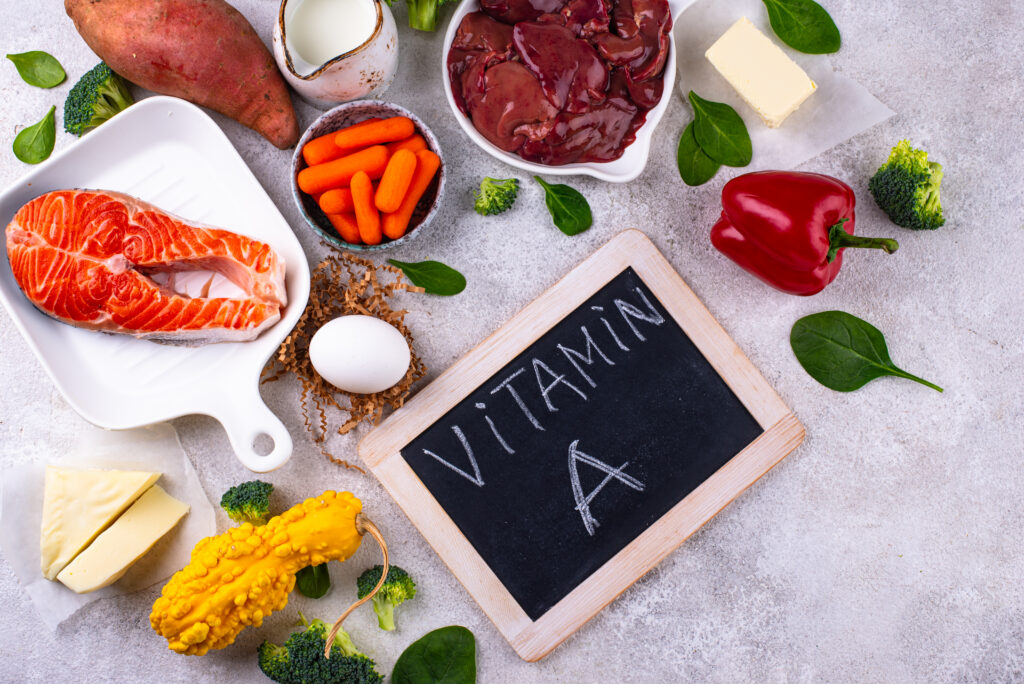
Dogs can get vitamin A from animal products that contain preformed vitamin A and plant-based foods rich in carotenoids, which are converted into vitamin A in the body.
Animal-based sources
Animal-based foods deliver preformed retinol that’s ready to use. These include:
-
- Liver or cod liver oil: Liver is a rich dietary source of retinol. This ingredient is included in many pet foods, but oversupplementing with cooked liver or liver treats can cause toxicity.
-
- Egg yolks: Eggs are a dietary source of vitamin A and provide other key nutrients, such as fatty acids and protein. Feed dogs cooked eggs only.
-
- Fish and fish oil: Fish provides retinol and omega-3 fatty acids, which may help support skin health and immune function. Some fish oil supplements for dogs also contain vitamin A.
Plant-based sources and beta-carotene
Dogs can also get vitamin A from plant-based foods that contain beta-carotene and other carotenoids. These provitamin A compounds act as precursors to retinol.
Good plant-based sources include:
-
- Carrots, sweet potatoes, and pumpkin: These popular veggies are rich in beta-carotene and make excellent treats.
-
- Leafy greens: Dark leafy vegetables, such as spinach and kale, contain carotenoids.
-
- Green beans and peas: These vegetables, and many others, provide small amounts of beta-carotene.
How much vitamin A does your dog need per day?
According to the American Association of Feed Control Officials (AAFCO) dog food nutritional guidelines, dogs of all breeds and life stages need at least 5,000 IU of vitamin A per kilogram of dry matter in their food. The National Research Council (NRC) guidelines are a bit easier to understand, recommending about 1,200 IU per 1,000 calories, with a safe upper limit of about 50,000 IU.
A 40-lb dog on a complete and balanced diet consuming roughly 1,000 calories per day should get about 1,200 IU. For reference, one ounce of beef liver contains around four times this amount. Because vitamin A is fat-soluble, your dog’s body stores excess amounts in the liver and fat cells. Over time, high-dose supplementation can cause harmful buildup.
Signs of vitamin A deficiency in dogs
Vitamin A deficiency is uncommon in dogs who eat a commercially formulated dog food. Still, it can develop in dogs fed unbalanced homemade diets for dogs or in dogs with conditions that affect nutrient absorption.
Many signs of deficiency overlap with other health issues. If any of the following issues persist or worsen, consult your veterinarian for proper diagnosis and treatment.
Skin and coat problems
Dogs with low vitamin A levels often develop dry, scaly skin with bumps or lesions. Their coat may become dull, thin, or patchy, and they may be more prone to secondary bacterial or yeast skin infections.
Night blindness and eye issues
Because vitamin A is critical for night vision, dogs who don’t get enough may struggle to navigate in low-light conditions. Some dogs with a deficiency also develop dry, irritated eyes.
Respiratory and immune weakness
A lack of vitamin A can weaken the mucosal barriers in a dog’s lungs and digestive tract, leaving them more susceptible to respiratory infections like pneumonia. These dogs may also experience immune issues that make it harder for their bodies to fight off illness.
Stunted growth in puppies
Puppies who don’t receive adequate vitamin A may experience stunted bone growth, developmental delays, and skeletal irregularities. Retinol is essential for normal growth and development in young dogs.
Vitamin A toxicity in dogs
Is vitamin A good for dogs? Absolutely, but too much can lead to serious problems. While vitamin A itself is not toxic to dogs, excessive amounts can lead to vitamin A toxicity, also called hypervitaminosis A. This can result from over-supplementation, excessive liver consumption, or ingestion of skincare products containing retinol or retinyl palmitate. Toxicity may develop suddenly from a single large overdose or gradually from chronic excess intake.
Joint stiffness and abnormal bone growth
One of the hallmark signs of chronic vitamin A poisoning is abnormal bone development. Dogs may develop irreversible extra bone deposits around their joints, leading to joint pain, stiffness, and limited mobility.
Digestive signs
Dogs with vitamin A toxicity may experience vomiting, constipation, or weight loss.
Lethargy and neurological changes
Excess vitamin A can cause lethargy, muscle weakness, or nervous system changes, particularly if toxicity continues for a long time.
Skin and coat problems
Too much vitamin A can cause many of the same skin problems as too little. Dogs with vitamin A toxicity may develop a rough, dry coat and peeling or flaking skin.
If you suspect your dog has consumed a high dose of vitamin A, contact your veterinarian or an animal poison control center right away. Liver damage can occur in severe cases, so prompt veterinary care is important.
Good nutrition helps keep your dog’s vitamin A in balance
Vitamin A is an essential nutrient that dogs need for healthy skin, clear vision, a well-functioning immune system, and proper growth. Both deficiency and excess can cause problems, but feeding a nutritionally complete, balanced diet is the best way to ensure safe vitamin A levels and overall well-being.
JustFoodForDogs recipes are formulated by veterinary nutritionists to deliver complete, balanced nutrition at every life stage. Ask your vet which formula is best for your pup or contact us to learn more.
This content is for informational use only and does not replace professional nutrition and/or medical advice, diagnosis, or treatment. It is not a substitute for and should not be relied upon for specific nutrition and/or medical recommendations. Please talk with your veterinarian about any questions or concerns.