- Shedding is normal for all dogs. They shed to replace old or damaged fur, but how much varies by breed, coat type and genetics.
- Many dogs shed most in spring and fall, especially double-coated breeds, but shedding can happen year-round, including in winter.
- Bald spots, patchy hair loss, itchy skin or sudden, dramatic shedding can point to allergies, parasites, stress, hormonal issues or nutritional imbalances.
- Regular brushing, bathing and a complete, balanced diet can help manage shedding, but nothing stops it entirely.
Dealing with fur on your clothes, floors and furniture is a normal part of pet ownership. But how much shedding is too much? Dogs shed to replace old or damaged fur as part of a natural hair-growth cycle, but how much they lose, and how quickly, varies greatly from dog to dog.
When a dog’s usual shedding pattern changes, you might worry something is wrong. Here, we cover how much shedding is normal, what causes excessive shedding in dogs, how grooming can help you manage your dog’s loose fur and when to call your vet.
How much shedding is normal for a dog?
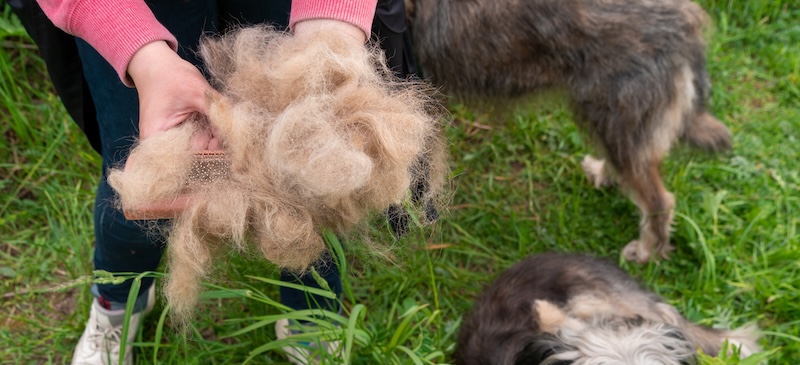
All dogs shed their fur periodically, but there’s no standard “normal” shedding pattern or amount because dogs vary widely in appearance, coat type and genetics. Weather, environment and the dog’s health also play roles.
Dogs with heavy double coats have more fur to lose, so they shed more than those with thinner single coats. Dogs with longer hair might seem to shed more than those with shorter hair because the hairballs floating around your house are more noticeable, but hair length alone doesn’t determine shedding patterns.
The biggest factor in how much a dog sheds is the hair growth cycle. Each hair follicle cycles through three growth stages:
- Anagen: This is the active growth phase. Breeds with continuously growing coats, such as poodles or shih tzus, spend more time in the anagen phase, so they shed less and need regular haircuts.
- Catagen: During this transitional phase, hair growth slows and eventually stops as the follicle shrinks, preparing the hair for its final resting stage.
- Telogen: During the resting phase, hair sits in the follicle without growing until new hair growth pushes it out.
Because shedding varies so much, the best way to know what’s normal for your pup is to monitor for changes over time.
Why do dogs shed more during certain seasons?
Dogs tend to shed most during the spring and fall in response to seasonal changes in daylight and temperature. This dog shedding season is most noticeable in double-coated breeds like Siberian huskies, Akitas and German shepherds, who may lose large clumps of their undercoat, a process also known as “blowing” the coat.
However, not all dogs shed seasonally. Individual genetics and exposure to artificial lighting and climate-controlled environments may blunt normal seasonal variation. Some dogs shed continuously, while others may shed in cycles unrelated to the season.
Many pet parents wonder, why is my dog shedding in the winter? However, shedding can be normal year-round, and you shouldn’t worry unless there has been a significant change from your dog’s normal shedding patterns.
What causes excessive shedding in dogs?
Excessive shedding in dogs can sometimes be concerning. If you notice more shedding than normal, bald spots or changes in coat quality, here’s what could be going on:
- Nutritional deficiencies or imbalances: Dogs need the right balance of fatty acids, vitamins, minerals and macronutrients to support healthy skin and normal shedding. Unbalanced or poor-quality food can cause hair loss and other coat changes.
- Allergies: Environmental or food allergies can cause skin inflammation, leading to itching or hair loss.
- Stress: Dogs may shed more when they feel anxious or after a stressful emotional or physical event, such as hospitalization or moving to a new home.
- Parasites and skin infections: Fleas, mites, mange, or bacterial or fungal infections can cause itchy skin, rashes and hair loss.
- Hormonal imbalances: Hormonal disorders like hypothyroidism and Cushing’s disease can disrupt the hair-growth cycle, causing hair to fall out, fail to grow back, or grow back thinner or more slowly.
- Seasonal alopecia: Some dogs, particularly boxers, develop darkened areas of hair loss on either side of their lower backs seasonally during cooler months or year-round. This condition is likely genetic and is not usually linked to anything harmful.
- Other health conditions: Any disorder that affects your dog’s general health can impact its stress levels, nutrient intake, nutrient absorption, and other factors that impact skin and coat health.
Because excessive shedding, thinning fur, and other skin or coat changes in dogs can have many causes, only your veterinarian can help identify the underlying issue. Contact your vet before changing your pet’s diet or trying any other treatments to help change or control your dog’s shedding.
How to manage normal dog shedding
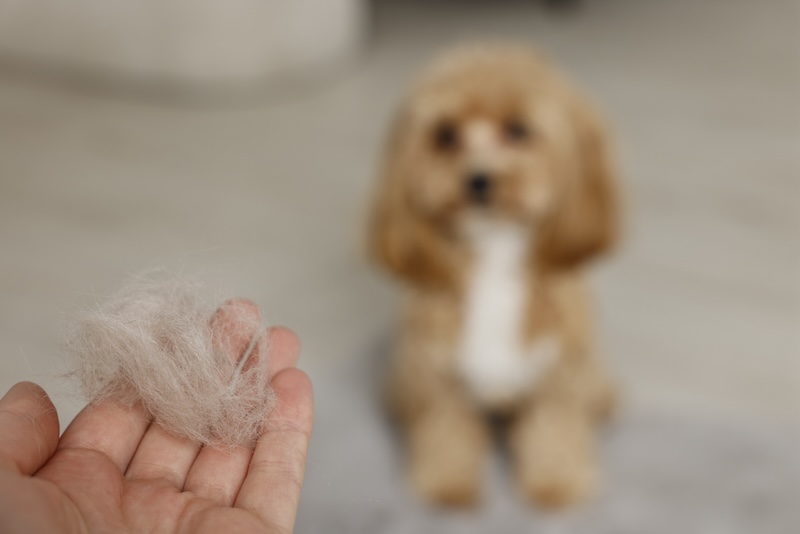
Regular grooming, at home or with a professional groomer, removes loose or dead hair, supports coat health, and reduces fur floating around your home. No grooming routine can stop shedding entirely, but a little regular maintenance goes a long way.
Here are a few practical ways to help manage shedding at home:
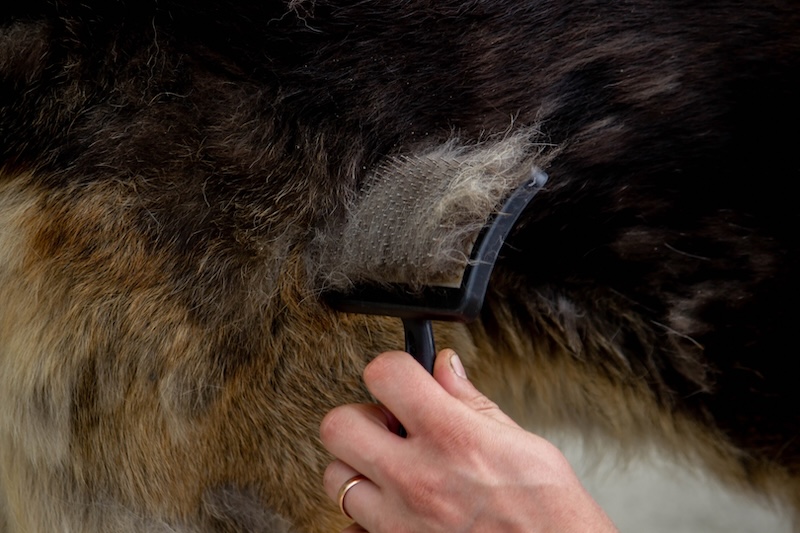
- Regular brushing: Brushing a few times per week removes dead hair before it ends up on your floors and furniture and helps distribute natural skin oils. During heavy shedding periods, you may need to brush your pet daily.
- Choose the right brush: Slicker brushes work best for longer or curly coats, rubber brushes or gloves work well on ultra-short coats, and an undercoat rake or deshedding tool can help you reach the dense undercoat on double-coated dogs.
- Bathe your dog: Lathering up with a dog-safe shampoo helps loosen and remove dead fur during a shed cycle. Avoid bathing too often, as it can dry out or irritate the skin.
- Consult a groomer: Professional grooming is best for dogs with specialized grooming needs, such as terriers with wiry coats, and can help remove as much fur as possible from double-coated breeds in peak shedding season.
When should you see a vet about your dog’s shedding?
Normal dog shedding is typically uniform across the body and doesn’t produce visible balding or thin areas. If you see any of the following along with excessive hair loss, call your vet:
- Bald spots or thinning: If you can see your dog’s skin where it wasn’t previously visible, a skin or systemic health condition may have disrupted the hair growth cycle.
- Patchy or asymmetrical hair loss: Hair loss that appears in irregular patches is often related to a skin condition, such as parasites, mange, ringworm, bacterial infections, allergies or autoimmune conditions.
- Hair coming out in clumps: Clumpy undercoat shedding is normal for some breeds, but if this is new for your dog or results in bald or thin patches, it could indicate a problem.
- Red, crusted or itchy skin: Scabs, sores, odor, redness, thickened patches or itching beneath thinning fur can signal a skin or other health issue.
- Sudden, dramatic shedding: A sharp increase in hair loss over a short period, outside of normal seasonal changes, should prompt a vet visit.
- Accompanying health changes: Changes in your dog’s weight, appetite, thirst, urination, energy or behavior that accompany increased shedding can indicate a systemic health issue, such as thyroid disease, Cushing’s disease or organ dysfunction.
Veterinarians use a combination of tests, including physical exams, skin scrapings, microscopic exams, blood tests or allergy tests, to help identify the cause of your dog’s excessive shedding and determine the best course of treatment.
Supporting your dog’s shedding with the right nutrition
Shedding is normal for dogs and can occur seasonally or year-round. Regular grooming can help keep your dog’s skin and coat in good condition and reduce loose fur in your home, though nothing will stop shedding completely.
Normal shedding depends on your dog’s breed and genetics. Learning your dog’s shedding patterns can help you spot changes and know when to call the vet about excessive shedding, thinning fur or skin issues.
Good nutrition supports your dog’s overall well-being, including skin and coat health. JustFoodForDogs develops diets to meet each dog’s nutritional needs, including custom diets and vet-prescribed formulas for dogs with specific skin, coat or health concerns. Contact our team to learn more and find the right fit for your pup.
Frequently asked questions
What are the stages of a dog's hair-growth cycle?
A dog's (and human’s) hair grows in three phases. During the anagen phase, hair grows actively. During the catagen phase, growth slows, and the follicle begins to shrink. During the telogen phase, hair rests in the follicle until new hair growth pushes it out, causing shedding.
How can I reduce my dog's shedding?
You can’t stop your dog from shedding, but you can manage it with regular brushing, bathing or professional grooming. Feeding your dog a complete, balanced diet suited to her individual needs may help support healthy skin and a normal hair growth cycle. If your dog starts shedding much more than usual or develops skin changes, call your vet.
Which dog breeds tend to shed the most?
Breeds known for heavy shedding often have thick double coats, including Labrador retrievers, golden retrievers, German shepherds, Siberian huskies, Akitas, Chow Chows and Alaskan malamutes. However, coat density and shedding patterns can vary greatly between individuals, even within a given breed.
Can pregnancy, giving birth, or spaying and neutering affect a dog's shedding?
Hormones are chemical messengers that help regulate many bodily functions, including hair growth and loss cycles. Hormonal changes from pregnancy, lactation, birth, spaying, neutering or stress can temporarily impact a dog’s shedding pattern. Hormonal diseases, including thyroid disease and Cushing’s syndrome, may cause chronic issues with hair loss or skin changes.
- Whitaker DT, Ostrander EA. Hair of the Dog: Identification of a Cis-Regulatory Module Predicted to Influence Canine Coat Composition. Genes (Basel). 2019 Apr 26;10(5):323. doi: 10.3390/genes10050323. PMID: 31035530; PMCID: PMC6562840.
- American Animal Hospital Association. (2026, April 3). Why does my pet shed? Causes, seasonal changes, and when to worry. AAHA.
- Amundson LA, Millican AA, Swensson E, McGilliard ML, Tomlinson D. Effect of Supplemental Trace Mineral Source on Haircoat and Activity Levels in Senior Dogs. Animals (Basel). 2025 Feb 26;15(5):686. doi: 10.3390/ani15050686. PMID: 40075969; PMCID: PMC11899368.
- Vetster Editorial Team. (2025, June 30). Nutritional deficiencies and hair loss in dogs. Vetster.
- Central Kentucky Veterinary Center. (2026, May 1). How grooming supports healthy skin, a shiny coat, and early problem detection.
- Scarampella F, Roccabianca P. Alopecia Areata in a Dog: Clinical, Dermoscopic and Histological Features. Skin Appendage Disord. 2018 Apr;4(2):112-117. doi: 10.1159/000479781. Epub 2017 Sep 9. PMID: 29765971; PMCID: PMC5939680.
- Gewirtz, E. W. (2026, October 6). What is a double-coated dog? Coat types, grooming, and care. American Kennel Club.
- Reichler IM, Welle M, Eckrich C, Sattler U, Barth A, Hubler M, Nett-Mettler CS, Jöchle W, Arnold S. Spaying-induced coat changes: the role of gonadotropins, GnRH and GnRH treatment on the hair cycle of female dogs. Vet Dermatol. 2008 Apr;19(2):77-87. doi: 10.1111/j.1365-3164.2008.00652.x. PMID: 18336424.
- Kutzler MA. Possible Relationship between Long-Term Adverse Health Effects of Gonad-Removing Surgical Sterilization and Luteinizing Hormone in Dogs. Animals (Basel). 2020 Apr 1;10(4):599. doi: 10.3390/ani10040599. PMID: 32244716; PMCID: PMC7222805.