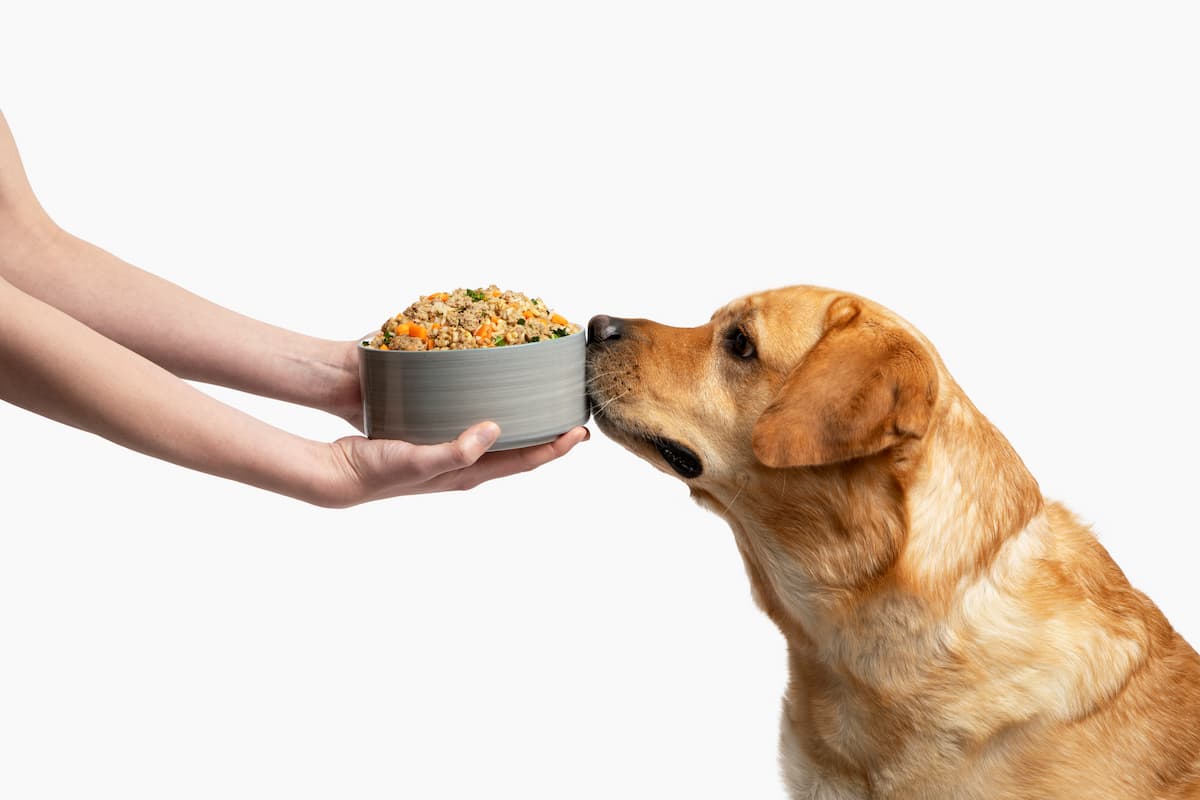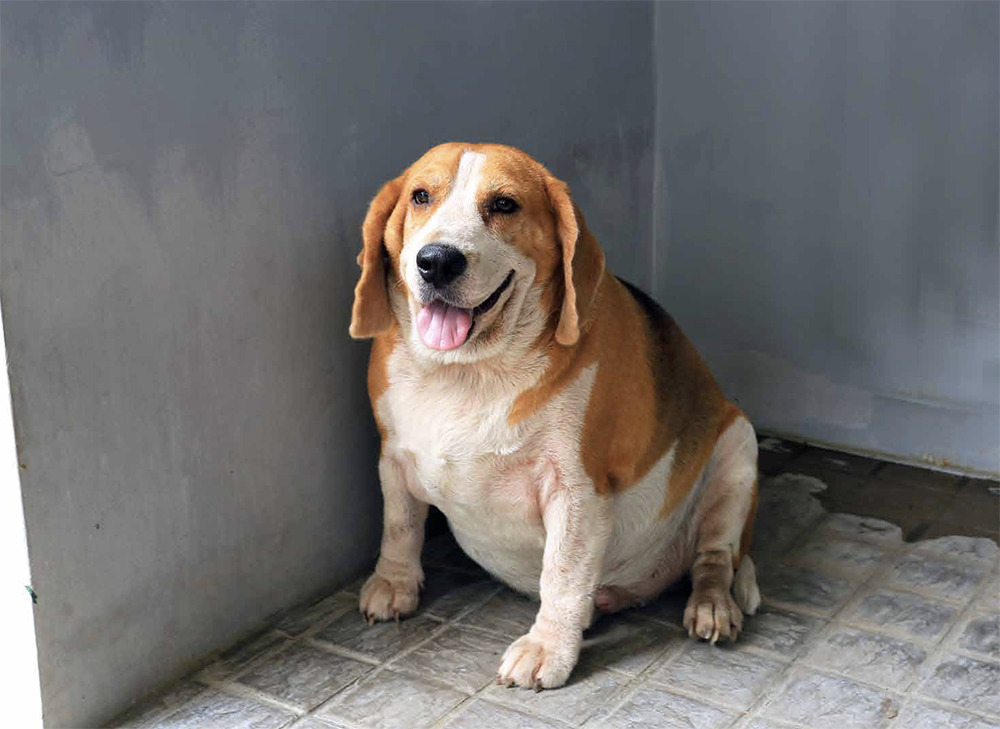
Some pet parents try everything before switching their pup to appropriate food for overweight dogs. If you’ve tried everything — portioning out the kibble, limiting snacks and dog treats, never (OK, rarely) offering your dog table scraps — but your pooch is still packing on the pounds, know that you’re not alone in your struggle.
According to the most recent data from the Association for Pet Obesity Prevention, more than 59 percent of dogs are overweight.
The good news is that sustainable weight loss in dogs is achievable, and nutrition is one of the most powerful levers available. This guide is designed to help you understand how weight-loss dog foods actually work. You’ll also learn how to choose food safely for your dog’s specific situation and how to build the kind of consistent, practical routine that supports lasting results rather than short-term fixes.
Why should my dog lose weight?
Although it’s tempting to view your adorably pudgy pup’s extra pounds as simply “more to love,” the sobering truth is that excess weight has a serious impact on your dog’s health. And there’s nothing adorable about that.
The conditions below aren’t reserved for severely obese dogs — research shows risk climbs with even modest weight gain:
- Type 2 diabetes. Excess body fat impairs insulin sensitivity, forcing the pancreas to work harder to regulate blood sugar. Overweight dogs are diagnosed with diabetes 3x more often than dogs that maintain an ideal weight.
- Heart disease. Obesity in dogs can change the structure of their hearts, impair cardiac function, and contribute to heart disease.
- Osteoarthritis. Excess weight stresses your dog’s joints, increasing wear and tear and contributing to the development and progression of osteoarthritis
- Joint injuries. Heavier dogs place greater mechanical stress on ligaments and tendons with every step.
- High blood pressure. Obesity disrupts normal blood pressure regulation, straining the heart, kidneys, and blood vessels and increasing the risk of secondary organ damage over time.
- Respiratory problems. Fat deposits around the chest and airway restrict normal breathing.
- Certain cancers. Chronic low-grade inflammation driven by excess fat tissue has been linked to higher cancer risk in dogs, mirroring patterns well-established in human medicine.
- Reduced lifespan. Taken together, these compounding health burdens translate to real years lost — studies suggest our dog’s extra pounds contribute to a shorter lifespan by up to 2.5 years.
How to Tell If My Dog Is Overweight?
Addressing weight gain before it becomes a bigger health issue is important. But it’s not always easy to tell when a dog is overweight.
To prevent obesity from becoming a serious health threat for your dog, it’s best to take a proactive approach. That’s why Jessica Wilson, DVM, suggests using the same technique veterinarians use to gauge your pet’s weight: body composition score.
Because dogs come in all shapes and sizes due to breed, sex, and age, there’s no universal weight chart that applies to all dogs. Telling whether a dog is overweight is less about the number on the scale and more about their body condition score.
Veterinarians rely on a visual assessment and physical exam to assign a body composition score. The score is based on how much fat your dog is carrying on their frame: An overweight dog will have:
- a sagging stomach
- thick waist
- broad back
- a layer of extra padding covering their ribs.
Large and small breeds alike with an ideal body composition have visible waistlines, an abdominal tuck where their stomach arches toward their hips, and no noticeable fat covering their ribs.
Key nutrients to look for in weight loss dog food
Protein is the most critical nutrient during calorie restriction. Without enough of it, the body breaks down muscle for energy rather than drawing on fat stores. The best dog food will have a protein as the first ingredient.
Fiber adds bulk to meals without adding meaningful calories, slowing digestion and extending fullness.
Moisture content increases meal volume without increasing caloric load. Fresh and wet foods with 70–80% moisture are significantly more filling than the same calories in dry kibble.
Fat should be moderated but not eliminated. It’s essential for absorbing fat-soluble vitamins, supporting skin and coat health, and making food palatable. The goal is appropriate fat from quality sources — not the lowest fat content possible.
L-carnitine is an amino acid compound that supports fat metabolism by helping transport fatty acids into cells to be burned for energy. Its presence in a weight-management formula is a good indicator that the diet was designed with fat loss — not just calorie reduction — in mind.
Omega-3 fatty acids help support the body’s inflammatory response during weight loss protects joints and metabolic health as pounds come off.
What are the best foods for weight loss in dogs
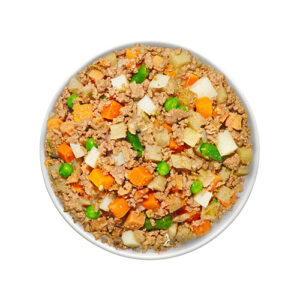
There’s no single lowest-calorie dog food or best dog food for weight loss. The right choice depends on your dog’s medical history, how much weight they need to lose, and whether they can stay comfortable and satisfied during calorie restriction. Understanding how different dog food formats work helps you have a more informed conversation with your vet rather than defaulting to whatever’s marketed as the “best dog food” for weight management.
Veterinary therapeutic diets
Prescription weight-management diets are often formulated to deliver fewer calories per cup while using higher fiber content to help dogs feel full on a reduced volume of food. Vet-recommended dog food for weight loss typically requires a veterinary prescription.
High-protein commercial weight control dog foods
Over-the-counter weight loss diets for dogs vary widely in quality and actual calorie reduction. The better dog food options use higher protein content to preserve lean muscle mass during weight loss.
Fresh or wet dog food
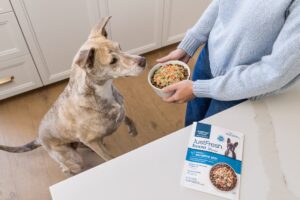
To help your dog lose weight, Dr. Wilson recommends weight-loss dog food made from high-quality, fresh, whole-food ingredients as the gold standard for weight loss and overall wellness in dogs.
“With fresh whole food, the big advantage is that your dog’s going to absorb more of the nutrients and can actually eat a larger volume of food and feel full. They’ll also benefit from increased energy from the nutrients,” Dr. Wilson says. “You’re going to have an easier time helping them lose the extra weight.”
Healthy Weight dog food, for example, is specifically formulated to help dogs reach and maintain a healthy weight while supporting lean muscle mass. The Fish & Sweet Potato meal is another low-fat dog food recipe with healthy carbohydrates, L-carnitine-rich fish, and antioxidants that Dr. Wilson recommends.
“It’s made with fresh whole foods, including white fish that is low in fat and rich in healthy fatty acids. And it contains a lot of fiber from vegetables, which promotes satiety,” says Dr. Wilson.
Homemade diets under veterinary supervision
Homemade diets give the most control over ingredients and calorie density, but they carry real risk if not properly balanced. Nutrient deficiencies are common in home-prepared diets put together without professional guidance. If you’re interested in this route, working with a board-certified veterinary nutritionist to develop a recipe tailored to your dog’s specific needs is essential, not optional. A nutritionist can also adjust the plan as your dog loses weight, since calorie and nutrient needs shift over the course of a weight-loss program.
How to choose the best weight loss food for your dog
Navigating the options is easier when you have a clear starting point. Follow these steps to move from assessment to action:
- Start with a veterinary assessment. Before changing your dog’s food for weight loss, get a professional baseline.
- Calculate a realistic calorie target. Your vet or a veterinary nutritionist can determine your dog’s resting energy requirement and set a daily calorie ceiling designed to produce gradual, safe weight loss.
- Choose a dog food format that supports satiety at reduced intake. Select a dog food that delivers complete, balanced nutrition within that budget while keeping your pup comfortable and satiated.
Feeding strategies that promote weight loss
Choosing the best dog food is only part of the equation — how and when you feed your dog matters just as much. These practices help maximize results while keeping your dog comfortable enough to stay the course toward a healthy weight.
- Measure every meal accurately. Eyeballing portions is one of the most common reasons weight-loss efforts stall. Use a digital kitchen scale rather than a measuring cup — kibble density varies enough between brands that volume measures of dog food can be unreliable.
- Split daily portions of dog food into smaller meals. Two or three meals a day rather than one large one may help stabilize blood sugar and may reduce hunger between meals.
- Restructure how you use treats. Treats can account for 10–30% of daily calories without pet parents realizing it. Rather than cutting them out entirely, factor them into the daily calorie budget — low-calorie options like carrot slices or plain cooked chicken let you reward freely without derailing progress.
- Use dog food as enrichment. Kibble slow-feeder bowls, dog food puzzle feeders, and snuffle mats extend mealtime and promote a greater sense of satiety for overweight dogs from the same number of calories, while also reducing food-obsessive behavior between meals.
- Track progress consistently. Weekly weigh-ins at the same time of day give meaningful trend data. A simple log of weight, food amount, and treat intake gives your vet something concrete to work with to help your dog continue to lose weight.
- Rule out medical causes if progress stalls. “If your dog’s weight is not moving even after you’ve dropped the calories, then there may be something medically going on with your overweight dog,” adds Dr. Wilson. Conditions like hypothyroidism and Cushing’s disease are common drivers of weight gain and resistance to loss.
Help your dog lose weight with a balanced, targeted diet
The best dog food for successful weight loss depends on your individual dog’s needs. Feeding less is necessary, but it’s not sufficient on its own. A well-designed weight-loss diet needs to preserve lean muscle mass, support satiety so dogs remain comfortable during restriction, and deliver complete, balanced nutrition at reduced calorie levels — because a dog losing weight is still a dog with full nutritional needs.
Sources
Byers, Christopher G., Cindy C. Wilson, Mark B. Stephens, Jeffrey L. Goodie, F. Ellen Netting, and Cara H. Olsen. 2014. “Owners and Pets Exercising Together: Canine Response to Veterinarian-Prescribed Physical Activity.” Anthrozoös 27 (3): 325–33. https://doi.org/10.2752/175303714×14036956449224.
Anderson, Katharine L., Helen Zulch, Dan G. O’Neill, Richard L. Meeson, and Lisa M. Collins. 2020. “Risk Factors for Canine Osteoarthritis and Its Predisposing Arthropathies: A Systematic Review.” Frontiers in Veterinary Science 7 (220). https://doi.org/10.3389/fvets.2020.00220.
Tropf, M., O.L. Nelson, P.M. Lee, and H.Y. Weng. 2017. “Cardiac and Metabolic Variables in Obese Dogs.” Journal of Veterinary Internal Medicine 31 (4): 1000–1007. https://doi.org/10.1111/jvim.14775.
Heeley, Angela M., Dan G. O’Neill, Lucy J. Davison, David B. Church, Ellie K. Corless, and Dave C. Brodbelt. 2020. “Diabetes Mellitus in Dogs Attending UK Primary-Care Practices: Frequency, Risk Factors and Survival.” Canine Medicine and Genetics 7 (1). https://doi.org/10.1186/s40575-020-00087-7.