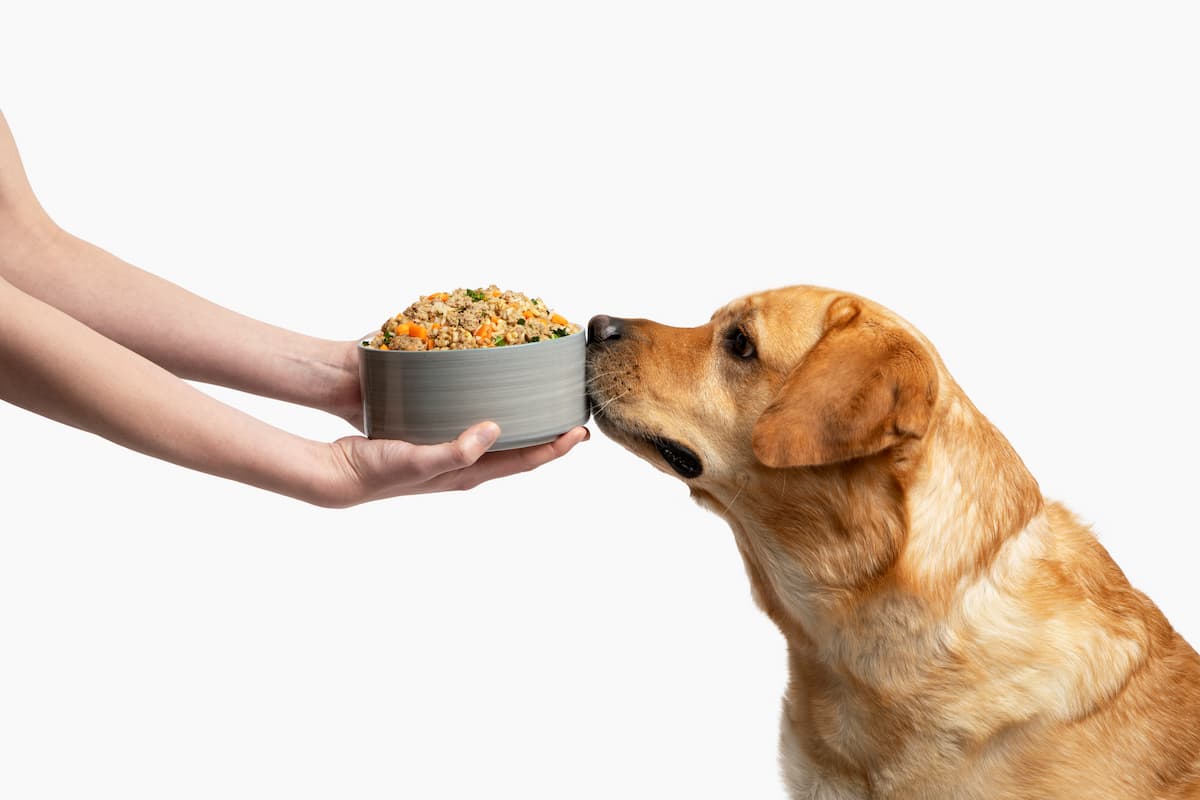
Many dog owners are unaware that changing their pet’s food is more complicated than scooping a new food into the bowl. Whether you’re switching dog food because of dietary needs, moving through life stages, or trying a new food brand, your dog’s digestive system needs time to adjust.
A sudden diet change can lead to gastrointestinal issues, such as gas, loose stool, or belly pain. A gradual transition is the best way to prevent these problems and protect your dog’s health and GI comfort when trying a new food.
This guide can help you understand when to change dog food, the best way to transition dog food, and how to monitor your pup during the process. Whether you’re introducing adult dog food, puppy food, wet food, or a small-breed meal, here’s how to make the transition as smooth as possible.
Why should I change my dog’s food?
Pet parents may switch dog food for various reasons, ranging from picky eating to evolving nutritional needs. Your pet’s energy requirements and health needs can change over time, making it essential to re-evaluate your pup’s diet periodically.
Here are a few of the most common reasons pet parents transition their dog to a new food:
- Your current food is no longer available: If your pup’s food has been discontinued, recalled, or is out of stock for the foreseeable future, you’ll need to choose a different dog food. Ideally, you should look for one with a nutritional profile and ingredient list similar to the original diet, and ensure it is free of foods that are toxic to dogs.
- Your veterinarian recommends a different diet: Your vet may suggest changing dog food if your pet has food allergies, sensitive digestion, or a medical condition that requires dietary support. Veterinary diets, including those with a novel protein source, can help manage digestive issues, skin problems, and more serious health conditions, such as kidney disease.
- Your dog has entered a new life stage: Puppies, adult dogs, and senior dogs each have different nutritional needs. Puppy food includes a high calorie count and the right balance of nutrients to support steady growth, while senior dog foods might have lower calories, easily digestible ingredients, and added joint support supplements. As your dog matures, your veterinarian may recommend switching to an age-appropriate dog food.
How can I switch my dog’s food safely?
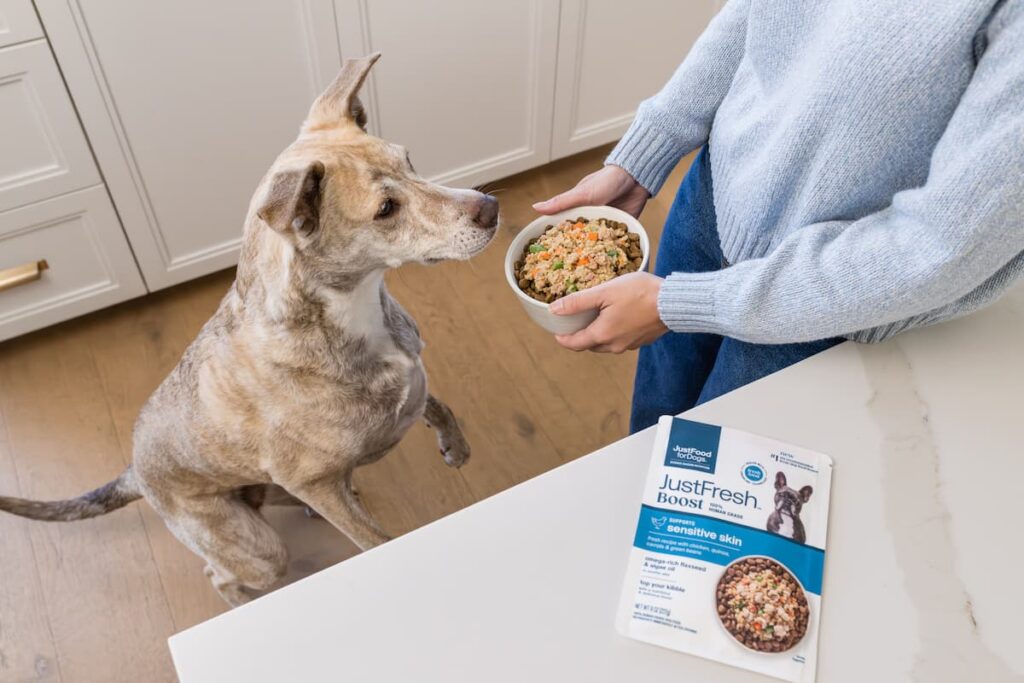
Whether you’re introducing a new protein, trying a different food brand, or moving from puppy food to adult dog food, switching dog food too quickly can upset your dog’s digestive tract. A sudden dietary change may lead to issues, such as soft stools, vomiting, or loss of appetite.
A slow transition is best when switching foods. Follow these tips to transition your dog to a new food safely and gradually.
Start with a small amount of the new food
On day one, mix only a few bites of the new food into your dog’s current food. This initial trial gives your pup’s digestive system time to adjust to new ingredients and allows you to ensure your pet likes the taste of the new diet and doesn’t have any serious reactions.
Gradually increase the new food over several days
Each day, increase the portion of new food and decrease the portion of old food by 10% to 20%. A typical transition should take about 7 to 10 days, but you can extend or shorten the transition period depending on your dog’s sensitivity and your reason for switching pet foods.
Monitor your dog’s appetite and stool
Throughout the switch, monitor your dog for signs of digestive upset, such as soft stools, gas, or refusal to eat. These could be symptoms that you are changing dog food too quickly, which indicates you should slow down. Every dog is different, and some dogs handle dietary changes better than others.
Adjust based on your dog’s tolerance
If your pup develops gastrointestinal issues, go back to the last ratio that worked and wait a few days before increasing the new food again. Adding a pet-safe probiotic to support digestion and reduce stomach upset can also help you transition to a new dog food safely.
Dog food transition schedule
Once you’ve decided to switch your dog’s food, following a consistent transition schedule can make the process easier on your pup’s digestive system. Each dog is an individual, but the following general schedule can work well for most dog breeds, life stages, and meal types.
Days 1–3: Introduce the new food gradually
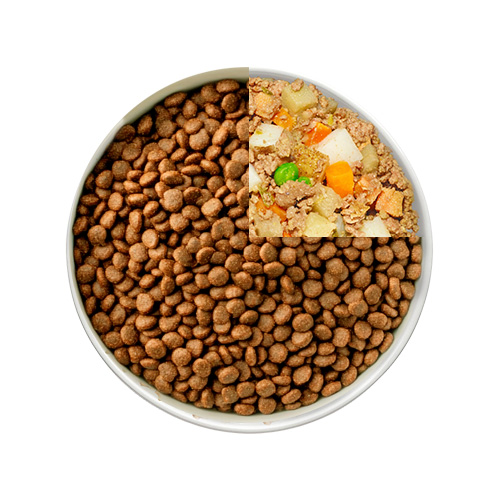
Start by feeding meals that contain 75% of the current food mixed with 25% of the new food. Mix the two thoroughly so your pup gets used to the texture, smell, and new ingredients. Watch closely for any changes in appetite, stool, or behavior.
Days 4–6: Increase the portion of new food
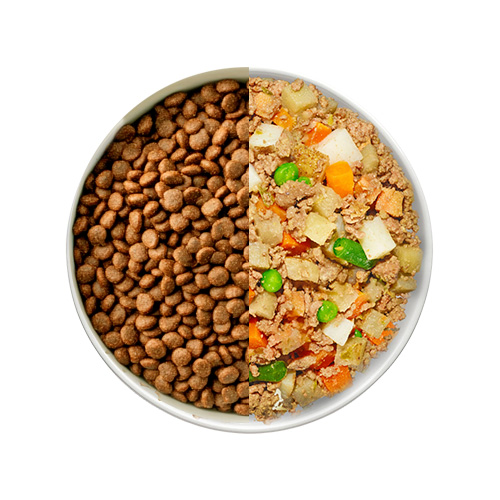
If your dog is eating normally and their stool looks healthy, bump up the ratio to 50% new food and 50% old food. Continue to assess how well they’re tolerating the change and slow down if digestive issues appear.
Days 7–9: Shift to mostly new food
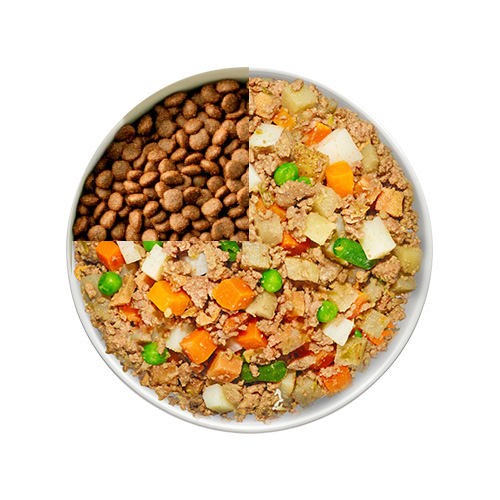
Feed 75% new food and 25% old food. By now, your dog’s digestive system should be mostly adapted to the new diet. Continue monitoring your pet’s appetite and willingness to eat to ensure they’re accepting the new food’s taste.
Days 10–12: Complete the transition to the new food
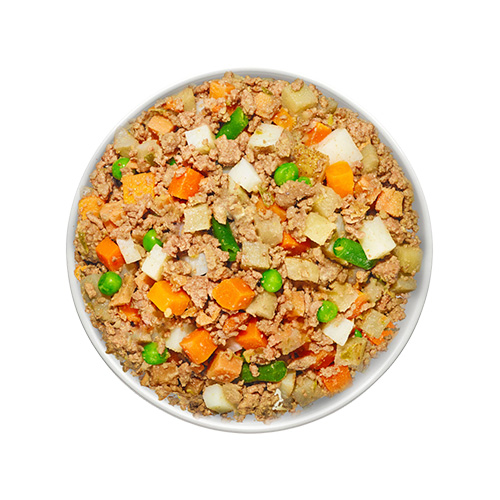
You can feed 100% new food if the transition has gone smoothly up until this point. If your dog is eating well and their tummy is happy, you’ve successfully made the switch. Continue feeding the new diet consistently and follow your veterinarian’s recommendations for calories and portions.
Keep in mind that this schedule is only a general guideline. If your dog has food allergies or a sensitive stomach, you might need to extend the transition process. If your pup has not been eating well or is dealing with a medical condition, your vet may recommend a faster change.
Make food changes easier
Switching your dog’s diet is easier when you choose food that’s made for the job. JustFoodForDogs shelf-stable meals come in resealable pouches containing nutrition-packed, preservative-free, veterinarian-formulated recipes that are gentle on digestion and complete for daily nutrition.
Because our fresh meals don’t require refrigeration or freezing until they are opened, they’re ideal for convenient, gradual mixing during a pet food transition. Our easily portioned, soft-textured meals add excitement to mealtime, whether served as a complete meal or as a topper.
JustFoodForDogs offers a variety of puppy food and adult dog food formulas to support overall health and wellness, and facilitate a smoother transition to a new dog food. Try our fresh-frozen, shelf-stable, and homemade dog food options to see what fresh, human-grade food can do for your dog.