If you’ve ever watched your dog gleefully drop their shoulder and grind themselves into a pile of poo, you already know the mix of horror and helplessness that follows. It’s one of the most baffling and unpleasant things our canine companions do.
Before you write it off as your dog simply being disgusting, it’s worth understanding that this behavior is completely natural. Dogs explore the world primarily through scent, and rolling in smelly substances is deeply wired into who they are.
This guide will answer the question, Why do dogs roll in poop? It will also reveal what it tells us about their instincts, and most importantly, what you can do to stop it from happening again.
Why Do Dogs Rub Themselves in Poop?
It’s entirely normal. As frustrating as it is for dog owners, rolling in foul-smelling substances isn’t bad behavior in the way chewing furniture or jumping on guests is. It’s instinctual, sensory-driven, and rooted in your dog’s evolutionary history.
Dogs don’t see the world the way we do. Their sense of smell is estimated to be 10,000 to 100,000 times more sensitive than ours, and scent is their primary way of gathering information, communicating, and interacting with their environment. What smells unbearable to us can be deeply fascinating, even irresistible, to them.
That said, understanding why dogs do this can help you manage it more effectively.
5 Common Reasons Dogs Roll in Poop
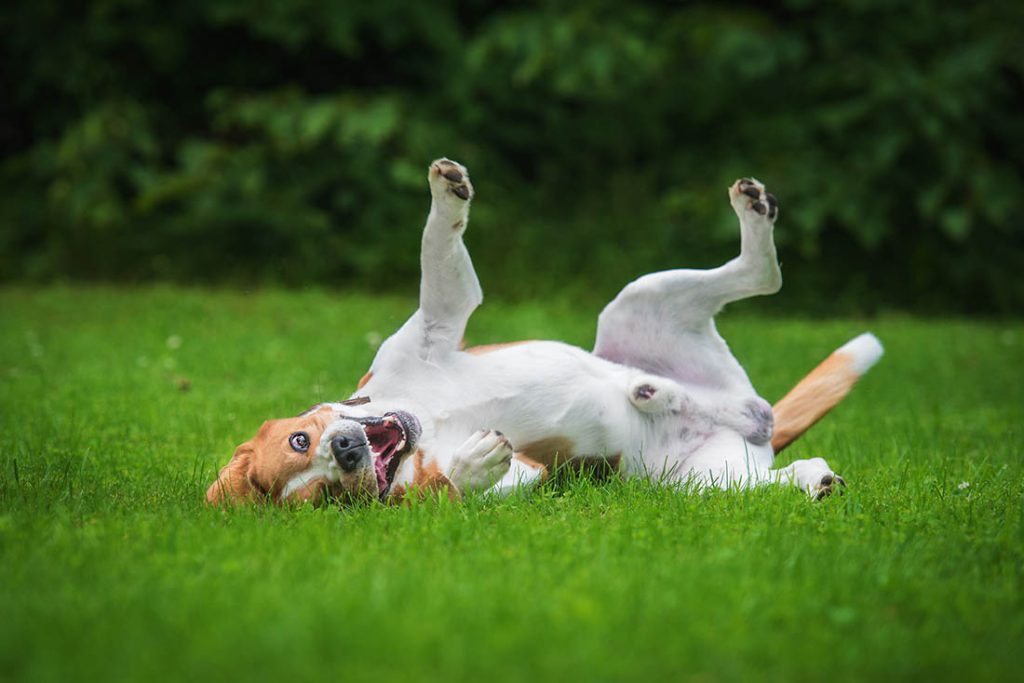
Here are five common reasons that answer the question, why do dogs like to roll in poop.
1. Instincts Inherited from Wild Ancestors
The most widely accepted explanation is evolutionary. Wolves and wild dogs are thought to roll in strong odors, including animal carcasses, poo, and other pungent substances, to camouflage their own scent. By masking their natural smell with something else, predators could sneak up on prey without being detected or hide from larger predators themselves.
Your domesticated dog doesn’t need to hunt for dinner, but those instinctual drives haven’t disappeared. When your pup catches a whiff of something potent and drops into a roll, they may be acting out behavior that served the dog family well for thousands of years.
2. Masking Their Own Scent
Closely tied to the above, some dogs might roll in poop specifically to hide their own scent from other animals. In the wild, a dog or wolf that smelled too strongly of themselves could alert prey before getting close enough to hunt. Rolling in a dead animal or strong-smelling waste helped disguise that scent signature.
Even in suburban backyards, this instinct can kick in. Your dog isn’t trying to annoy you; they’re following a deeply embedded evolutionary script.
3. Communication with Other Dogs
Dogs communicate through scent in ways we can barely imagine. Rolling in a particular odor and then returning to the pack is thought to be a way of sharing information. Some researchers believe that when a dog rolls in something smelly and trots back to their companions, they’re essentially saying, “I found something interesting; come sniff this.”
It’s a form of canine social communication, using their fur as a message board. Next time your dog comes home smelling terrible, just know they may have been trying to tell you something.
4. Attraction to Strong Smells
Why do dogs roll in stinky stuff even when there’s no clear survival advantage? The answer is because they find it genuinely appealing. Strong odors are stimulating to a dog’s powerful nose. What registers as foul-smelling to us can be rich, complex, and interesting to them, like a particularly captivating perfume, from their perspective.
Dogs might also roll in unfamiliar scents simply out of curiosity. Their nose picks up layers of information in an odor that we can’t begin to process, making even a pile of poo a potentially compelling sensory experience.
5. Seeking Attention or Stimulation
Some dogs learn that rolling in smelly things gets a big reaction from their owners. Even negative attention, the gasp, the chase, the bath, can be rewarding for a dog that’s bored or under-stimulated. If your dog rolls in poo and you immediately drop everything to deal with them, they’ve successfully captured your full attention.
A dog that frequently seeks out disgusting things to roll in may simply be telling you they need more engagement, exercise, or mental stimulation.
How to Stop My Dog Rolling in Poop
Understanding why dogs like to roll in poop is the first step. The second step is doing something about it. Here are practical strategies that work.
Supervise Outdoor Time Closely
Prevention is far easier than cleanup. When your dog is outside, especially in areas where other animals have been, keep a close eye on them. Learn to recognize the body language that precedes a roll: nose down, circling, slowing down, then that telltale shoulder drop. If you catch them in the early stages, you can intervene before they commit.
Train a Strong “Leave It” Command
A reliable “leave it” cue is one of the most useful tools in any dog owner’s arsenal. Work on it regularly in low-distraction environments and gradually practice it around increasingly tempting smells. When your dog reliably responds to “leave it” on command, you have a real-time tool to redirect them away from anything unpleasant before they make contact.
A professional dog trainer can help if your dog is particularly stubborn about this behavior or if your recall isn’t strong enough yet.
Redirect with Treats or Toys
Positive reinforcement works. If your dog starts sniffing around a suspicious patch of ground, call them away and immediately reward them with a high-value treat or a favorite toy. The goal is to make coming to you more rewarding than rolling in poo.
High-quality treats make excellent training rewards. Something like JustFoodForDogs Treats, made with real ingredients and no artificial additives, can be a compelling motivator even for dogs with a nose for the disgusting.
Keep Your Dog Mentally and Physically Stimulated
A tired, well-stimulated dog is less likely to go looking for sensory thrills. Make sure your dog gets adequate exercise, enrichment activities, and interaction throughout the day. Sniff walks (where you let your dog lead and explore scents at their own pace) are a particularly good outlet; you’re satisfying that instinctual need to engage with smells in a way you can control.
Use a Leash in High-Risk Areas
In areas where you know poo or dead animal carcasses are likely, such as trails, parks, and fields, keep your dog on a leash. It removes the opportunity entirely. You can give more freedom in environments you know are clean and low-risk.
Clean Up Waste Promptly
If your dog tends to roll in their own poo or that of other pets in your garden, prompt cleanup is essential. Remove waste as soon as possible so there’s simply nothing to roll in. The same applies to any communal spaces you manage.
Cleaning Your Dog After a Poop Rolling
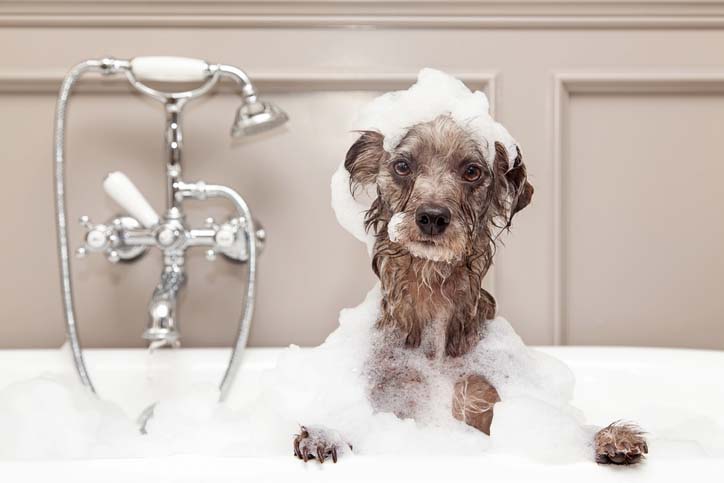
Sometimes you don’t catch it in time. Here’s how to deal with the aftermath efficiently.
Remove Excess Debris Safely
Before bathing your dog, use paper towels or gloves to remove any large bits of mess from their fur. Do this outdoors if possible. Avoid rubbing the debris further into the coat; blot and lift rather than wipe.
Bathe Your Dog with Odor-Neutralizing Shampoo
A good dog shampoo designed to neutralize odor is essential. Regular shampoo may clean the fur but leave the smell behind. Look for an enzymatic or odor-neutralizing dog shampoo that breaks down the compounds causing the stink rather than just masking them. You may need more than one wash for particularly foul encounters.
Clean Collars, Harnesses, and Bedding
Poo odor clings to fabric and plastic hardware. Don’t forget to wash your dog’s collar, harness, and any bedding they’ve come into contact with after the incident. Otherwise, the smell lingers and can transfer right back to your freshly bathed pet.
Avoid Reinforcing the Behavior During Cleanup
Try to keep bath time calm and matter-of-fact. Fussing over your dog, laughing, or making a big production of it can inadvertently reward the behavior. Clean them up efficiently without turning it into an event.
Keep Your Dog Healthy and Fresh from the Inside Out
While you can’t completely override millions of years of instinct, proper care goes a long way. A dog that gets enough exercise, mental enrichment, consistent training, and a high-quality diet is generally a calmer, more responsive pet, and less likely to go hunting for the nearest pile of something revolting.
Good nutrition supports coat health, reduces skin issues that might make rolling feel satisfying, and contributes to overall well-being. A healthy, well-cared-for dog is simply easier to manage in every area of life.
Final Thoughts
Dogs rolling in poop is one of those behaviors that manages to be equal parts baffling and revolting, but it makes perfect sense from your dog’s perspective. Whether they’re channeling their inner wolf, communicating with the pack, or just enjoying a particularly interesting smell, it’s an instinctual behavior with deep evolutionary roots. Understanding why dogs rub themselves in poop doesn’t make the smell any better, but it does make the whole thing a little easier to live with.