- Puppies typically open their eyes roughly 10 to 14 days after birth, sometimes one eye before the other.
- Newly opened eyes can only detect shapes, light and movement — clear vision doesn't develop until around eight weeks of age.
- All puppies are born with blue eyes, with permanent adult eye color settling in over the following weeks.
- Contact your vet if eyes are still closed past 14 to 16 days, or if you notice discharge, swelling or redness.
Bringing home a new puppy is exciting, but it also comes with a long list of questions about what’s normal and what’s not. One of the most common questions new dog owners ask is: When do puppies open their eyes?
Understanding this timeline helps you know what to expect during those fragile first weeks and gives you the confidence to recognize when something needs a vet’s attention.
In this guide, you’ll learn the answer to how long does it take for puppies to open their eyes, why the process happens gradually rather than all at once and how to support your pup’s vision as it continues to develop. You’ll also find answers to related questions about puppy development by week, including hearing, walking and safe handling, so you’re prepared for every stage of your puppy’s early life.
When do dogs open their eyes?
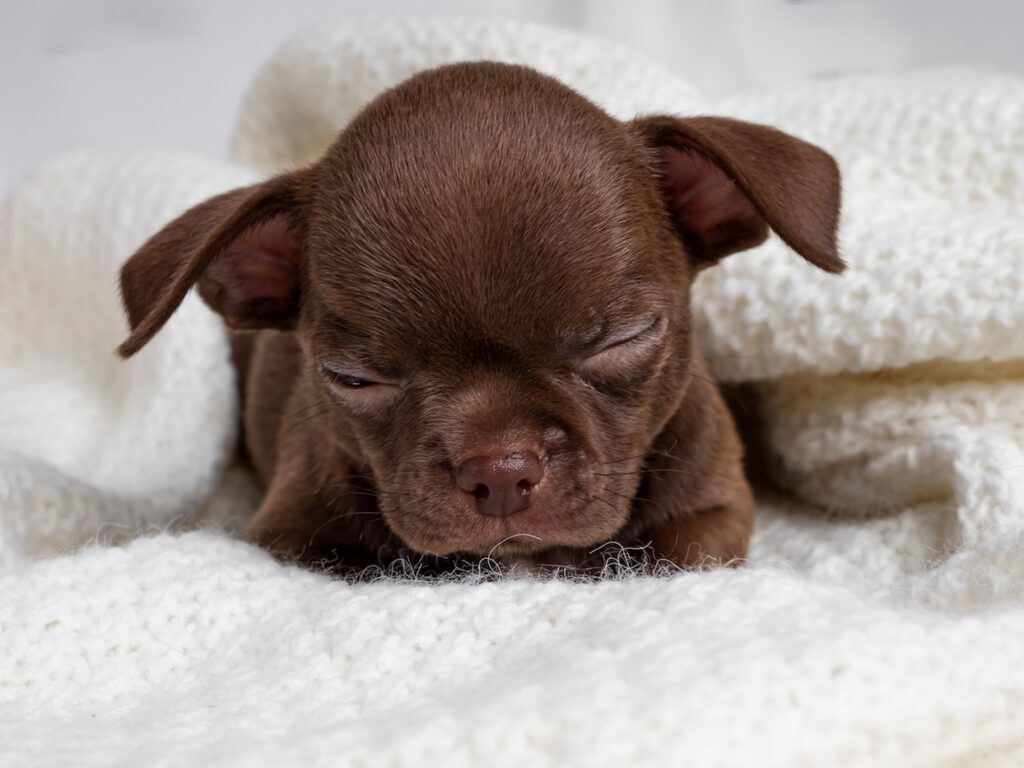
Puppies typically open their eyes approximately 10 to 14 days after birth, according to veterinary research, sometimes one eye at a time, so don’t be alarmed if you notice one eye open before the other. Once the eyes open, vision is far from perfect. Early sight is blurry, and newborn puppies are especially sensitive to bright light during this transition.
The eyesight of puppies continues to improve over the following weeks as the nerves in their eyes keep developing.
Here are a few key facts about the eye-opening timeline every new puppy owner should know:
- Typical age range. Most puppies open their eyes somewhere between 10 and 14 days of age, though some may start as early as five days after birth. A few pups take a little longer, and that alone isn’t necessarily cause for worry.
- One eye before the other. It’s completely normal for a puppy to open one eye a day or two before the other. It’s normal to see variation even among puppies from the same litter, and a single puppy may open one eye noticeably ahead of the other.
- When can puppies see clearly? When puppies’ eyes first open, they can only detect shapes, light and movement rather than sharp detail. It generally takes 10 to 14 days for newborn puppies to open their eyes and longer for them to see clearly.
- Breed variation. While the 10- to 14-day window applies broadly across breeds, individual pups and litters can vary slightly regardless of size, so patience is key during this developmental stage.
If your puppy’s eyes are still shut well past two weeks of age, it’s worth a call to your veterinarian, but a small amount of variation between littermates is expected and normal.
Why puppies are born with their eyes closed
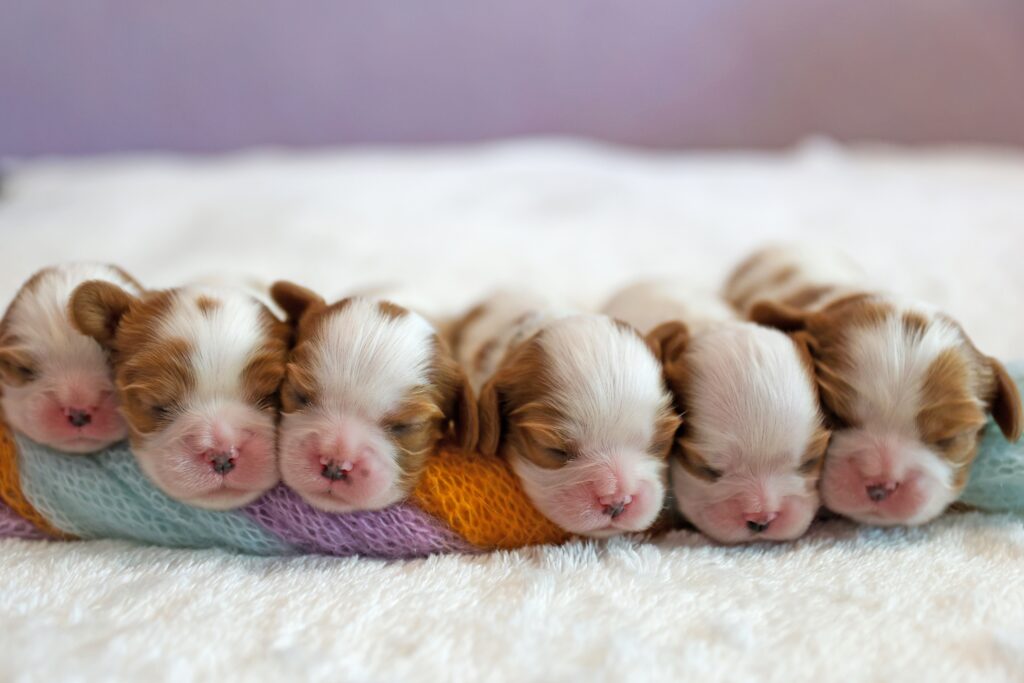
Unlike many mammals, dogs have a fairly short gestation period, and puppies arrive in the world before their eyes and nervous system are fully mature.
In dogs, eye development happens late in the game — a side effect of how brief canine gestation is. At roughly 60 days, it’s a fraction of the nine-month human timeline, leaving far less time for the eyes to finish forming before birth.
As a result, newborn puppies are born blind and deaf, relying almost entirely on touch and their sense of smell to find their mother and nurse.
When puppies are born, their eyes, central nervous system and optic nerves are all still works in progress. The eyelids stay shut for a good reason: They act as a protective barrier while the delicate structures inside the eye finish forming.
Closed eyelids act as a barrier, helping keep out light, dust and debris while the tissue underneath finishes forming. Skip that protection, and a newborn’s still-developing cornea and optic nerves would be left exposed to potential scratches, irritation and infection.
This is also why puppies don’t need functioning eyesight right away. Puppies don’t need to use their eyes immediately, and mother dogs are able to give birth quickly and leave their litters in a safe place while relying on scent and body warmth to keep the family together.
It’s a survival strategy that works well as long as owners understand it’s a normal, temporary stage of canine development rather than a sign of a problem.
What puppies can see once their eyes open
Once the eyelids finally separate, don’t expect your pup to start recognizing faces or chasing toys right away. When puppies first open their eyes, the world is a blurry place; they are only able to detect shapes and movement, and at this stage they can only identify other puppies and their mothers.
Bright light remains uncomfortable for several more days, so vision stays limited on purpose while the eyes adjust.
A few facts about this in-between stage of sight and eye color development:
- Light sensitivity shapes the environment. A puppy’s vision gradually becomes more acute as it approaches the two-month mark, but during the transition period the dog remains sensitive to bright light, making a dimly lit space away from direct sunlight important.
- Eye color settles over time. All young dogs have blue eyes during the early eye-opening stage, and the iris typically settles into its permanent adult color over the following weeks as pigment develops.
- Clearer vision develops gradually. Puppies acquire full vision at around eight weeks old, with noticeably sharper sight and better depth perception building steadily in the weeks leading up to that point.
- Testing eyesight gently. Caregivers can gently toss a cotton ball in the air to observe a puppy’s visual response. If the pup follows the movement, it’s a good sign its sight is developing normally.

Signs your puppy’s eyes need veterinary attention
Most puppies progress through this stage without any issues, but it’s important to know the warning signs of a problem. If you notice any of the following, contact your veterinarian promptly rather than waiting to see if things improve on their own:
- Thick discharge, pus or crusting. Unusual discharge from the eyes is a signal to bring the puppy to a veterinarian, since it can indicate an eye infection that needs treatment before it affects the puppy’s developing eyesight.
- Swelling or puffiness near the eyelids. Swelling or bulging underneath the eyelids is another sign that warrants a veterinary visit, as it may point to fluid or infection building up behind closed lids.
- Eyes still fully closed past 14 to 16 days. If a puppy’s eyes haven’t opened by two weeks of age or so, schedule an appointment with your vet right away to rule out a developmental delay or blocked eyelid.
- Redness or visible irritation. Any redness, squinting or obvious discomfort once the eyes are open should be checked by a veterinary professional, since young eyes are especially delicate.
When in doubt, a quick call to your vet is always the safer choice. Veterinary staff would rather examine a puppy that turns out to be fine than have an owner wait too long on something treatable.
Caring for your puppy after the eyes open
Once your puppy’s eyes are open, your job shifts to helping your dog adjust safely to a whole new world of sight. Here’s how to support your puppy during this stage:
- Keep the environment dimly lit at first. Because vision is blurry and light-sensitive right after the eyes open, avoid placing your puppy’s bed or play area in direct sunlight or under harsh lighting for the first several days.
- Limit sudden noise or bright flashes. Loud sounds and sudden bright light, like camera flashes, can startle a puppy whose senses are still fine-tuning. Introduce new stimuli gradually and gently.
- Puppy-proof the space as curiosity increases. As sight sharpens, puppies become more mobile and curious about their surroundings. Remove small objects, cords, and anything a pup could chew or trip over.
- Let vision and coordination develop gradually. Resist the urge to rush socialization or introduce toys too early. Give your puppy time to build coordination between the eyes, ears and movements before expecting confident play.
Following these steps helps your puppy’s eyes and brain adjust to light and movement at a pace that matches her or his natural developmental stages, reducing stress and supporting healthy vision long term.
Nutrition’s role in healthy puppy development
Understanding when puppies open their eyes, and why it happens gradually, gives new dog owners a clearer picture of just how much growing happens in those first two weeks of life. From optical nerve maturation to the gentle transition from a dimly lit nursery to a brighter, more active world, every stage builds on the one before it.
Good nutrition plays a central role in supporting that growth. A properly balanced diet helps give a young pup’s brain, nervous system and eyes the building blocks they need to help mature on schedule, while also helping support the immune system during a period when puppies are especially vulnerable.
As your pup transitions from nursing to solid food, feeding a high-quality, age-appropriate diet helps support overall health, including weight gain, and overall comfort throughout these formative early weeks.
Final Thoughts
Puppies are born blind and deaf, with closed eyelids protecting their developing eyes until they’re ready for the world. Eyes typically open between 10 and 14 days after birth, vision starts blurry and light-sensitive, and clearer sight develops by around two months of age.
Watch for warning signs like discharge, swelling or eyes still closed past two weeks, and always consult your veterinarian if something seems off.
With a calm, dimly lit environment, patience, and good nutrition, you’ll help your puppy grow into a healthy, confident dog.
When can you touch newborn puppies?
You can gently touch newborn puppies from birth, as long as the mother is comfortable with it, since gentle handling helps puppies get used to human contact early on. Keep handling brief and calm during the first couple of weeks, and always wash your hands first to protect the litter from illness.
When do puppies start walking?
Puppies typically begin crawling within their first one to two weeks and start attempting to walk around three weeks of age. By four to five weeks, most pups are walking and moving around with much more confidence and coordination.
When can puppies hear?
Puppies are born deaf, and their ear canals stay closed for slightly longer than their eyes. Hearing typically develops around two to three weeks of age (with some developing within 10-20 days), shortly after the eyes open, giving pups a fuller picture of their environment.