- Bully sticks are safe for most healthy dogs when sized and supervised properly. They’re a single-ingredient, high-protein, easily digestible beef chew, gentler on the gut than rawhide, bones or antlers.
- They’re long-lasting and keep dogs mentally busy. They may help scrape away plaque, but they don’t replace toothbrushing. A chew that’s too hard for your dog’s mouth can fracture a tooth.
- The main risks are choking, extra calories, digestive upset and bacteria. Supervision, the right size and gradual introduction help reduce each one.
- Keep treats to under 10 percent of daily calories, start with one or two bully sticks a week, and check with your vet before adding a new chew.
Bully sticks are popular dog chews because they’re natural, long-lasting treats that help stimulate a dog’s mind and satisfy the urge to chew while keeping the pup busy. With the right size and supervision, bully sticks can be a safe, healthy treat option.
However, giving your dog chews of any type can have risks. Here’s what pet parents should know about bully sticks, what they are, how to feed them safely and how they could benefit your pup.
What are bully sticks made of?
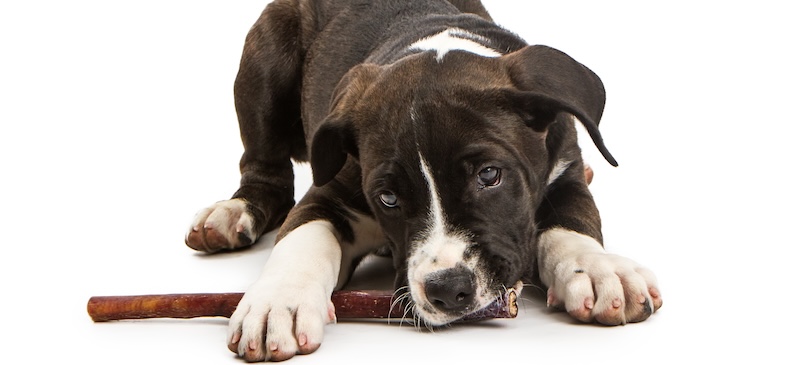
You’ve probably seen these popular treats in the dog chew aisle and wondered, what is a bully stick? Bully sticks are dried chews made from beef pizzle, or the penis of a bull or steer.
This fact can be a bit off-putting for some pet parents, but it’s important to remember that many parts of animals deemed undesirable for humans to eat are irresistible to our pets. Bully sticks are generally safe, single-ingredient, highly digestible chews for dogs.
Benefits of giving your dog a bully stick
Are bully sticks good for dogs? Pet parents and veterinarians value bully sticks over many other popular dog chews for several reasons.
As a high-protein, fully digestible treat, bully sticks have a lot going for them. Here are some of the biggest benefits.
Easily digestible
Bully sticks are made from fibrous muscle tissue, so they’re easier to digest than chews made from rawhide, bones or antlers. Bully sticks soften as dogs chew rather than splintering or breaking into large pieces, so they tend to pass through the digestive system safely and predictably for most dogs.
High protein
Beef bully sticks are made mostly of protein with low to moderate fat. Animal protein provides the amino acids dogs need to build and support muscle tissue and maintain overall health.
Protein-packed treats like bully sticks are especially ideal for young, active or working dogs who need nutrient-dense foods to support their lifestyles.
Single ingredient
Finding treats for dogs with food sensitivities can be tricky. Bully sticks are made from a single ingredient, so they’re typically suitable for dogs who have allergies or sensitivities to other proteins, like chicken, pork or lamb.
However, bully sticks are not suitable for dogs with beef allergies.
Long lasting
A good chew session keeps dogs mentally engaged and prevents active dogs from getting bored, especially when they’re stuck indoors because of the weather or when recovering from an injury or surgery. Bully sticks last a long time, giving your pup a healthy outlet for excess energy and saving your shoes from destructive chewing.
Are bully sticks good for dogs’ teeth?
Many chews can support dog dental health by manually scraping plaque and tartar off teeth. How well a bully stick cleans a dog’s teeth depends on the dog’s chewing style and how long she chews before biting off and swallowing pieces.
For some dogs, bully sticks can contribute to long-term dental health.
Chews like bully sticks won’t replace routine at-home dental care, such as toothbrushing. Plus, chewing on items that are too hard for a dog’s mouth can sometimes cause tooth fractures, so pet parents should weigh the pros and cons before deciding whether bully sticks are right for their pets.
Are bully sticks safe for dogs? Risks and how to reduce them

For most healthy dogs, bully sticks are safe and healthy treats. However, they aren’t guaranteed to be safe for every dog in every situation.
Here are the potential risks of giving your dog bully sticks and the steps you can take to keep your pup safe.
Choking hazards
Choking is a top concern with any dog chew, including bully sticks. Some highly food-motivated dogs may get excited and try to swallow a bully stick whole as soon as it is small enough for them to do so, which could lead to choking.
You can reduce this risk by supervising chewing sessions and taking the chew away before it becomes a choking hazard. Never leave your dog alone with a bully stick.
Weight gain
Bully sticks are calorie-dense treats. Depending on size and thickness, a bully stick may contain 100 calories or more, which can be a large percentage of a small or medium dog’s daily recommended allowance.
Excess chews, including bully sticks, can contribute to weight gain, so vets recommend that treats make up no more than 10 percent of a dog’s daily calories.
Digestive upset
Dogs allergic to beef or those with sensitive digestive tracts could experience digestive upset after eating a bully stick. Always introduce new foods or treats gradually, starting with a small amount and gradually increasing to a full stick over time.
Watch for signs of an upset stomach, including loose stools, gas, vomiting or diarrhea, and discontinue bully sticks if these occur.
Dental fractures
Chewing on bully sticks may help reduce plaque buildup. However, aggressive chewers could fracture a tooth on a bully stick that’s too hard for their size, which may require veterinary dental care to repair.
Pet parents can help prevent dental injuries by choosing a bully stick that matches their dog’s size and chewing style.
Bacterial contamination
Like any animal product, bully sticks can become contaminated with bacteria like Salmonella or E. coli during the manufacturing process. Choose bully sticks sold by reputable brands that openly advertise safe manufacturing practices, and always wash your hands after handling bully sticks.
Avoid offering your dog bully sticks or any similar chew product if your pet (or anyone in your human family) has a compromised immune system.
Always consult a veterinarian before introducing a new chew or treat to your dog’s diet. Your vet can help you decide if bully sticks are appropriate for your dog’s age, size, health and chewing style.
Call your vet or head to a local veterinary emergency facility if you think your dog is choking or if she develops signs of digestive upset after eating a bully stick.
How to choose the right bully stick for your dog

The right choice of bully stick depends on your dog’s size and chewing habits, as well as your personal preferences. Here are a few factors to consider:
Size and shape
Bully sticks typically come in several different lengths, styles and thicknesses to suit a wide range of chewing styles. Shorter, thinner options are best for less aggressive chewers, small dogs and puppies. Larger, thicker or braided options are best for more aggressive chewers and larger dogs.
Always supervise your dog’s chewing sessions, and switch to a different chew if needed.
Flavor
Most bully sticks are unflavored because the natural beef taste is extremely appealing to most dogs. However, you might choose a bully stick with added natural flavors like peanut butter or cheese for variety.
Always check the ingredients list of a flavored bully stick if your dog has food allergies or sensitivities.
Odor
Bully sticks have a naturally strong odor that some pet owners find objectionable. They can also stain some surfaces, especially if there are added flavors or colorings.
You may find low-odor bully sticks that are processed to reduce the natural smell or train your dog to chew only in a specific location to contain the mess.
Good nutrition matters more than any single treat
Bully sticks can be a safe, enjoyable and healthy treat for many dogs. Long-lasting treats and chews help keep your dog busy, reduce boredom and destructive behavior, and provide a healthy, protein-rich reward that complements his overall nutrition.
Work with your vet to choose the right bully stick for your dog’s size, chewing style and health history, and to help reduce the risk of tooth fracture or digestive upset that comes with any type of dog chew.
Complete, balanced nutrition from JustFoodForDogs supports your dog’s overall well-being, vitality and quality of life. Contact us or browse our range of diets, treats and supplements to find what’s right for your pup.
Frequently asked questions
At what age can puppies start having bully sticks?
Like people, puppies start life with a set of temporary baby teeth. Hard chews like bully sticks can damage baby teeth and harm developing jaws or adult teeth, so you should not feed them to young puppies. Instead, work with your vet to confirm when your dog’s adult teeth have come in (usually around 6 to 7 months of age), and ensure its teeth and mouth are healthy before starting them on hard chews.
How often can I give my dog a bully stick?
Because bully sticks add calories to your dog’s diet, start with one or two per week to avoid upsetting nutrient balance or causing weight gain. Factor the calories from a bully stick (listed on the package) into your dog’s overall calorie allowance, and keep treats and chews to less than 10 percent of total intake.
How long should I let my dog chew a bully stick before taking it away?
Many chewing sessions with bully sticks last about 10 to 15 minutes, but this depends on your dog’s chewing style. Your dog may chew bully sticks faster or slower; the most important thing is to monitor your dog closely and take the bully stick away once it becomes small enough to swallow.
- Freeman LM, Janecko N, Weese JS. Nutritional and microbial analysis of bully sticks and survey of opinions about pet treats. Can Vet J. 2013 Jan;54(1):50-4. Erratum in: Can Vet J. 2015 May;56(5):520. PMID: 23814301; PMCID: PMC3524813.
- Flint HE, Atkinson M, Lush J, Hunt ABG, King T. Long-Lasting Chews Elicit Positive Emotional States in Dogs during Short Periods of Social Isolation. Animals (Basel). 2023 Feb 4;13(4):552. doi: 10.3390/ani13040552. PMID: 36830339; PMCID: PMC9951671.
- Carroll MQ, Oba PM, Sieja KM, Alexander C, Lye L, de Godoy MRC, He F, Somrak AJ, Keating SCJ, Sage AM, Swanson KS. Effects of novel dental chews on oral health outcomes and halitosis in adult dogs. J Anim Sci. 2020 Sep 1;98(9):skaa274. doi: 10.1093/jas/skaa274. PMID: 32845313; PMCID: PMC7511057.
- Freeman, L. M. (2018, November 1). Dangers of bully sticks: Popular treat can carry bacteria and add calories. Petfoodology. Cummings School of Veterinary Medicine at Tufts University.