- Plain, air-popped popcorn is generally safe for dogs as an occasional treat, in small amounts.
- Skip the butter, oil, salt, sugar and seasonings — these cause most of the problems, not the popcorn itself.
- Unpopped kernels are a choking hazard, so remove them before sharing.
- Popcorn is a treat, not nutrition — keep treats to under 10 percent of daily calories.
You’re curled up with your pooch watching your favorite show with a bowl of popcorn. Sounds cozy. And your dog is begging for some of your popcorn snack. A thought may flit across your mind: “Can dogs eat popcorn?”
The short answer is yes, but not a lot and not with seasonings like salt and butter. This guide offers safe choices for feeding your dog popcorn so you can feel confident.
Can dogs eat popcorn?
Yes, dogs can eat popcorn as an occasional treat, as long as it’s plain and fully air-popped. Air-popped popcorn without any salt, butter, oil or other seasonings is the safe choice for your pup.
However, popcorn shouldn’t replace any part of your dog’s regular, balanced diet, but a few pieces can be a fun snack to share with your pooch now and then.
Not all popcorn is safe for dogs, though. The butter, salt and other toppings that make movie-night popcorn so tasty for us can cause problems for your pup. Unpopped kernels can also be a choking hazard.
Is popcorn safe for dogs? It can be when properly prepared.
We’ll cover what to avoid and how much popcorn is safe for your dog below.
Is popcorn good for dogs? 4 potential benefits
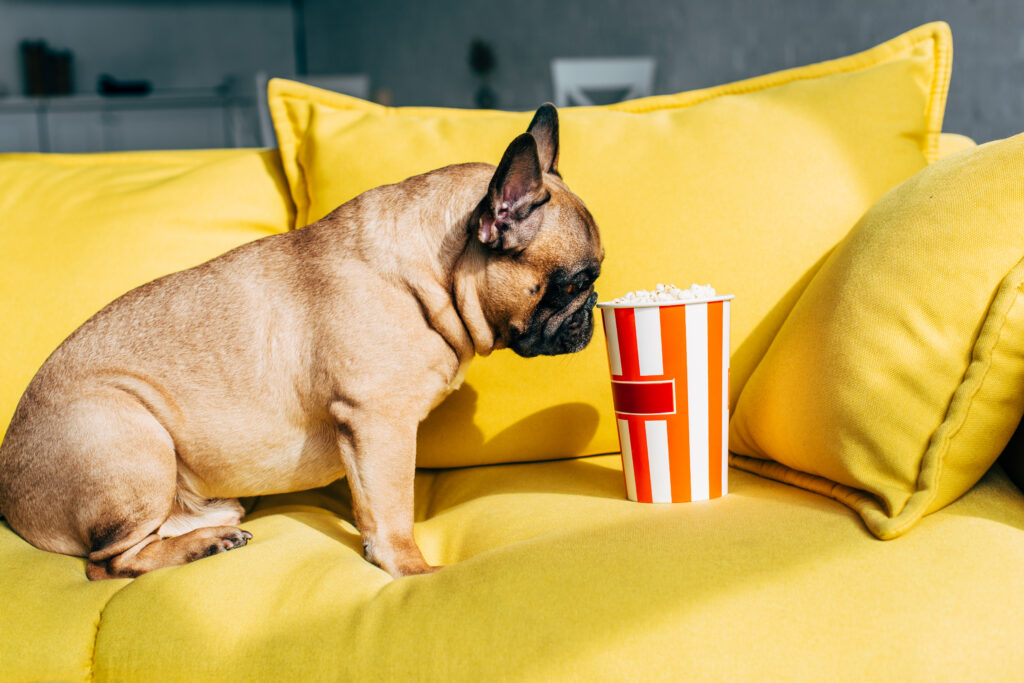
Plain, air-popped popcorn can be a safe occasional treat for most dogs, but it doesn’t offer major nutritional benefits. Air-popped simply means the kernels are popped using hot air instead of oil or butter.
Most microwave popcorn isn’t safe for dogs because it contains added oil, salt, butter or other flavorings.
But if it’s air-popped (no oil), plain popcorn does have a few things going for it.
- It contains several minerals. Popcorn provides small amounts of magnesium, manganese, phosphorus and zinc, which all play important roles in the body.
- It provides some fiber. Popcorn contains dietary fiber, although the small amount you should give your dog won’t contribute much to its daily fiber intake.
- It contains trace amounts of vitamins. Popcorn has small amounts of some vitamins, but again, your dog shouldn’t rely on popcorn as a source of essential nutrients.
- Plain popcorn is relatively low in calories. When it’s air-popped without butter, oil or other toppings, popcorn can be a lower-calorie option than many human snacks.
So, is popcorn good for dogs? It can be a perfectly fine treat in moderation, but think of it as something fun to share rather than something your dog needs for its nutritional value.
Is popcorn bad for dogs? 5 harmful ways to serve it
Is popcorn toxic to dogs? Plain popcorn isn’t considered toxic, but some kinds of popcorn aren’t safe for your pooch because of the added ingredients.
Even plain popcorn can cause problems if your dog eats too much or gets hold of unpopped kernels.
Here are some of the biggest risks to watch for:
- Too much salt: A few pieces of salty popcorn are unlikely to cause problems for most healthy dogs, but large amounts of salt can be harmful. It’s best to skip the salt altogether when making popcorn for your pooch.
- Butter and oil: Butter and oil add extra fat and calories and may contribute to digestive upset, including vomiting or diarrhea. High-fat foods can also be particularly problematic for dogs with certain health conditions or a history of pancreatitis.
- Unpopped kernels: Those hard kernels at the bottom of the bowl aren’t for your pup. They can get stuck between a dog’s teeth and may pose a choking hazard, particularly for smaller dogs.
- Sugar and sweet toppings: Caramel, kettle corn and other sweetened popcorn can contain a lot of added sugar and other ingredients your dog doesn’t need. Some flavored varieties may also contain ingredients that are toxic to dogs, such as chocolate or xylitol.
- Seasonings and flavorings: Cheese powder, garlic, onion and other seasonings commonly added to flavored popcorn may cause digestive problems or, in the case of ingredients such as garlic and onion, can be toxic to dogs.
So, is popcorn bad for dogs? Plain, fully popped popcorn is generally safe in small amounts, but the popcorn you make for yourself may not be. When sharing with your dog, set aside a few plain pieces before adding the good stuff to your own bowl.

How to safely feed your dog popcorn
When it comes to sharing popcorn with your dog, a little goes a long way. How much your dog can have depends on her or his size, overall diet and health.
As a general guide, PetMD recommends the following portions of plain, air-popped popcorn:
- Extra-small dogs (2–20 pounds): 1–2 pieces (e.g., Yorkies, Chihuahuas, Pomeranians, Pugs)
- Small dogs (21–30 pounds): 2–3 pieces (e.g., Basenjis, Beagles, Miniature Australian Shepherds)
- Medium dogs (31–50 pounds): 5–6 pieces (e.g., Basset Hounds, Border Collies, Australian Cattle Dogs)
- Large dogs (51–90 pounds): a small handful (e.g., Pit Bulls, German Shepherds, Labrador Retrievers)
- Extra-large dogs (91+ pounds): a handful (e.g., Newfoundlands, Bernese Mountain Dogs, Saint Bernards)
These breed examples are for illustration only. Your dog’s individual needs can vary based on its size, health, activity level and overall diet.
These portions are meant as occasional treats, not daily additions to your dog’s bowl. Treats, including popcorn, should make up no more than about 10 percent of your dog’s daily calories. The other 90 percent should come from a complete and balanced diet.
If your dog has a health condition or follows a special diet, check with your vet before adding new dog treats or human foods.
How to prepare popcorn for your dog
If you want to share some popcorn with your pooch, keep the portion plain and simple. Here’s how:
- Start with plain kernels. Air-pop them using hot air rather than butter or oil.
- Skip the toppings. Don’t add butter, oil, salt, sugar, cheese powder or other seasonings to your dog’s portion.
- Let it cool. Freshly popped popcorn can be hot, so give it time to cool before offering it to your dog.
- Remove unpopped kernels. Check your dog’s portion for unpopped or partially popped kernels that could get stuck in its teeth or become a choking hazard.
- Serve just a few pieces at a time. Giving your dog individual pieces also makes it easier to keep track of how much they’ve eaten.
If you’re making popcorn for yourself, an easy option is to set aside your dog’s plain pieces before adding butter, salt or your favorite toppings to the rest.
Good treats support good nutrition

Sharing a few pieces of plain popcorn with your dog can be a fun way to include your pet in movie night. Just remember that treats are exactly that: treats. They should complement, rather than replace, the complete and balanced diet your dog relies on every day.
When choosing treats for your pooch, look for options made with simple, dog-friendly ingredients, and keep portions appropriate for your dog’s size and nutritional needs. You can also try making your own treats at home when you want more control over what goes into them.
Not sure which foods should stay out of your dog’s bowl? Learn more about the top toxins for dogs, preservatives in dog food and foods that are toxic for dogs in these videos featuring veterinary toxicologist Dr. John Tegzes.
Looking for more ways to treat your pup? Explore healthy dog treats that make it easy to give your dog something special while supporting good nutrition.
What are the alternatives to popcorn for dogs?
If you're looking for an alternative to popcorn, choose a treat made specifically for dogs or offer small portions of dog-safe fruits or vegetables. Some dogs enjoy crunchy cucumbers, while others may prefer a few pieces of banana. You can also explore which fruits dogs can eat for more treat ideas.
There are plenty of other human foods dogs can enjoy occasionally, when prepared appropriately. Depending on your dog's diet, that might include foods such as fish, chicken or even pasta. Just because a food is safe for dogs doesn't mean they can have unlimited amounts, so keep portions appropriate for your dog's size and dietary needs.
What if your dog eats popcorn kernels?
If your dog swallows one or two unpopped popcorn kernels, it will usually be fine. Watch for signs of choking, coughing, gagging, difficulty swallowing or other discomfort.
Popcorn kernels are hard and can also become stuck between a dog’s teeth. If your dog appears to be choking or is having trouble breathing, seek veterinary care immediately.
Can dogs eat kettle corn or caramel popcorn?
No. Don’t share kettle corn or caramel popcorn with your dog. These types of popcorn are loaded with sugar and likely also have butter, salt, oil or other ingredients your dog doesn’t need.
Be especially careful with flavored or coated popcorn. Some varieties may contain chocolate or xylitol, which are toxic to dogs. If your dog eats popcorn containing either ingredient, contact your veterinarian or a pet poison control service right away.