
- Yes, dogs sweat, but only a little, and not through most of their skin. Dogs sweat mainly through merocrine glands in their paw pads. Fur traps moisture and blocks airflow, so sweat can’t evaporate from the rest of the body.
- Panting is a dog’s main cooling system. Evaporation from the tongue, mouth and respiratory tract carries heat away from the body. Vasodilation, fur insulation and seeking cool surfaces help too.
- Some dogs overheat more easily. Flat-faced breeds, overweight dogs, seniors, puppies and dogs with dark coats are at higher risk. Panting works less well in high heat and humidity.
- Prevent overheating before it starts. Provide shade and fresh water, walk in the early morning or evening, check pavement temperature, and never leave a dog in a parked car.
Do dogs sweat? Anyone who has watched a dog pant on a hot afternoon has probably wondered.
Knowing how your dog regulates body temperature helps you catch overheating early because a dog cools down very differently than humans do. This guide covers dog sweat glands, panting, other cooling methods, heatstroke risk and practical tips to keep your pet safe in hot weather.
Do Dogs Sweat? How Their Sweat Glands Work
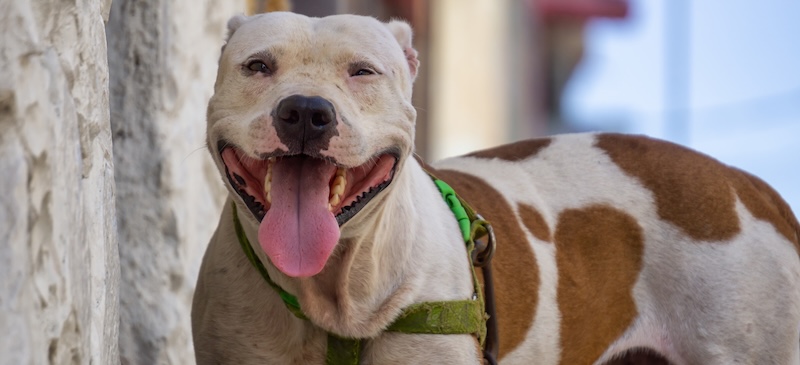
Yes, dogs sweat, but sweating plays only a relatively minor role in cooling. If you have ever asked, “How do dogs sweat?” the answer starts with the skin.
Dogs have two types of sweat glands, and both work differently from the ones humans rely on.
Merocrine glands are the dog sweat glands most similar to human ones. They release watery sweat that evaporates and cools the skin.
Dogs have a small number of merocrine glands, and they sit mainly in the paw pads. So, do dogs sweat through their paws? Yes.
If you have ever noticed damp paw prints on a vet’s exam table or a tile floor, you have seen merocrine sweat in action.
Apocrine glands appear all over a dog’s body, attached to hair follicles. Despite the name, these glands don’t primarily cool the dog. They release a scent-rich fluid containing pheromones, which dogs use to send signals to other dogs.
You may notice this fluid more when a dog is stressed or anxious.
Why does sweating contribute so little? A dog’s fur traps moisture and blocks airflow, so sweat can’t evaporate from most of the body.
The paws are mostly bare, but they cover a tiny surface area. Sweat from the paw pads can’t remove enough heat to keep a dog cool, so dogs depend on other mechanisms.
Why Panting Is a Dog’s Main Cooling System
When a dog pants, it breathes rapidly with its mouth open and its tongue extended. This behavior serves as the primary mechanism for thermoregulation.
Moisture from the tongue, mouth and respiratory tract evaporates as air rushes over it. That evaporative cooling carries heat away, both from the dog’s respiratory tract and blood, and helps lower body temperature.
Here is how it works: Air flows in through the nose and across the damp nasal passages. Then, the air moves through the airways and lungs. As it passes over moist tissue, water evaporates and removes heat.
The dog then exhales that warm air through the same route, where it comes into close contact (through the skin) with blood vessels lining the nasal passages. This helps eliminate heat from the blood.
The dog’s tongue also releases heat directly, which is why it often looks long and wide during heavy panting.
Panting works effectively, but it has limits. In very warm weather or high humidity, moisture evaporates less readily, so the cooling system loses power.
A panting dog also burns energy and loses water, which makes staying hydrated essential. When a dog is panting heavily and still cannot cool off, the situation can turn dangerous quickly.
Other Ways Dogs Cool Down
Beyond sweating and panting, dogs use a few other strategies to keep cool.
Vasodilation
Vasodilation means the blood vessels near the skin widen. When body temperature rises, a dog’s warm blood flows closer to the surface, especially in the ears and face, where fur is thinner. The body can then release heat into the surrounding air.
This is one reason a hot dog’s ears may feel warm to the touch.
Coat and Fur as Insulation
A dog’s coat works like a thermos. Fur insulates against both cold and heat, and it shields the skin from direct sunlight.
A healthy double coat traps a layer of air near the body, which helps regulate temperature in all seasons. Regular brushing removes loose undercoat and keeps that layer working effectively.
While fur acts as an insulator, matted fur does not. That’s why it’s important to keep your dog’s coat free of mats.
Seeking Cooler Surfaces
Dogs also change their behavior to lose body heat. They stretch out on cool tile, dig in damp soil or lie in the shade. These simple choices help a dog lower body temperature without extra effort.
Signs of Overheating and Heatstroke Risk
Any dog can overheat, but some face greater danger. Dogs at higher risk include:
- Short-nosed or flat-faced breeds, such as bulldogs and pugs
- Overweight dogs
- Senior dogs and puppies
- Dogs with dark-colored coats, which absorb more heat
- Dogs that have previously experienced heatstroke
Watch closely for these signs.
Overheating
- Restless behavior, such as pacing or being unable to settle
- Heavy panting and drooling
- Ears that droop suddenly
- A lowered tail
- Difficulty breathing
Heatstroke
- Vomiting or diarrhea
- Pale, red or blue gums
- A rapid or irregular heartbeat
- Disorientation or stumbling
- Seizures
Heat exhaustion can progress to heatstroke fast. If you notice any of these signs, contact your veterinarian immediately. Move your dog to a shaded or air-conditioned spot while you call, and offer small sips of cool water.
Don’t wait to see whether symptoms improve on their own.
How to Help Your Dog Stay Cool
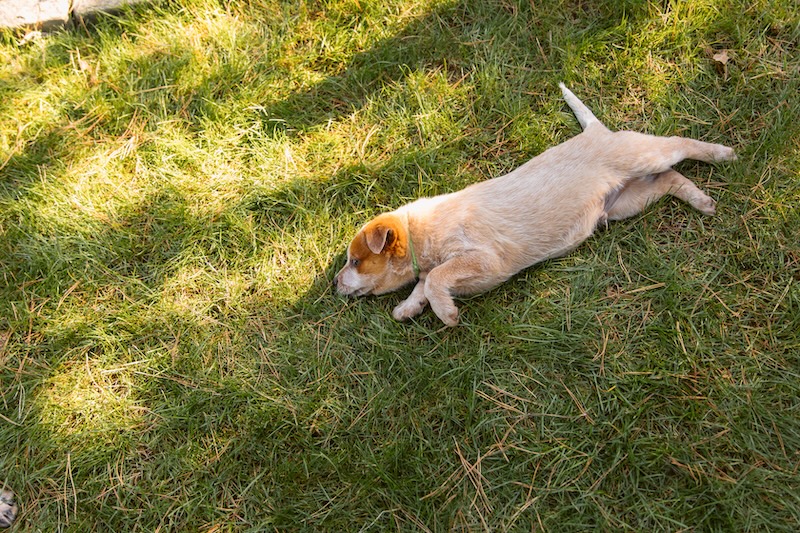
How to Help Your Dog Stay Cool
Prevention works better than treatment. These steps help your dog keep cool and avoid overheating:
- Provide constant access to shade and fresh water. A hydrated dog cools more effectively, so refill bowls often and carry water on outings.
- Avoid exercise during the hottest parts of the day. Midday sun raises the risk of overheating for every dog.
- Schedule walks for early morning or evening. Cooler air makes outings safer and more comfortable.
- Check pavement temperature before walks. Press the back of your hand to the surface for several seconds. If it feels too hot for you, it will burn your dog’s paw pads.
- Never leave a dog unattended in a parked car. Temperatures inside a vehicle climb to dangerous levels within minutes, even with the windows cracked.
- Use cooling mats, vests or bandanas. These products add comfort on hot days and give your dog a cool place to rest.
- Let your dog pant freely after play. Skip carrying toys in the mouth right after exercise so your dog can pant at full capacity.
- Watch senior dogs, puppies and dark-coated dogs more closely. These dogs tend to struggle most in warm weather, so give them extra breaks and extra shade.
Good Nutrition Supports Your Dog’s Everyday Comfort
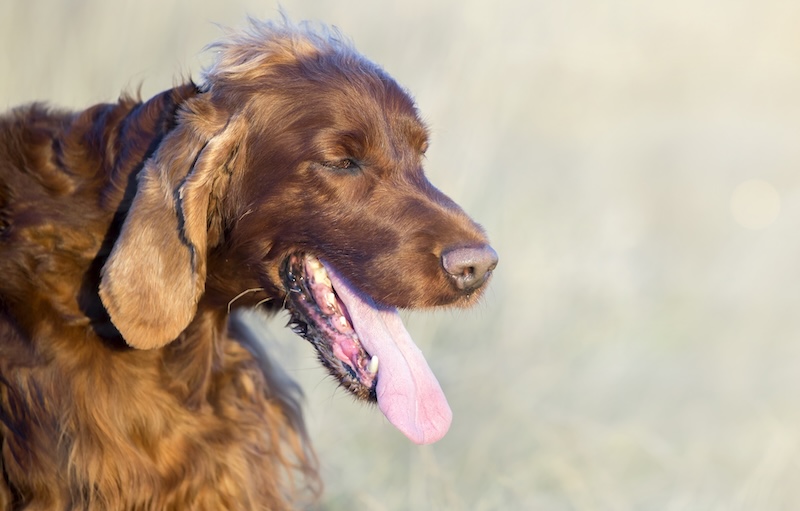
Cooling strategies protect your dog on hot days, but everyday care matters too. Balanced, high-quality nutrition supports a healthy coat, steady energy and overall wellness. Those benefits work alongside the habits in this guide to help your dog feel its best.
Food alone does not regulate body temperature or prevent heatstroke, so keep following the safety steps above. Talk with your vet about the best diet for your dog’s age, size and activity level.
Final Thoughts
Do dogs sweat? Yes, but only a little, mostly through merocrine glands in the paw pads.
Panting does the real work of cooling, while vasodilation, fur and smart behavior add support.
Learn the signs of overheating, protect high-risk dogs and plan walks around the heat. If your dog shows signs of heatstroke, call your veterinarian right away.
With a few simple habits, you can keep your dog comfortable all summer.
Frequently Asked Questions
Does shaving a dog help keep them cool?
No. A healthy coat insulates against heat and protects the skin from sunburn. Shaving removes that protection and can make it harder for the body to regulate temperature. Brush your dog regularly instead, and ask a groomer or veterinarian before you consider any trim.
Can swimming help cool down my dog?
Yes, water play can help. Cool water draws heat away from the body, and wet fur helps with cooling as it evaporates. Dogs don't sweat from the torso the way humans do, so a dip gives them a cooling boost their skin can't provide on its own.
Use cool, not icy, water, and always supervise your dog around pools and lakes.
Why do dogs pant and sweat at the same time?
When a dog pants and leaves damp paw prints, the body is working hard to release heat. It may mean your dog is exerting itself, or it may signal early overheating. Stress can also trigger paw sweating.
If the panting continues after rest and water, call your vet.
- Slotta-Bachmayr L, Oyugi A, Mutoro N, Burak M, Wykstra M. Detection Dogs Working in Hot Climates: The Influence on Thermoregulation and Fecal Consistency. Animals (Basel). 2024 Aug 23;14(17):2456. doi: 10.3390/ani14172456. PMID: 39272240; PMCID: PMC11393967.
- Takahashi, Y. (1964). Functional activity of the eccrine sweat glands in the toe-pads of the dog. The Tohoku Journal of Experimental Medicine, 83(3), 205-219.
- Jenkinson DM, Montgomery I, Elder HY. Studies on the nature of the peripheral sudomotor control mechanism. J Anat. 1978 Mar;125(Pt 3):625-39. PMID: 640964; PMCID: PMC1235629.
- Atoji Y, Yamamoto Y, Suzuki Y. Apocrine sweat glands in the circumanal glands of the dog. Anat Rec. 1998 Nov;252(3):403-12. doi: 10.1002/(SICI)1097-0185(199811)252:3<403::AID-AR8>3.0.CO;2-F. PMID: 9811218.
- Adelman S, Taylor CR, Heglund NC. Sweating on paws and palms: what is its function? Am J Physiol. 1975 Nov;229(5):1400-2. doi: 10.1152/ajplegacy.1975.229.5.1400. PMID: 1200160.
- Goldberg MB, Langman VA, Taylor CR. Panting in dogs: paths of air flow in response to heat and exercise. Respir Physiol. 1981 Mar;43(3):327-38. doi: 10.1016/0034-5687(81)90113-4. PMID: 7280382.
- Blatt CM, Taylor CR, Habal MB. Thermal panting in dogs: the lateral nasal gland, a source of water for evaporative cooling. Science. 1972 Sep 1;177(4051):804-5. doi: 10.1126/science.177.4051.804. PMID: 5052734.
- Vanstone, E. (2026, January 26). Why do dogs have cold noses? Science Sparks.
- Hobe Sound Veterinary Clinic. (2020, July 1). How your dog cools himself down
- Romanucci M, Salda LD. Pathophysiology and pathological findings of heatstroke in dogs. Vet Med (Auckl). 2013 Jan 9;4:1-9. doi: 10.2147/VMRR.S29978. PMID: 32670838; PMCID: PMC7337213.
- Zanghi BM (2016) Eye and Ear Temperature Using Infrared Thermography Are Related to Rectal Temperature in Dogs at Rest or With Exercise. Front. Vet. Sci. 3:111. doi: 10.3389/fvets.2016.00111
- Kwon CJ, Brundage CM. Quantifying body surface temperature differences in canine coat types using infrared thermography. J Therm Biol. 2019 May;82:18-22. doi: 10.1016/j.jtherbio.2019.03.004. Epub 2019 Mar 8. PMID: 31128646.
- Hall EJ, Carter AJ, Bradbury J, Beard S, Gilbert S, Barfield D, O'Neill DG. Cooling Methods Used to Manage Heat-Related Illness in Dogs Presented to Primary Care Veterinary Practices during 2016-2018 in the UK. Vet Sci. 2023 Jul 15;10(7):465. doi: 10.3390/vetsci10070465. PMID: 37505869; PMCID: PMC10385239.
- Caldas GG, da Silva DOB, Junior DB. Heat stroke in dogs: Literature review. Vet Med (Praha). 2022 Apr 14;67(7):354-364. doi: 10.17221/144/2021-VETMED. PMID: 39100130; PMCID: PMC11295878.
- Parnes SC, Mallikarjun A, Ramos MT, Stone TA, Otto CM. A Randomized Cross-Over Study Comparing Cooling Methods for Exercise-Induced Hyperthermia in Working Dogs in Training. Animals (Basel). 2023 Nov 28;13(23):3673. doi: 10.3390/ani13233673. PMID: 38067024; PMCID: PMC10705156.