If you’ve ever caught your dog lying flat on their belly with their legs stretched out behind them like a tiny, furry frog — congratulations, you’ve witnessed a sploot. It’s one of the most widely recognized and photographed dog behaviors on the internet, and for good reason: it’s absolutely adorable. But beyond the cuteness, pet parents frequently wonder what splooting actually means and whether it’s something to monitor. In this article, you’ll learn exactly what splooting is, why dogs do it, which breeds are most likely to strike the pose, and the signs that warrant a call to your vet.
What Is Splooting in Dogs?
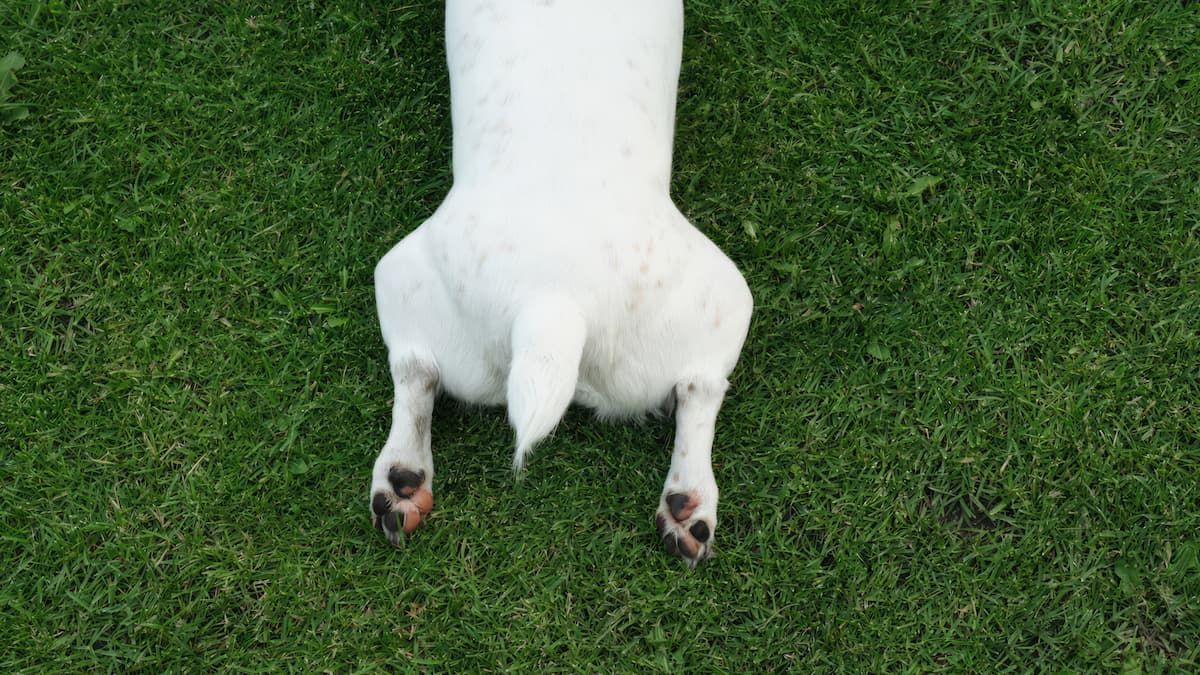
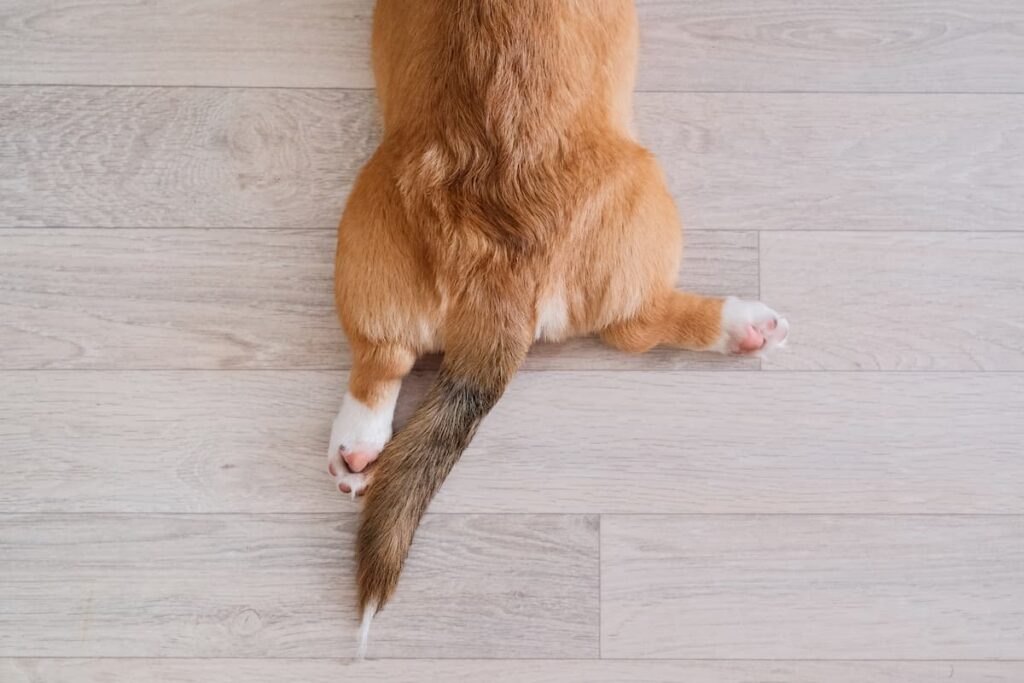
Splooting is the term used to describe a specific resting position in which a dog lies flat on their stomach with one or both hind legs stretched out straight behind them, rather than tucked underneath the body. The result is a prone, low-to-the-ground posture that looks somewhere between a yoga stretch and a pancake.
The term originated in internet slang — likely popularized through social media and online pet communities — but it has since become widely recognized by both pet parents and veterinary professionals as a straightforward descriptor for this distinctive position.
There are a few variations you might spot:
- Full sploot: Both back legs are extended straight behind the dog simultaneously. This is the classic, most recognizable form and the one most likely to go viral.
- Half sploot: Only one back leg is stretched out behind the dog while the other remains tucked. It gives a lopsided, endearingly casual look.
- Side sploot: The dog rolls slightly to one hip, with one or both legs extending out to the side rather than directly behind. This version is common during deep relaxation.
Why Do Dogs Sploot?
Splooting isn’t random. Dogs adopt this position for several practical reasons that make intuitive sense once you understand canine body mechanics.
Hip and Leg Stretch
One of the most functional explanations for splooting is that it simply feels like a good stretch. Extending the hind legs in a full body stretch lengthens the hip flexors, inner thighs, and surrounding musculature. Dog stretching — like humans after a long run or a nap — instinctively seek out positions that relieve muscle tension and restore range of motion. The sploot is essentially a passive hip stretch held at rest.
Cooling Down
Dogs regulate body temperature differently from humans. Because they can’t sweat through most of their skin, they use behavioral strategies, like the sploot frog pose, to manage heat. Pressing the belly against a cool surface — tile, hardwood, concrete — allows dogs to transfer body heat away more efficiently. A dog stretching in the splooted position maximizes the surface area of the belly and inner legs in contact with the ground, making it an especially effective cooling strategy on warm days.
Comfort and Relaxation
Sometimes the simplest explanation is the right one: splooting is just comfortable. When a dog chooses to sploot, it often signals a high degree of ease and contentment in their environment. A dog that feels safe and relaxed is more likely to settle into unusual or exposed comfy positions, whereas an anxious or guarded dog typically keeps their limbs tucked close to their body.
Natural Flexibility
Dogs vary widely in their baseline hip and joint flexibility, and for many dogs — particularly younger ones and those with naturally loose joints — the pancaking is a natural expression of how their body moves in a full body stretch. It requires no special effort. For these dogs, stretching the legs back behind their lower back is no more unusual than a human propping their feet up on a coffee table.
Which Dog Breeds Sploot?
Any dog of any size can sploot — the behavior is not limited to specific breeds, body types, or ages. That said, short-legged, long-bodied breeds are especially associated with splooting because of their anatomy. Their proportions naturally lend themselves to a wider hip angle and lower center of gravity, making the position easy and comfortable to hold.
Breeds commonly spotted in the sploot position include:
- Corgis — perhaps the breed most culturally synonymous with the sploot
- French Bulldogs — compact and flexible, they take to the position easily
- Dachshunds — their elongated bodies and short legs make it a natural fit
- Chihuahuas — small but surprisingly flexible, especially as puppies
- Basset Hounds — their low, heavy build encourages belly-to-floor resting
- Pugs — flat-faced and compact, they often sploot when cooling down
- Golden Retrievers — larger dogs sploot too, and Goldens are enthusiastic participants
- Bulldogs — their wide stance and low center of gravity make splooting instinctive
- Newfoundlands — gentle giants who sploot with impressive commitment
- Bernese Mountain Dogs — large, relaxed, and often found fully stretched across floors
Is Splooting Bad for Dogs?
For the vast majority of dogs, splooting is completely harmless. It reflects a normal, comfortable resting position and, in many cases, is a positive sign of flexibility and contentment. Seeing your dog sploot regularly is generally nothing to worry about.
That said, context matters. There are a few warning signs that may indicate splooting is connected to an underlying physical concern. When these accompany the behavior, it’s worth reaching out to your veterinarian.
Sudden Increase in Splooting Frequency
If a dog that rarely splooted suddenly begins doing it constantly, it may indicate hip discomfort, joint inflammation, or compensatory behavior tied to pain elsewhere in the body. A change in baseline behavior is always worth noting. If the shift is dramatic or paired with other symptoms, schedule a vet visit to rule out musculoskeletal issues.
Splooting Accompanied by Limping or Difficulty Standing
Splooting paired with limping, stiffness when rising, or reluctance to bear weight on one or more legs is a meaningful combination. These signs together may point to hip dysplasia, arthritis, a soft tissue injury, or other orthopedic conditions. A dog that struggles to get up after splooting or is limping should be evaluated.
Prolonged Reluctance to Move Out of the Position
Dogs move in and out of resting positions naturally. A dog that seems unable or unwilling to reposition may be experiencing stiffness and joint discomfort that deserves professional attention. Healthy splooting should be easy to enter and exit.
Fuel the Dog Who Sprints, Stretches, and Sploots
Splooting is a normal, healthy behavior. It’s a sign that your dog is comfortable, relaxed, and physically at ease in their body. A dog who sploots freely is a dog who feels good.
And a dog who feels good doesn’t get there by accident. The physical ease that allows dogs to stretch, move, and rest comfortably starts with what goes in their bowl every day. Everyday nutrition is the foundation of long-term mobility and comfort. The right balance of protein, healthy fats, and essential nutrients supports muscle integrity, joint health, and the kind of whole-body wellness that lets a dog live fully, from their morning sprint to their afternoon sploot.
Feed the stretch. Fuel the dog.