For unspayed female dogs, a regular heat cycle is an indication of fertility and good health. But a dog’s heat cycle is very different from a human’s menstrual cycle — most female dogs go into heat just a few times per year.
If you’re a pet parent, it helps to understand how these cycles work so you can support your pup and make responsible breeding decisions. In this article, we’ll break down how often dogs go into heat, symptoms to expect, and how to take care of your dog during this time.
Stages of a dog’s heat cycle
A dog’s heat cycle, also known as the estrus cycle, has four distinct stages:
- Proestrus: This is the first stage of the estrus cycle, and it’s when dogs start to exhibit visible signs of heat. For example, you might notice your dog has hormonal bleeding or vaginal discharge during this time. This stage usually lasts from seven to 10 days.
- Estrus: During this stage, your dog is fertile and will allow male dogs to mate with her. It can last anywhere from five to 21 days.
- Diestrus: This is when your dog recovers from her heat symptoms. Her body also releases high levels of a hormone called progesterone to prepare for a potential pregnancy.
- Anestrus: This is the period between cycles, when your dog’s reproductive system is inactive. It usually lasts between three and five months.
Female puppies can experience their first heat cycle anywhere between six months and two years of age. Smaller dogs usually experience their first heat earlier than larger dogs.
Common behaviors of a female dog in heat
When your dog is in heat, you’ll notice some significant physical and behavioral changes. Here are the symptoms to watch for.
Swelling of the vulva and nipples
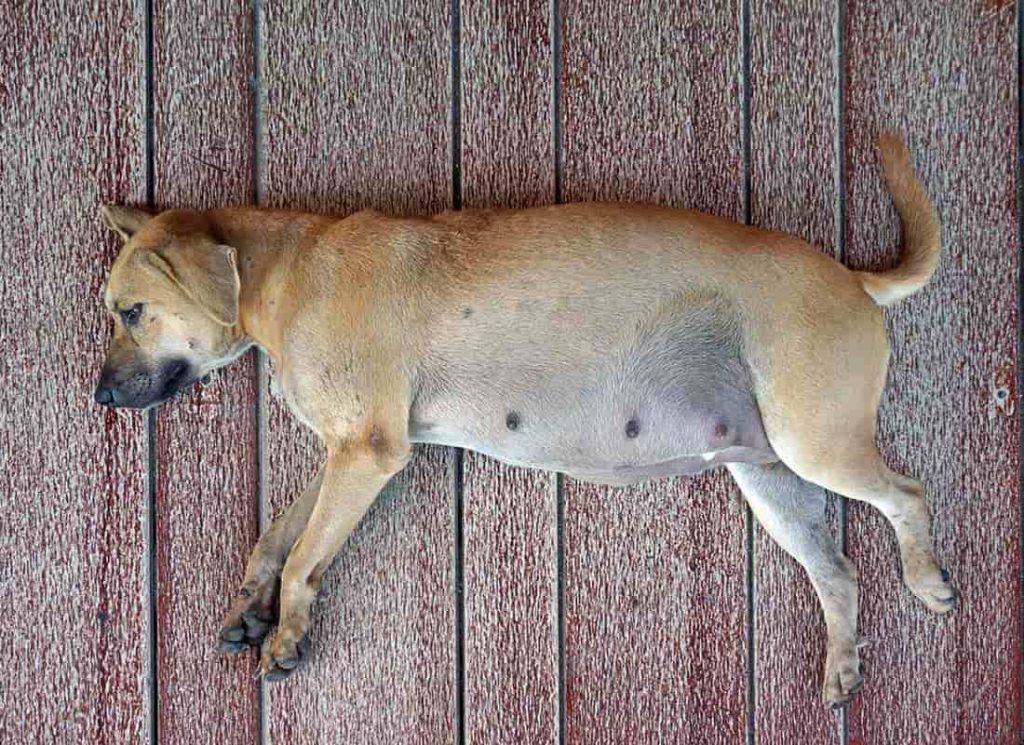
When your dog is in heat, her private parts will appear significantly larger than normal. In some cases, the vulva will also develop a reddish color. There may be swelling for up to three weeks during the proestrus and estrus stages of her heat cycle. Many dogs will also develop swollen nipples during proestrus.
Watch out for excessive licking, obvious pain, or open wounds — these could be signs that your dog is fighting an infection and needs to see a vet.
Bloody or straw-colored discharge
Vaginal discharge is another tell-tale sign of a dog in heat. The discharge will be bloody or pink-colored at the start of their heat cycle, with a lighter straw or tan shade at the end of their cycle. Luckily, doggy diapers can help prevent messes during this time.
Increased urination
When your dog is in heat, you’ll notice that she needs to go to the bathroom more often than normal. This is because dogs use their urine to mark their scent, and their pheromones let male dogs know they’re ready to mate.
Behavioral changes
When your dog is in heat, her hormones are racing, which means she might not act like her normal self. You may notice that your dog is restless or aggressive when she’s normally calm, or that she’s more attention-seeking than normal. Exact behavioral changes will vary depending on your dog and her unique personality.
Increased interest from male dogs
Female dogs in heat will get plenty of attention from male dogs at the dog park or while you’re out on walks. Be sure to keep her on a leash to avoid any unwanted mating!
Nesting or clinginess
Dogs in heat will often “nest” by moving blankets and toys to create a cozy place to sleep. They might also paw at their bedding or walk in circles on top of it. This is an instinctive behavior that can pop up when your dog is preparing for a future pregnancy (even if she’s not currently pregnant). Your dog might also be more clingy and cuddly than normal and want extra love.
Changes in appetite
It’s normal for a dog’s appetite to change when she’s in heat. Most dogs will eat less than usual during this time, but some may eat more often. If your dog isn’t eating anything while they’re in heat, be sure to check in with your vet and rule out more serious problems.
How often do dogs go into heat?
Most unspayed female dogs go into heat twice a year on average. However, the exact frequency of a dog’s heat cycle can vary significantly based on their breed and age. Here are some average cycle lengths for different types of dogs:
- Small breeds: Every 3 to 6 months
- Medium breeds: Every 6 to 8 months
- Large breeds: Every 8 to twelve months
- Giant breeds: Every 12 to 18 months
Every dog is unique, so their cycles might not align perfectly with these averages. Your dog’s cycle will also change as she gets older, as older dogs go into heat less often than youngsters.
Factors that influence heat frequency
The estrus cycle is different for every dog, and there are a variety of factors that influence the length and frequency of heat cycles. Over time, you’ll learn what’s normal for your girl so you can prepare accordingly. Here are some of the factors that influence a dog’s heat cycle:
- Breed size and type: Small-breed dogs have more frequent heat cycles than large-breed dogs.
- Age and maturity: Unlike humans, dogs don’t experience menopause — they’ll continue to go through heat cycles throughout their lives. However, a dog’s heat cycles will get less frequent, and symptoms will get less intense as they get older.
- Health conditions: Dogs facing infections or chronic illnesses will experience heat cycles less frequently, as their bodies are focused on healing instead of reproduction.
- Spaying status: Dogs won’t experience heat cycles after being spayed.
- Environmental or seasonal factors: Research shows that exposure to light affects a dog’s heat cycle, making them more likely to go into heat in the summer. Extreme temperatures or drastic environmental changes could also put stress on your dog’s body, making them less likely to go into heat.
How to take care of a dog in heat at home
You might be wondering what to do when your dog is in heat for the first time. Here’s how to keep your dog safe and comfortable while they’re in heat:
- Provide a clean and comfortable space to relax: Many dogs feel anxious when they’re in heat. Make sure they have plenty of warm, clean bedding to relax on during this time.
- Use dog diapers: Discharge and spotting are normal during a heat cycle, so use dog diapers to prevent messes around your home.
- Take her outside more frequently: Dogs need to urinate more often during their heat cycles, plus they may feel more energetic or aggressive. Take your dog outside to release that energy — just be sure to keep her leashed for safety.
- Provide plenty of attention and reassurance: Many dogs are anxious or needy during their heat cycles. To combat this, spend some extra time with her and offer plenty of reassuring snuggles.
- Monitor interactions with other pets: While in heat, your dog might try to mate with nearby male dogs or be aggressive with other pets. It’s best to err on the side of caution and keep her separate from other animals.
- Track her cycle: Note down when your dog enters the proestrus phase, what symptoms she’s having, and when her symptoms subside. Over time, you’ll be able to predict your dog’s cycle.
- Consult your veterinarian about abnormal symptoms: If you notice your dog seems to be in pain, has large amounts of discharge, or excessive swelling, contact your vet right away for further guidance.
If you don’t plan on breeding your dog and want to prevent future heat cycles, consider having your dog spayed. This is a one-time procedure that prevents future heat cycles and pregnancy, and it may reduce your dog’s chances of developing mammary cancer.
Support your dog’s nutritional health during heat cycles
During your dog’s heat cycle, she’ll need a little extra love and support. Providing a nutritious diet and plenty of water will fortify her immune system and help her recover from any heat-related stress.
JustFoodForDogs meals may help with changes in appetite and digestive sensitivity, as well as supplements to support a healthy skin and coat. With DIY nutrient kits, you can even whip up balanced dog meals at home.
Get started with JustFoodForDogs and build your pet’s custom meal plan today.