The transition from milk to solid food is one of the most important early decisions a new puppy owner faces. Get the timing right, and your pup builds a strong nutritional foundation. Get it wrong, and you risk digestive upset, nutritional gaps, or a puppy who simply isn’t ready to handle what’s in the bowl.
This guide covers everything you need to know: when dry food becomes appropriate, how to wean your puppy step by step, how to soften kibble correctly, what to look for when choosing a puppy food, and how long to keep feeding puppy-specific formulas before making the switch to adult food.
When Can Puppies Eat Dry Food?
Most puppies can begin transitioning to dry food between 6 and 8 weeks of age, but there’s an important caveat: dry puppy food must be softened with warm water or puppy milk replacer until puppies are at least 8 to 10 weeks old. Their teeth and digestive systems simply aren’t ready for unsoftened kibble before that point.
The weaning process itself typically kicks off much earlier, around 3 to 4 weeks, when puppies begin showing interest in food beyond their mother’s milk. By 6 to 8 weeks, most puppies are fully weaned and ready to go with moistened solid food as their primary nutrition source.
Keep in mind that breed and individual development play a role. Small breeds and toy breeds may move through the stages slightly faster, while large breed dogs like Labrador Retrievers may need a more gradual approach.
How to Wean a Puppy onto Solid Food
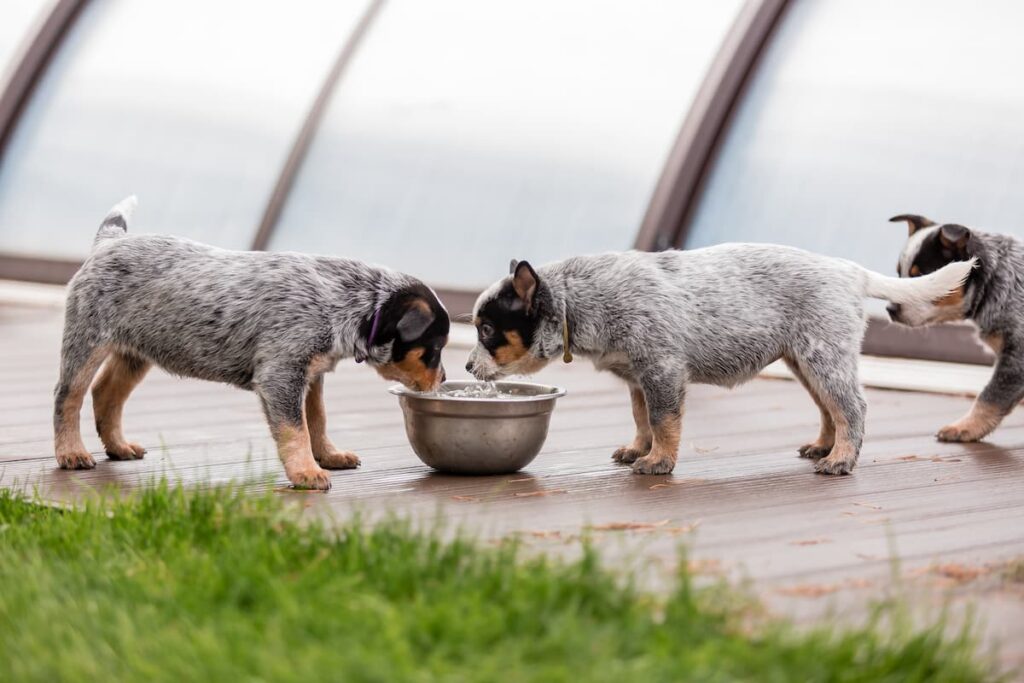
One common question new pet parents ask is, “When do puppies start eating food and drinking water?” Another common one is, “When can puppies eat wet food?” The answer unfolds in stages. Here’s a practical breakdown of the weaning timeline:
3 to 4 Weeks Old
This is when weaning puppies begins. Start introducing a shallow dish with a small amount of puppy gruel, a mushy mixture of puppy milk replacer or warm water blended with wet puppy food or soaked dry puppy food. The consistency should be smooth and liquid-heavy, almost soup-like. Let puppies lap it up at their own pace. They’ll still be nursing frequently, so this is about introduction, not replacement.
5 to 6 Weeks Old
Puppies are now nibbling more readily and nursing less. Gradually thicken the gruel by reducing the liquid ratio. The mixture should become chunkier, closer to oatmeal in consistency, as puppies get used to managing soft food in their mouths. Offer food around three to four times daily and remove uneaten portions promptly to keep things clean and fresh.
6 to 8 Weeks Old
By this stage, most puppies are eating solid wet food as their main diet and nursing only occasionally, if at all. Continue offering moistened puppy kibble, but make the mixture thicker with each passing week. Some puppies will begin comfortably chewing slightly softened pieces. Baby teeth are emerging during this period, so soft food remains important; teething puppies smaller than expected may need more time.
8 to 10 Weeks Old
Most puppies leave their littermates and arrive in new homes right around this window. By 8 to 10 weeks, many puppies can begin transitioning to fully dry dog food, though it’s still a good idea to soften it slightly if your pup shows any signs of digestive upset or reluctance. By 10 weeks, teeth eruption is well underway, and most puppies can comfortably handle unsoftened kibble. Watch their stool for any signs of diarrhea, which can signal the transition is moving too quickly.
How to Soften Puppy Food
Softening dry food correctly makes a real difference in how smoothly the weaning process goes. Here are four practical tips:
- Soak Kibble in Warm Water or Puppy Milk Replacer: Add warm water or puppy formula to dry puppy food and let it soak for about 10 minutes before serving. Puppy milk replacer adds calories and familiar flavor that encourages even reluctant pups to eat. Avoid using cow’s milk, which can cause digestive upset in young dogs.
- Mash the Soaked Kibble to a Smooth, Gruel-Like Consistency: After soaking, mash the softened kibble with a fork until it reaches a smooth, gruel-like texture. Early in weaning, the mush should be thin enough to lap easily. As puppies develop, you can leave more texture in the mix and reduce the mashing.
- Reduce the Liquid Ratio Gradually Week by Week: Each week, use slightly less water or milk replacer in the mixture. This gradual shift helps puppies adjust without overwhelming their sensitive stomachs. A too-fast transition from liquid to hard food is one of the most common causes of tummy upset during puppyhood.
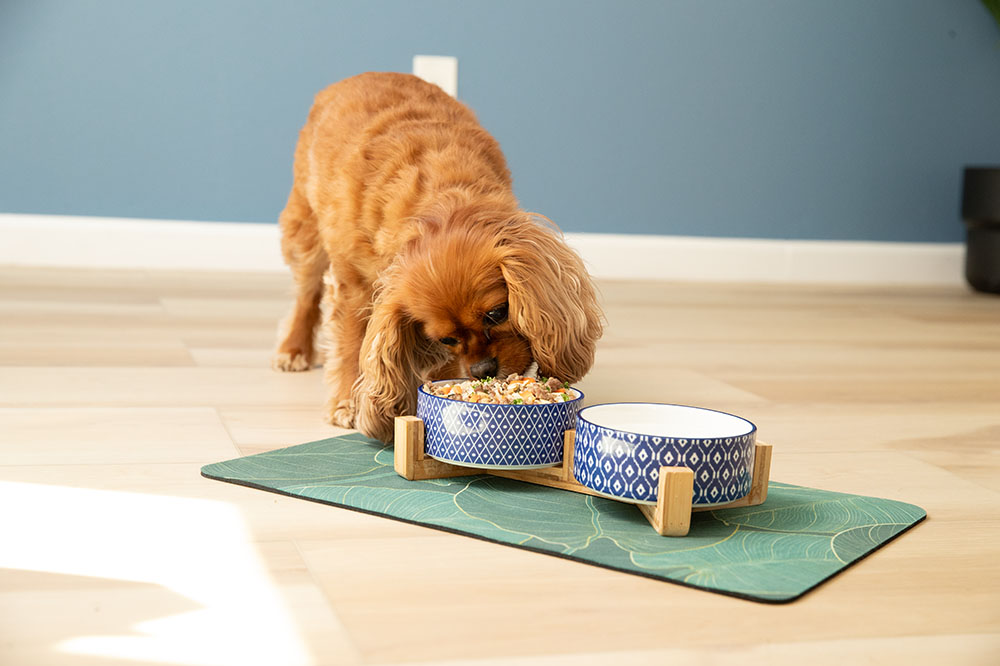
- Serve in a Shallow Bowl the Puppy Can Easily Reach: A shallow dish matters more than it sounds. Deep bowls are hard for young puppies to access and can cause frustration at mealtime. A flat, wide dish lets small breed dogs and toy breeds reach their food without strain and keeps the feeding process calm and easy.
Choosing a Food for Weaning Puppies
When to wean puppies and what to feed them go hand in hand. Not all pet food is appropriate for growing dogs. Here’s what to look for:
Formulated Specifically for Puppies, Not Adult Dogs
Adult dog food is not nutritionally appropriate for puppies. Puppy food is specifically formulated with higher levels of protein, calcium, phosphorus, and calories to support rapid growth. Always check the food label for a puppy feeding life stage statement before buying.
Appropriate for the Puppy’s Expected Adult Size
Large breed dogs and small breed dogs have different nutritional needs. Large breed puppies need carefully calibrated calcium and phosphorus levels to support bone development without accelerating growth too quickly. Look for foods labeled for your puppy’s anticipated size: small breeds, medium, or large breed sizes.
Nutritionally Complete and Balanced
Look for foods that meet AAFCO standards for growth, which ensures the diet covers all essential nutrients a growing puppy needs. This is non-negotiable, particularly during weaning, when nutrition is doing heavy lifting for developing bodies.
High-Quality Protein as the Primary Ingredient
Protein drives healthy muscle development. The first ingredient on any dry puppy food or wet puppy food you choose should be a named animal protein, chicken, beef, salmon, or similar. Avoid foods where grains or fillers appear at the top of the ingredient list.
How Long Do Puppies Need Puppy Food?
Most puppies should continue eating puppy-formulated food until they reach their adult size, and that timeline varies significantly by breed.
- Small breeds (under 20 lbs at maturity) typically transition to adult food at 9 to 12 months.
- Medium breeds generally make the switch around 12 months.
- Large breed dogs may need puppy food until 12 to 24 months, as their skeletal development continues well past the one-year mark.
Consult your veterinarian if you’re unsure when your specific breed is ready. A vet can assess your puppy’s growth curve and give guidance on the right transition point for their size and health status.
Build a Diet That Grows with Your Puppy
What a puppy eats in their first weeks and months sets the foundation for everything that comes after: immune function, bone density, muscle development, and long-term digestive health. That’s why getting puppy feeding right from the weaning stage matters far beyond just “what’s in the bowl.”
JustFoodForDogs offers custom diets and vet-prescribed targeted nutrition options that give owners complete ingredient control from day one. Whether you’re navigating the early weaning stage or planning your puppy’s long-term diet, their team can help you build a feeding plan that genuinely grows with your dog.
Explore Custom Diets and Targeted Nutrition to get started.
Final Thoughts
Transitioning a puppy from milk to solid food is a gradual, stage-by-stage process, not a single event. Starting with puppy gruel at 3 to 4 weeks, moving to thicker moistened kibble by 6 to 8 weeks, and introducing fully dry dog food by 8 to 10 weeks gives most puppies the time they need to adjust safely. Choose a food that’s specifically formulated for puppies, matches your dog’s expected adult size, and leads with high-quality protein. When in doubt, consult your veterinarian; they’re your best partner through every stage of puppyhood.