Dogs are funny. They are hilarious with physical comedy, with those adorable head tilts of innocence, clumsiness, and silly behaviors, even if unintentional. But do dogs have a sense of humor? The question has fascinated pet parents, scientists (even Charles Darwin), and animal behaviorists. The short answer is: yes, dogs almost certainly have something that functions like a sense of humor, though it doesn’t look quite like ours.
What Does “a Sense of Humor” Actually Mean for Dogs?
Before we can answer whether dogs have a sense of humor, we need to decide what we even mean by the phrase.
For humans, humor is complex. Finding something hilarious involves recognizing incongruity, understanding that a situation has harmlessly violated expectations, and feeling the pleasure of that gap. Academics call this the Benign Violation Theory. It’s the idea that something is funny when it’s simultaneously wrong and okay.
Clearly, dogs aren’t workshopping punchlines. But humor, at its most basic level, might simply be the capacity to do something that breaks a pattern and enjoy the response it creates.
Playfulness and humor aren’t the same thing, but they’re deeply intertwined. In humans, we’d expect a playful person to have a good sense of humor, and vice versa. Dogs are, almost by definition, playful creatures. Their playfulness is deliberate, social, and often aimed squarely at provoking a reaction. That starts to sound less like instinct and more like wit.
What Science Says: Expert Opinions and Research
Psychologist and dog behavior expert Dr. Stanley Coren has argued that if playfulness is a reliable proxy for humor — which it appears to be in humans — then dogs and their anthropomorphisms most certainly qualify. Some breeds qualify more than others.
In Coren’s view, dogs bred for sustained social engagement with humans have retained what biologists call neoteny: the preservation of juvenile traits into adulthood. Puppies are playful. Dogs, uniquely among domesticated animals, stay that way for life. That perpetual puppy-mind is part of what makes them so companionable — and part of what makes them so reliably hilarious.
A Laboratory Animal Refinement and Enrichment Forum discussion explored humor from a different angle, suggesting that animals may display humor-like behavior precisely because it gets a response. In other words, if your dog does something ridiculous and you laugh, and your dog repeats that behavior, they have learned the mechanics of a joke. The fact that it’s learned, researchers note, doesn’t make it any less genuine. Humans learn what makes other people laugh, too.
Do Dogs Laugh?
Yes, dogs laugh. When dogs are deeply engaged in play, they produce a breathy, forced panting sound that’s acoustically distinct from their regular breathing. It’s more open-mouthed, more rhythmic, and more expressive. Zooologist Konrad Lorenz was among the first to describe it as laughter-adjacent, noting the open mouth and relaxed expression that accompanied it.
Research found that other dogs respond to it. Play recordings of this sound near an anxious dog in a shelter, and their posture softens. The sound functions as a social signal. It communicates: this is joyful, you’re safe, join in. That’s not so different from what human laughter does.
Animal behaviorist Patricia Simonet studied the vocalizations dogs make during play and identified a specific exhalation-type panting sound (different from regular panting) that functions as a social signal. When she played recordings of this sound to other dogs, they became more relaxed and playful. The sound, she concluded, may be the closest thing dogs have to audible laughter: produced in moments of delight, aimed at others, and socially contagious.
Do Dogs Try to Make You Laugh?
Many dogs exhibit behaviors that seem intended to make us laugh because they learn that laughter is a positive social signal tied to play and attention. However, it’s difficult to prove true intent. Dogs do perceive human emotions and prefer positive sounds, such as laughter, so it stands to reason that they aim to get humans to make that positive sound on purpose. Our laughter is reinforcement.
Signs Your Dog Has a Sense of Humor
“Humor” from a dog’s perspective is a blend of playfulness, surprise/novelty, social bonding, and attention-seeking. What looks like comedy to us is often canine communication (especially play signals) plus learned patterns that get a rewarding response from humans. Here’s what canine humor tends to look like in practice:
The keep-away strut. Your dog picks up a toy — or a sock, or your TV remote — and parades past you just slowly enough to make sure you’ve noticed. The item itself is irrelevant. The point is the parade and amusing antics. When you reach for it, they’re gone.
The perfectly timed zoomies. Dogs seem to have an uncanny awareness of the worst possible moment to explode into clownish full-speed laps around the living room: when you’ve just cleaned, when guests have arrived, when you’re on an important call. Coincidence? Owners of high-energy dogs will have their doubts.
The fake-out. Many canines will pretend not to know a command they’ve known for years — right up until they realize treats are on the table, at which point they perform the trick with suspicious precision. Border Collies are particularly gifted at this particular practical joke.
The play bow. The silly play bow — front legs flat, rear in the air, wagging tail, maybe a tilted head — is a dog’s clearest way of signaling that whatever comes next is meant in fun. But some dogs use it as a setup: they bow, wait for you to engage, and then do something entirely unexpected. It’s almost theatrical.
The dramatic side-eye. This one is harder to quantify scientifically, but any dog owner knows the expressive look: the slow, withering glance your dog gives you when you’ve asked them to move from the couch, or put on their raincoat, or end playtime. It’s a look that suggests they find you faintly ridiculous. They may be right.
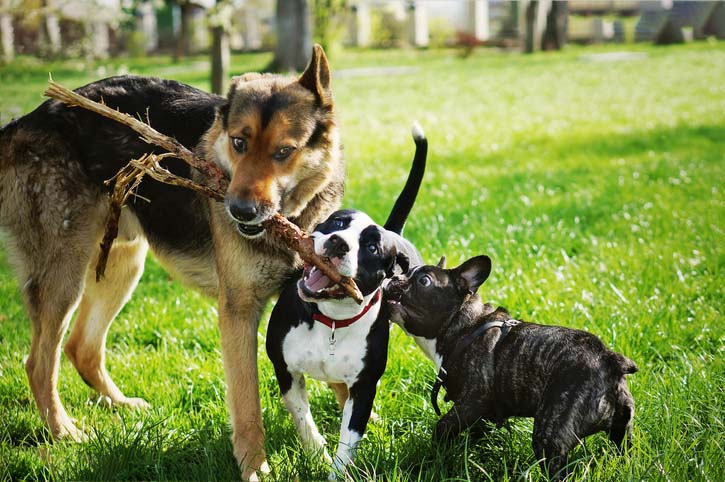
Stolen objects with an audience. Unlike a dog who steals something and retreats to chew it privately, the humor-adjacent thief stays visible with enthusiasm. They want you to know they have your glove. The chase is the whole point.
Each of these quirks and behaviors shares a common feature: awareness of the other. The dog is reading your reactions, adjusting accordingly, and repeating what works. That feedback loop — doing something, watching the effect, doing it again — is the engine of social humor.
Which Dog Breeds Are Most Playful?
Some dogs seem to approach life as a series of opportunities for mischief, while others are more earnest in their interactions. By and large, dogs are individuals.
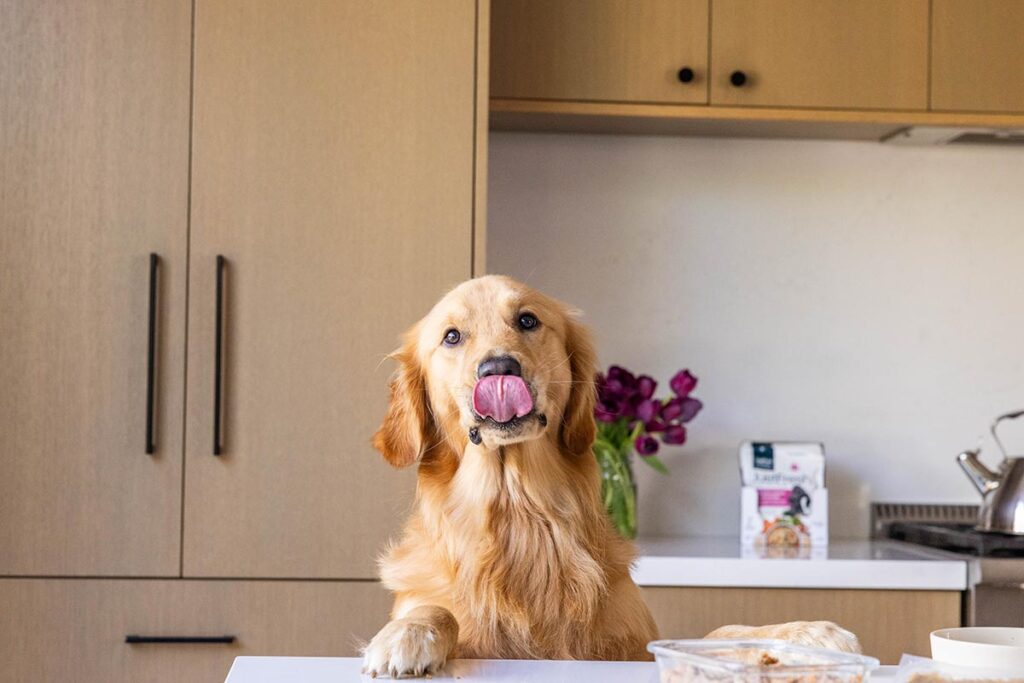
That being said, breeds often cited for their comedic sensibility include Golden Retrievers, who combine high social intelligence with a goofy physicality; Boxers, whose exaggerated play style and rubbery facial expressions make them natural clowns; Cairn Terriers and Airedale Terriers, both known for an almost defiant wit; Irish Setters, prone to elaborate and theatrical games; Dachshunds, who carry the air of creatures who know exactly how absurd they look and have committed to it; and Border Collies, whose humor runs toward the intellectual — they are less likely to steal your shoe and more likely to convince you that you wanted them to.
The key variable, it turns out, is environment as much as genetics. Dogs raised in households where play is frequent and reciprocal tend to develop more elaborate and inventive humor-adjacent behaviors. Humor, like most things in a dog’s life, flourishes when it’s welcomed.
How to Nurture Your Dog’s Playful Side
If you want to bring out your dog’s inner comedian, the good news is that the approach is exactly what you’d hope: play more, laugh more, pay attention.
Respond to their antics. Positive reinforcement works in both directions. When your dog does something funny, perhaps accompanied by a head tilt, and you react, you’re teaching them that this behavior elicits a response worth repeating. You’re not rewarding bad behavior; you’re co-creating a repertoire.
Learn to read the play bow. When your dog bows uninhibited, they’re opening a window. Step through it. Reciprocating — even just crouching down, mirroring the gesture — tells them the channel is open.
Play games with ambiguity. Hide-and-seek, keep-away (initiated by you, not just survived by you), and fetch variations that change the rules slightly are all ways of building the kind of interactive playfulness and excitement that breeds humor.
Don’t punish the joke. If your dog steals a sock and parades it past you, they’re inviting you into a comical game. Chasing them, or even just laughing, continues the game. A flat non-reaction ends it. Don’t misjudge–not every stolen item needs to be a teachable moment.
The more you play with your dog and develop “inside jokes,” the more you’ll start to recognize the specific flavor of their humor.