

- A dog’s nose stays wet thanks to mucus from nasal glands; frequent nose licking; and moisture picked up from water bowls, air and surfaces.
- That moisture helps your dog smell better, since scent particles stick more easily to a damp surface, and gives a small assist with cooling when dogs pant.
- A dry nose is often normal, such as after a nap, after exercise, or in dry or windy weather. A wet nose doesn’t guarantee good health, either.
- Call your vet if nose changes come with other signs of illness, or if discharge is thick, discolored, bloody or persistent.
It’s natural for pet parents to wonder what’s normal for their pets and what isn’t. Some questions dog owners often ask are: Why is my dog’s nose always wet? And does my dog’s nose say something important about her health?
A dog’s nose should be moist most of the time, but a dry nose doesn’t necessarily mean something’s wrong. Here, we explain what a dog’s wet nose does, how dogs’ noses stay moist, and what it could mean if your pup’s nose seems too dry or too runny.
Why are dogs’ noses wet?
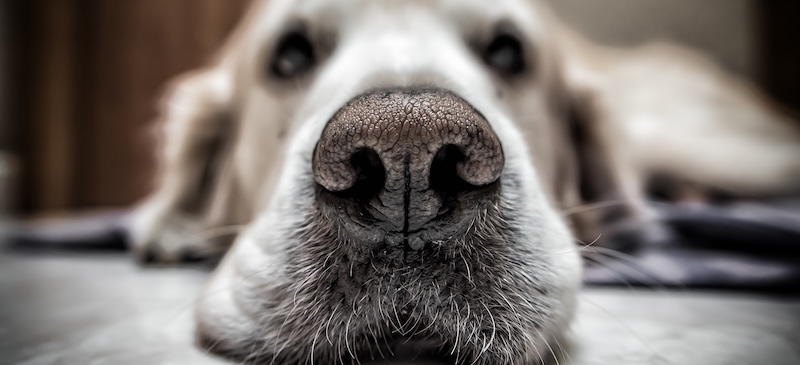
A dog’s nose stays moist for several reasons related to normal body functions.
Mucus glands
Glands inside the nasal cavity produce a thin layer of mucus that coats the inside of a dog’s nose and keeps the surface damp. This moisture helps trap scent particles from the environment, giving dogs more time to pick up and process the smells around them.
Nose licking
Dogs frequently lick their noses, which helps transfer scent particles from the air into special sensory organs inside the mouth that let them analyze those smells in more detail. A dog’s sense of smell is how it primarily interacts with the world, so this licking is an important way for them to understand their environment.
Environmental moisture
Dogs are natural investigators, and they stick their noses into just about everything. A dog’s nose may pick up moisture from the air, water bowls or from other surfaces he touches.
What a wet nose does for your dog
The moisture on a dog’s nose serves an important function: It enhances its sense of smell. Scent particles from the air stick more easily to a moist surface, giving dogs more contact time to analyze what they’re sniffing.
The canine nasal cavity contains more than 100 million sensory receptor sites that send information about smells to the brain, and moisture helps dogs make the most of this powerful system.
Dog nose moisture also helps marginally with temperature regulation. Although dogs have sweat glands on their noses, there aren’t enough to help them cool down. However, a cool nose moist from mucus and saliva can assist with evaporative cooling when dogs pant.
When is a dry nose normal in dogs?
A dry nose doesn’t automatically mean a dog is sick, and a wet nose doesn’t always guarantee good health. A sick dog can still have a cool, wet nose, and a healthy dog can have a warm, dry one.
Here are a few common situations where a dry dog nose is perfectly normal:
- After a nap: Dogs don’t lick their noses while they sleep, so they can dry out during rest.
- After exercise or play: Physical activity can temporarily dry out a dog’s nose, especially in warm weather.
- Natural variation: Some dogs have drier noses than others because of genetics, face shape or age.
- Weather and season: Low humidity, cold temperatures or wind may cause nose dryness or irritation, similar to how winter conditions can dry out a person’s skin. Light-colored dogs can also develop sunburn on their noses, which may cause irritation or dryness.
A dry nose on its own usually isn’t a cause for concern. However, you should call your vet right away if your dog’s nose is dry and she also shows other signs of illness or dehydration, such as lethargy, loss of appetite, vomiting, diarrhea or weakness.
If you notice a dry, crusty or flaky nose that causes your dog discomfort, schedule a routine visit with your vet to have it checked out.
When nose discharge may signal a problem
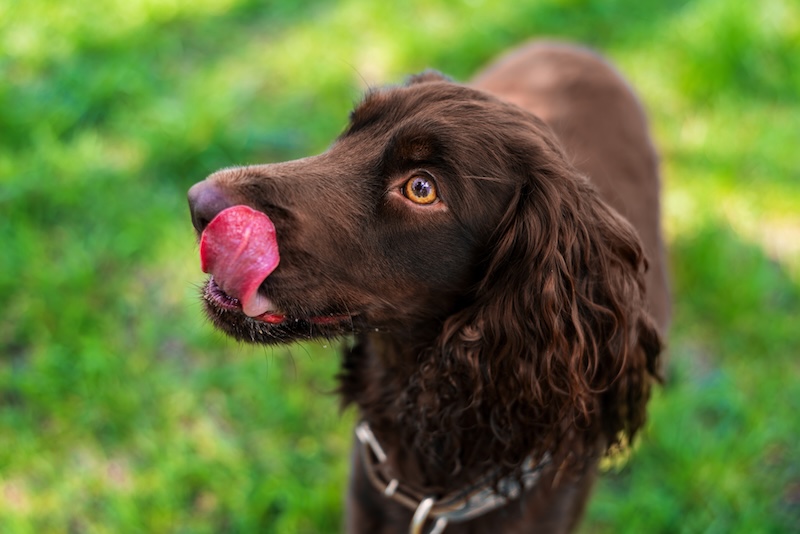
The skin on a dog’s nose and the mucous membranes inside their nose should be slightly moist, but excessive discharge may signal a problem. Just as some dogs drool, they may also have a runny nose when excited or nervous, or when their nasal passages are irritated.
However, your pet may need veterinary care if they develop abnormal nasal discharge. Call the vet if you notice any of the following:
- Thick or discolored discharge: Dogs with yellow, green or cloudy nasal discharge may have a respiratory infection or another illness. If the infection is bacterial or viral, it may be contagious to other dogs.
- Excess or persistent discharge: A runny nose that doesn’t clear up within a day or two, or one that keeps getting worse, could be caused by allergies, an infection, a chronic condition, or a foreign object stuck in the nostrils or nasal passage.
- Blood-tinged discharge: Blood in nasal discharge or a frank nosebleed can result from trauma; a foreign body; or something more serious, like a tumor, clotting disorder or toxin ingestion. If your dog has this type of nasal discharge, head to the vet for an urgent evaluation.
- Discharge accompanied by other symptoms: A runny nose with coughing, sneezing, lethargy, fever, loss of appetite, eye discomfort or skin issues may indicate a condition that needs treatment.
If you aren’t sure what’s going on with your dog, it never hurts to call your vet or schedule a visit. Your vet can discuss your dog’s symptoms with you, review his history and order any necessary tests to help determine if there is cause for concern or a need for treatment.
Good nutrition supports your dog from nose to tail
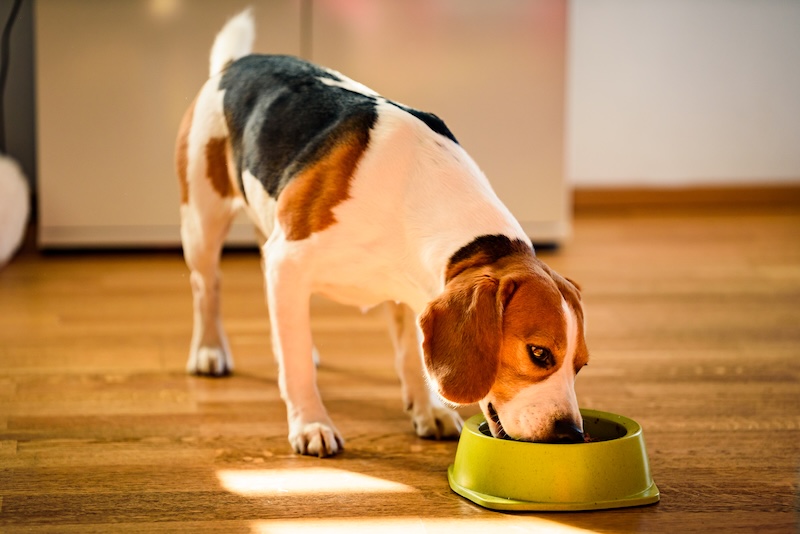
A dog’s wet nose serves important functions, including enhancing sense of smell and helping stay cool. However, a warm or dry nose doesn’t necessarily mean anything is wrong.
Each dog is an individual and may have a wet or dry nose at times, but you shouldn’t worry unless your dog show other signs of illness or discomfort.
Changes in nose moisture or discharge can sometimes signal a health issue, but knowing what to look for and when to call a vet can help pet parents stay on top of their pups’ health. Additionally, feeding a complete, balanced diet can help to support overall health and well-being at all life stages.
Check out JustFoodForDogs’ shelf-stable meals for a convenient way to feed your dog high-quality, human-grade food, or explore the range of complete and balanced diets to find the right fit for your pup.
Frequently asked questions
Should my dog’s nose be wet?
A moist nose is normal for dogs and helps them smell and stay cool, but a dog's nose may be wet or dry depending on activity level, sleep schedule or the weather. Call your vet if your dog's nose seems drier than normal, looks cracked or irritated, or is accompanied by other signs of illness like lethargy or loss of appetite.
Are all dogs' noses black?
Dog noses come in a range of colors, including black, brown, pink and liver (reddish-brown). A dog's breed and genetics largely determine nose color. Some breeds have lighter noses, while others may experience a seasonal change called "snow nose," where a dark nose lightens to pink or light brown during the colder months and returns to its original color in the spring.
Dogs with pale or pink noses are more vulnerable to sunburn, so pet parents may want to apply pet-safe sunscreen before extended sun exposure.
What is reverse sneezing in dogs?
Reverse sneezing is a reflex, like a regular sneeze or a yawn. Dogs use it to clear irritation from their nasal passages. Instead of blowing air out like a regular sneeze, they rapidly pull air in through the nose, producing a loud snorting or snuffling sound.
Brachycephalic breeds (such as pugs or shih tzus) and smaller dogs tend to reverse sneeze more often than larger breeds, but it can happen to any dog.
How do I keep my dog's nose healthy?
Most dogs don't need any special nose care. Offering access to clean, fresh water, feeding a balanced diet and protecting your dog from extreme weather should help. Call your vet if your dog develops a dry, cracked or irritated nose; if you notice changes in the texture or color of your dog’s nose; or if your dog develops unusual nasal discharge.
- Jenkins EK, DeChant MT, Perry EB. When the Nose Doesn't Know: Canine Olfactory Function Associated With Health, Management, and Potential Links to Microbiota. Front Vet Sci. 2018 Mar 29;5:56. doi: 10.3389/fvets.2018.00056. PMID: 29651421; PMCID: PMC5884888.
- Kowalczyk-Jabłońska I, Jundziłł-Bogusiewicz P, Kaleta T. The Role of Olfaction in Dogs: Evolution, Biology, and Human-Oriented Work. Animals (Basel). 2026 Jan 29;16(3):427. doi: 10.3390/ani16030427. PMID: 41681409; PMCID: PMC12897092.
- Kokocińska-Kusiak A, Woszczyło M, Zybala M, Maciocha J, Barłowska K, Dzięcioł M. Canine Olfaction: Physiology, Behavior, and Possibilities for Practical Applications. Animals (Basel). 2021 Aug 21;11(8):2463. doi: 10.3390/ani11082463. PMID: 34438920; PMCID: PMC8388720.
- Plickert HD, Tichy A, Hirt RA. Characteristics of canine nasal discharge related to intranasal diseases: a retrospective study of 105 cases. J Small Anim Pract. 2014 Mar;55(3):145-52. doi: 10.1111/jsap.12175. Epub 2014 Jan 15. PMID: 24423057.
- Meler E, Dunn M, Lecuyer M. A retrospective study of canine persistent nasal disease: 80 cases (1998-2003). Can Vet J. 2008 Jan;49(1):71-6. PMID: 18320982; PMCID: PMC2147700.
- Cornell University College of Veterinary Medicine. (n.d.). Reverse sneezing. Cornell Richard P. Riney Canine Health Center.