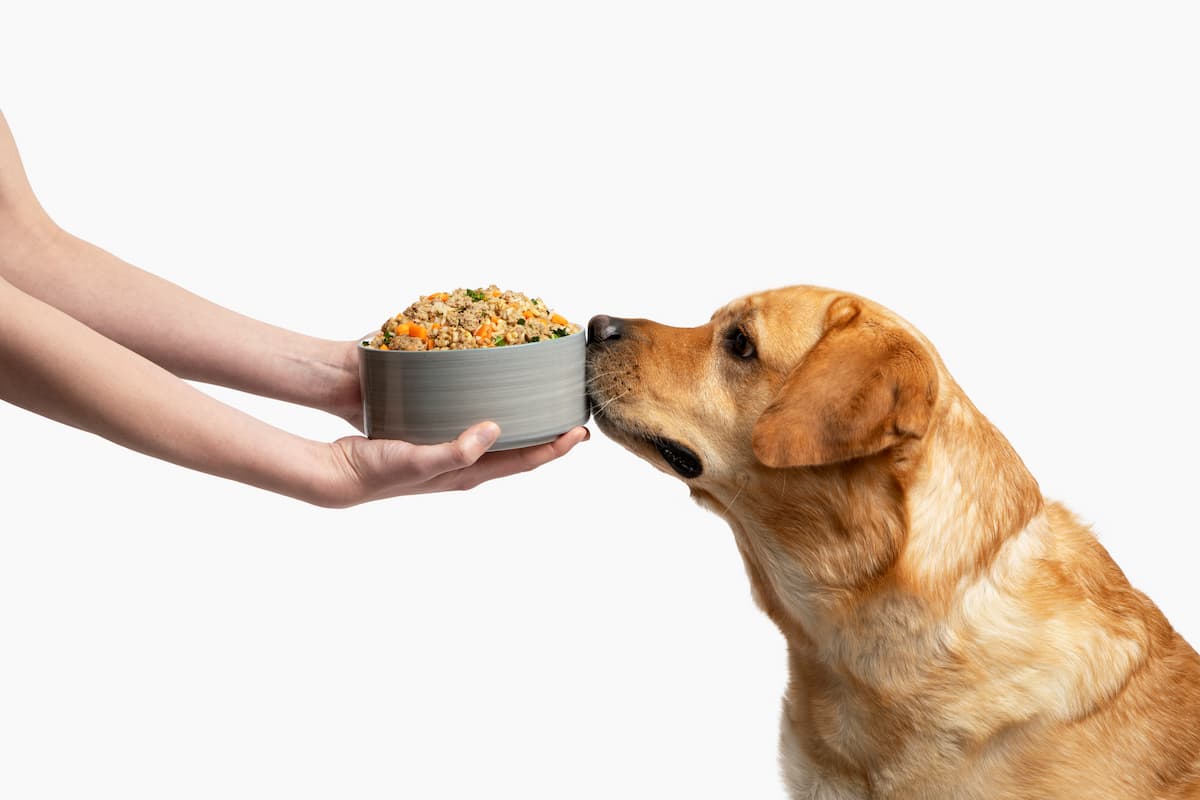
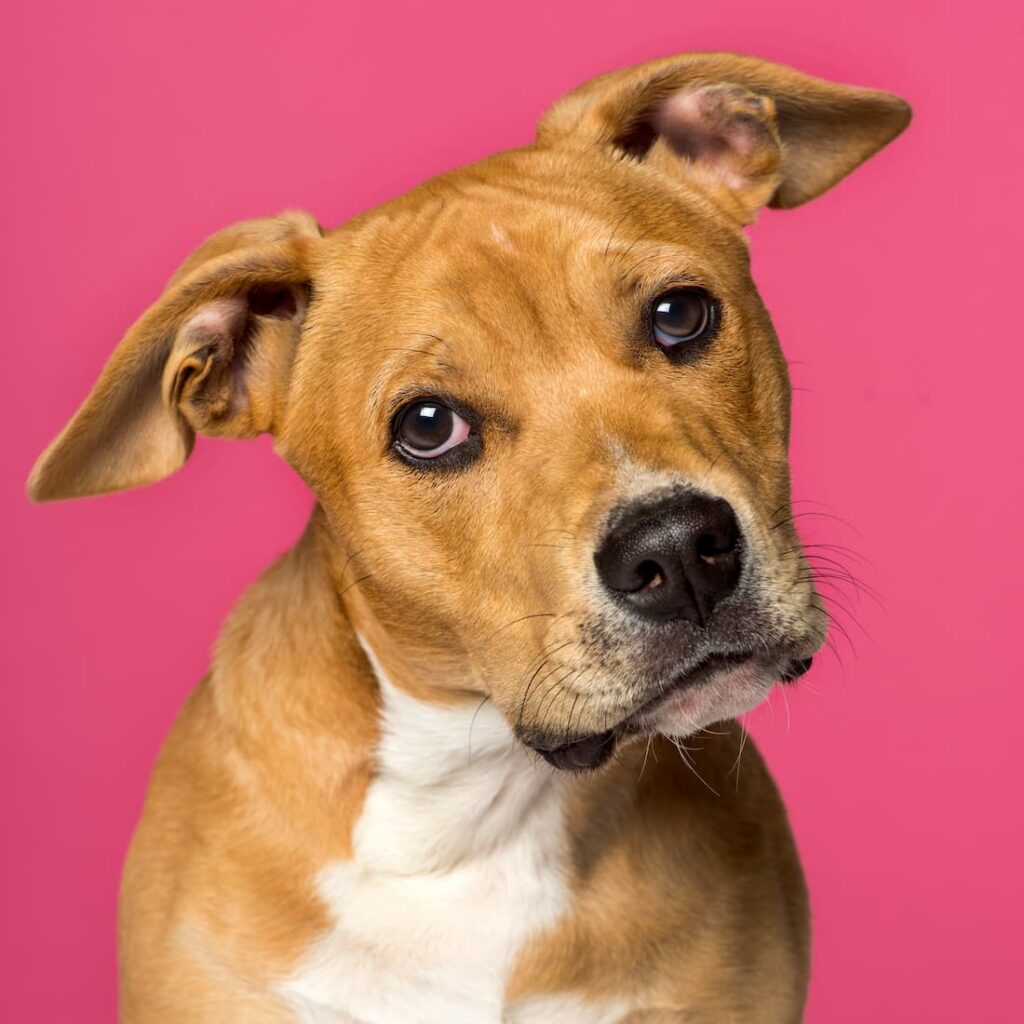
There’s a moment every dog owner knows intimately. You’re talking to your puppy — maybe asking if they want a walk, maybe just making a strange noise to see what happens — and their head slowly rotates to one side, ears perked, eyes wide and searching. It’s one of those sights that can disarm even the grumpiest person in the room. But what’s actually going on inside that fuzzy little skull? Why do puppies tilt their heads, and is it purely a performance of cuteness or something far more interesting?
The answer is both scientifically fascinating and genuinely sweet.
Canine Hearing & How Puppies Process Sound
Dogs hear the world very differently from us. Their range of hearing is impressive and can detect frequencies between 40 Hz and 65,000 Hz. Humans max out around 20,000 Hz. But raw frequency range isn’t everything. Dogs also need to locate sounds with precision, and this is where the head tilt comes in.
When a sound reaches a dog’s ears, the brain calculates where it came from by measuring the tiny difference in time it takes the sound to reach each ear. This is called interaural time difference, and it’s the same mechanism humans use.
But dogs have a complication we don’t: their ear shapes and positions vary enormously by breed, and the soft tissue around their ears can actually interfere with pinpointing where sounds originate.
By tilting their heads, dogs physically shift the position of their outer ears relative to the sound source. Think of it as fine-tuning an old radio antenna. The tilt helps them better triangulate where a sound is coming from, particularly high-pitched or unfamiliar sounds that their brains flag as worth investigating.
This is why the head tilt often happens when you speak in a high or animated voice. You’ve essentially given your dog’s auditory system something worth puzzling over.
The Communication Hypothesis
Sound localization alone doesn’t fully explain it. Dogs tilt their heads in visual contexts too — when watching something intriguing on a screen, when seeing you pull out a leash, or when you ask them a question they seem to partially understand.
Researchers and animal behaviorists have proposed that the head tilt is also a visual processing behavior. Dr. Stanley Coren, a psychologist who has spent decades studying canine cognition, has suggested that dogs tilt their heads to see human faces more clearly. Specifically, their muzzles may actually block their view of the lower half of a human face when looking straight on. By tilting their heads to the side, dogs get a clearer sightline to information-rich parts of a face that communicate emotion and intent, like the mouth and jawline.
This idea has been tested informally and makes intuitive sense when you watch dogs with longer snouts versus shorter ones. Breeds like pugs and bulldogs, whose muzzles barely protrude at all, seem to tilt their heads less frequently than longer-snouted breeds like collies or German shepherds. The tilt may literally be compensating for a partial blind spot created by their own nose.
If this is correct, they’re not just hearing us, they’re reading us, adjusting their position to catch as much emotional information as possible.
Language Processing in Dogs: Understanding More Than We Think
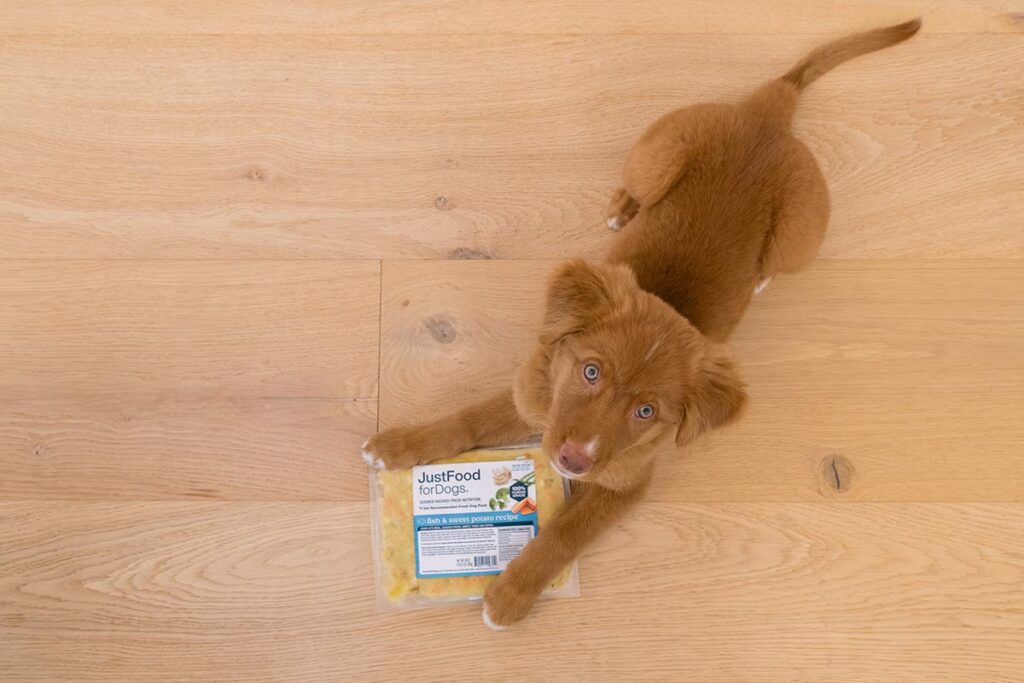
Emerging research suggests that dogs, particularly those raised in language-rich environments, may actually process some human words in ways that parallel how we do. A landmark 2016 study published in Science found that dogs use different brain hemispheres for processing the emotional tone of speech versus its actual content.
What this means practically is that when you say “good boy” in a flat, deadpan voice, your dog knows something is off. They’re processing the word and the tone as separate pieces of information, and they only register real reward when both match up positively.
Some researchers believe the head tilt may be connected to this deeper language processing. When a dog tilts their head, they may be trying to hear you more carefully. They’re not just locating the sound, but actively trying to decode meaning from it. If your puppy hears a word they recognize buried in a sentence — “park,” “treat,” “walk,” “ball” — that tilt might be the visible sign of them straining to parse the context around that familiar word.
The Social Reward Loop
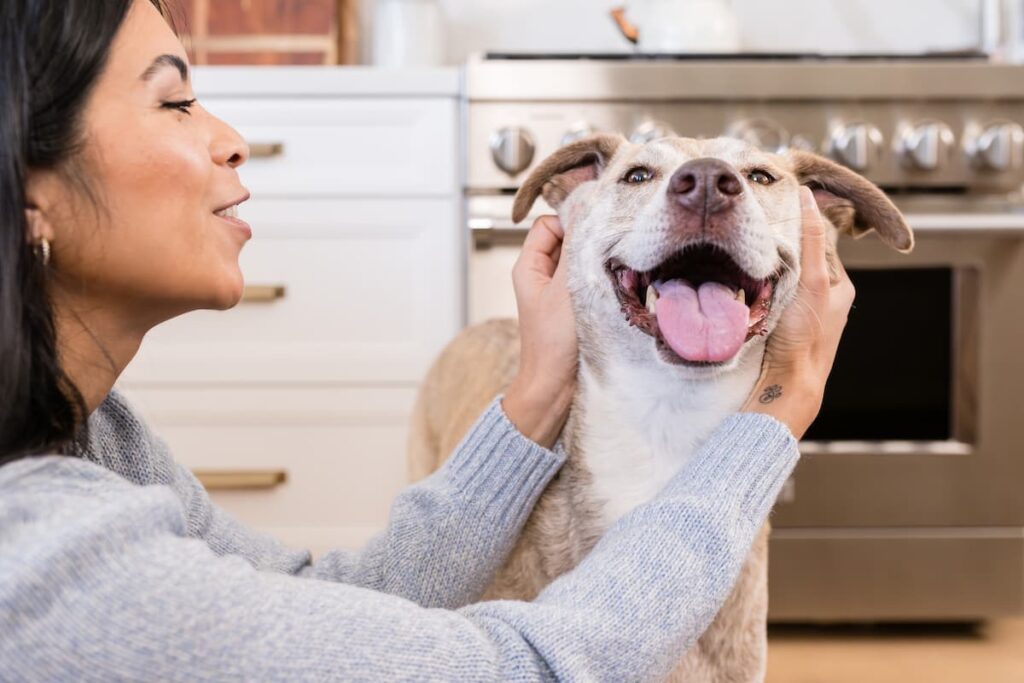
Here’s the part that dogs have figured out, perhaps more cleverly than we give them credit for: the head tilt works.
The moment a dog tilts their head, humans respond. We gasp, we coo, we reach out to pet them, we repeat whatever we just said in an even more animated voice. We take out our phones. We post videos to Instagram.
Over tens of thousands of years of co-evolution with humans, dogs have become extraordinarily sensitive to what behaviors make us respond positively. The head tilt has been reinforced over generations because it elicits warmth and attention from people. The puppies who tilted their heads were the ones humans wanted to keep around and fed. The ones who stared blankly, less so.
This is why the head tilt is often most dramatic in puppies. They’re in the most active phase of learning how to communicate with humans, and they’re discovering, through thousands of tiny daily interactions, which behaviors produce the best responses. The exaggerated, searching tilt of a puppy isn’t just adorable. It’s a social experiment in real time.
Is Head Tilting in Puppies Ever a Problem?
Most of the time, a head tilt is just a head tilt. A benign and endearing part of what it means to share your life with a dog. But it’s worth knowing that a sudden, persistent tilt that doesn’t go away may occasionally signal a medical issue. Inner ear infections, vestibular disease (a condition that affects balance), or neurological problems can all cause a dog to hold their head tilted to one side involuntarily.
The key distinction is context and duration. A tilt your dog does when they’re listening to you, then release when they lose interest? Normal and delightful. A tilt they seem unable to stop, especially if accompanied by loss of balance, unusual eye movements, or vomiting? Worth a trip to the vet.
Most puppies, most of the time, are just trying to understand you.
The Bigger Picture of Why Puppies Tilt Their Head
The head tilt is a small thing, but it points toward something large. It’s evidence that dogs are not passive recipients of human affection. They are active, curious, socially sophisticated creatures who are genuinely trying to figure us out. The tilt is a question mark made physical. It’s a puppy saying, in the only language their body allows: I’m paying attention. I’m trying to understand you. Say it again.
We’ve spent millennia building a relationship with dogs, and they’ve spent that same time building the tools to maintain it. Their tilted heads are not just reflexes, but a form of engagement — auditory, visual, social, and maybe even linguistic.
So the next time your puppy cocks their head to one side while you’re rambling at them about your day, remember that you’re witnessing something genuinely remarkable. Not just a cute behavior, but a living artifact of one of the longest and most improbable friendships in the history of life on Earth.
And yes, you should absolutely take the photo.
Sources
Ledford, Heidi. 2019. “Scientific American.” Scientific American. 2019. https://www.scientificamerican.com/article/this-gene-may-determine-if-dogs-have-long-floppy-ears-or-short-study-ones/.
“How Well Does Your Dog Understand You? | Media Relations | the George Washington University.” 2025. Media Relations. 2025. https://mediarelations.gwu.edu/how-well-does-your-dog-understand-you.
Buckley, Colleen, Courtney L Sexton, George Martvel, Erin E Hecht, Brenda J Bradley, Anna Zamansky, and Francys Subiaul. 2025. “What Does That Head Tilt Mean? Brain Lateralization and Sex Differences in the Processing of Familiar Human Speech by Domestic Dogs.” Vt.edu. MDPI. October 31, 2025. https://vtechworks.lib.vt.edu/items/6699b7b6-2458-4bfc-b193-9a83e77b5232.
This content is for informational use only and does not replace professional nutrition and/or medical advice, diagnosis, or treatment. It is not a substitute for and should not be relied upon for specific nutrition and/or medical recommendations. Please talk with your veterinarian about any questions or concerns.