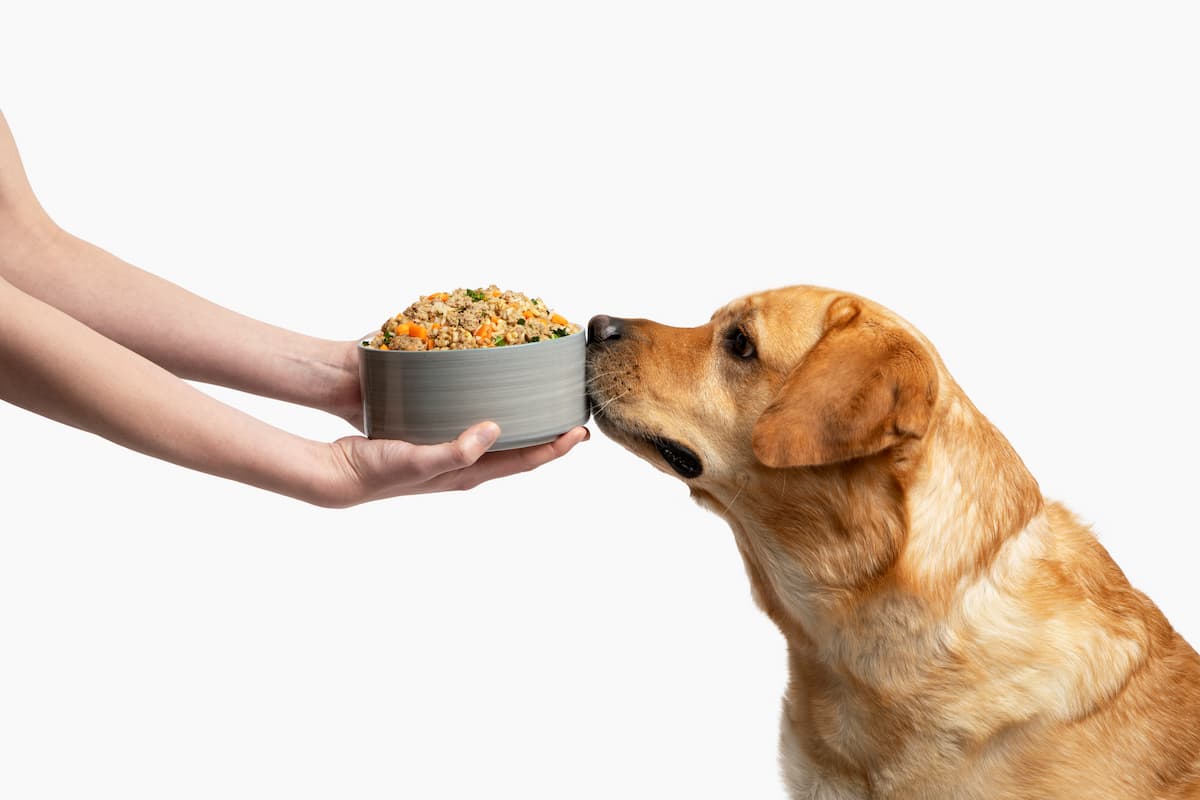
- Belly rubs feel good because a dog's belly has thin skin and dense nerve endings, plus touch triggers a release of oxytocin and endorphins.
- Rolling over to expose the belly is also a sign of trust and vulnerability — it's not just a request for a scratch.
- A belly-up posture doesn't always mean "rub me": It can also signal fear, submission, cooling off or play.
- Not every dog enjoys belly rubs — preference varies by breed and individual temperament, so always let the dog initiate, and watch the dog's body language.
Few things bond a dog and human quite like a good belly rub. But understanding why do dogs like tummy rubs helps pet parents build trust and avoid uncomfortable interactions that unintentionally stress a dog out.
In this article, you’ll learn what actually drives this behavior, how to read your dog’s body language during and after a rub, and how to approach belly rubs the right way so the experience stays pleasurable for both of you.
Why do dogs love belly rubs?
So why do dogs like tummy rubs so much in the first place? The answer is part biology, part emotional bonding and part learned behavior. Here are the main reasons dogs love belly rubs.
Sensitive nerve endings: A dog’s belly has thinner fur and skin than most of the body, which means the nerve endings there sit closer to the surface. Each hair follicle connects to a bundle of nerves, so a gentle scratch or rub sends a strong, satisfying sensation through the spinal cord and up to the brain. For many dogs, this makes belly rubs feel genuinely pleasurable rather than just tolerable.
The oxytocin bonding response: Touch between a dog and human triggers a release of oxytocin, often called the “love hormone.” This hormone reinforces the bond between dog and owner, and studies have found that both species experience a rise in oxytocin during affectionate contact. That shared chemical response is part of why a good belly rub feels like more than just physical stimulation; it strengthens trust and connection.
Endorphins and stress relief: Along with oxytocin, gentle touch prompts the release of endorphins, the body’s natural feel-good chemicals. This combination of good chemicals helps a tense dog relax, calm stress signals and create a calm, pleasant state that many dogs actively seek out.
Trust and vulnerability: A dog’s belly covers its vital organs, so exposing it is an act of vulnerability. When a dog rolls over and stays relaxed, it signals a high level of trust in the person nearby. Dogs found comfortable enough to expose this vulnerable area are communicating safety, not just requesting a scratch.
Positive association and reinforcement: Every time a belly rub leads to a good outcome, the dog’s brain builds a stronger positive association with the behavior. This is simple reinforcement: A pleasurable experience reinforces the behavior that led to it, so the dog is more likely to roll over and request it again.
Why rolling over doesn’t always mean rubbing my belly
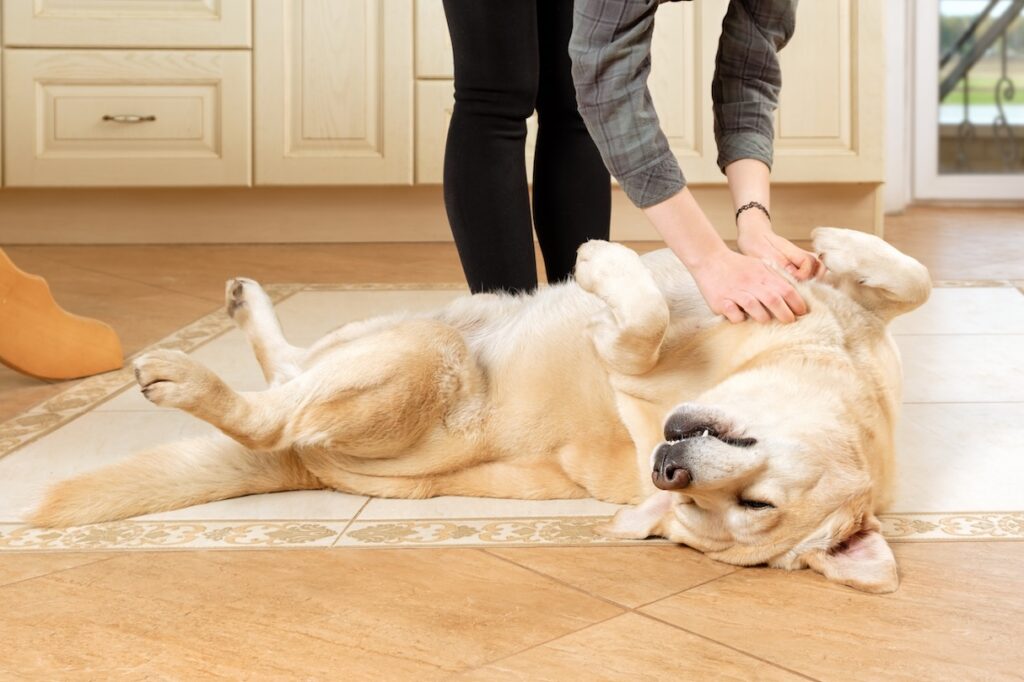
It’s a common assumption that a dog exposing its belly is always asking for a rub, but that’s not always true. Reading canine body language alongside the posture itself is the only way to know what a dog actually wants in the moment.
A relaxed roll with loose limbs and soft eyes usually means an invitation. A stiff roll with a tucked tail or wide eyes usually means something else entirely.
Here are a few other reasons a dog may roll onto its back:
A submission or fear response: Rolling over can be an appeasement gesture. In moments of stress, a dog might expose its belly as a submissive signal to a person or another dog, communicating “I’m not a threat” rather than “please touch me.” This kind of roll often comes with stiff muscles, a tucked tail and avoidance of eye contact rather than a relaxed, wiggly invitation.
Temperature regulation on hot days: Dogs don’t sweat the way humans do, and exposing the belly, where fur is thinner, helps release body heat. A dog stretched out on a cool floor with its belly up on a warm day may simply be cooling off, not requesting attention.
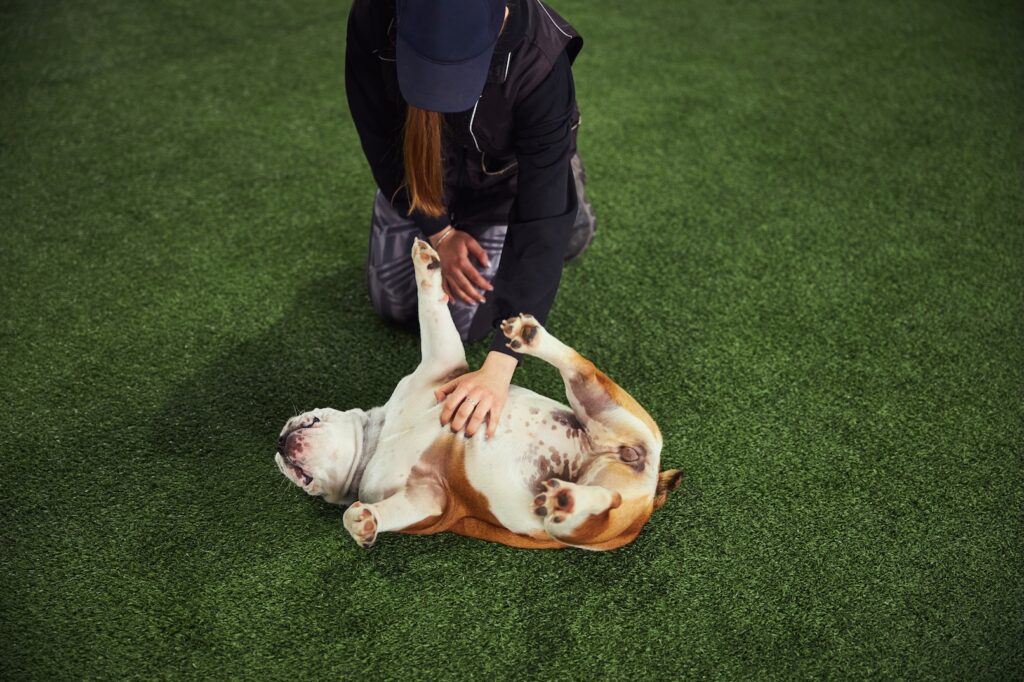
An invitation to play: Puppies and playful adult dogs sometimes roll onto their backs as part of a play sequence, often followed by wiggly movement, playful nipping or a quick flip back onto their paws. This is a very different context from a calm, settled belly-up posture meant for a relaxed scratch.
A defensive posture: In rare cases, particularly with a dog that feels cornered, a belly-up position can be defensive rather than submissive, allowing the dog to use its legs and mouth if needed. This posture tends to come with stiff, tense body language rather than relaxed muscles.
Not every dog wants a belly rub
Belly rub preference varies quite a bit by both breed tendency and individual personality, and it’s a myth that every dog enjoys this kind of contact. Some breeds, particularly certain guard dog types or naturally independent breeds, tend to be more reserved about vulnerable-position touch in general.
Beyond breed, individual history matters just as much: A dog with a nervous temperament, a limited socialization history or past negative experiences may find a belly rub more stressful than satisfying. Recognizing that preference is individual, not universal, is one of the most important parts of respectful dog behavior.

Signs your dog wants a belly rub, or doesn’t
Learning to read these signals takes the guesswork out of the interaction and helps you avoid pushing a dog past its comfort zone.
Signs your dog is enjoying it
- Relaxed posture with no tension anywhere in the body
- Loose, floppy legs, sometimes with a back leg kicking involuntarily as a reflex to a good scratch
- Ears relaxed and eyes closed or half closed
- Soft eyes and no tension around the mouth or face
- A relaxed tail or a slow, gentle wag
- Staying close with no attempt to move away
- Leaning in to your hand or nudging for more when you pause
Signs your dog wants space
- Attempts to move away or shift the body out of reach
- Yawning that isn’t related to tiredness
- Lip licking without food nearby
- Tension stiffening the body or limbs
- Open, wide eyes with tight lips, sometimes showing whale eye, where the whites of the eyes become visible
- A tucked tail or a body that avoids eye contact altogether
If your dog consistently shows these stress signals during touch, even gentle touch, it’s worth checking in with your veterinarian. Consistent discomfort during normal handling can sometimes point to an underlying physical or behavioral issue worth ruling out.
How to give a belly rub the right way
A good belly rub should always be led by the dog, not the person. These practices help keep the interaction pleasurable and low-stress:
- Let the dog initiate contact. Wait for your dog to approach, roll over on its own or nudge your hand before starting, rather than reaching for a resting dog’s belly uninvited.
- Start with short strokes, and pause to check in. Begin with a brief, gentle rub, then pause. If the dog leans in, noses your hand or wags, that’s an invitation to continue. If the dog goes still or moves away, stop.
- Leave room for the dog to move. Avoid pinning a dog in place or rubbing in a way that blocks an easy exit. A dog that can move away freely is far more likely to relax into the touch.
- Recognize that consent can be withdrawn at any time. A dog that enjoyed a belly rub yesterday may not want one today. Watch the body language each time rather than assuming a repeat welcome.
- Use a gentle touch, not firm pressure. A soft, even scratch tends to feel better than deep pressure, especially near the chest and lower belly, where the skin is thinner.
- Avoid forcing a roll. Never physically flip a dog onto its back to access the belly. This removes the dog’s ability to choose and can trigger a defensive or fearful response instead of a relaxed one.
A well-nourished dog is a more content dog
A dog that feels safe, relaxed and physically comfortable is far more likely to enjoy affectionate touch like a belly rub. Reading the signals correctly, letting your dog set the pace and respecting when a dog wants space all strengthen the bond between dog and owner over time.
That same sense of physical comfort extends well beyond touch, though. A dog fed a complete, well-balanced diet tends to get support for healthy skin, a full coat and overall energy, all of which support the kind of relaxed, contented state that makes affectionate moments like belly rubs so satisfying in the first place.
For more on keeping your dog comfortable and healthy day to day, check out this advice on how to care for your best buddy.
Final Thoughts
Dogs like tummy rubs for a genuine mix of biological and emotional reasons: sensitive nerve endings, an oxytocin-driven bonding response and the trust it takes to expose something as vulnerable as the belly. But a belly-up posture doesn’t always mean “rub me,” and not every dog enjoys this kind of contact at all.
Learning to read relaxed versus stressed body language, letting your dog initiate and guide the interaction, and respecting when a dog wants space all go a long way toward keeping affection genuinely enjoyable for both ends of the leash.
Where else do dogs like to be pet?
For dogs who aren't big fans of belly rubs, the ears, the base of the tail and the side of the neck tend to be gentler alternatives. These areas offer plenty of nerve endings and a satisfying scratch without asking a dog to expose its more vulnerable belly.
Why does my dog always want belly rubs?
A dog that constantly seeks out belly rubs has usually learned that the behavior reliably earns attention, praise and affection. Since the experience feels good and reinforces the bond each time, the dog naturally keeps requesting it.
Do dogs prefer belly rubs over treats?
Interestingly, research using a Y-shaped maze found that most dogs chose contact and praise from their owners over a food reward, suggesting affection carries real value for many dogs. That said, individual dogs vary, and food motivation still plays a strong role for plenty of pups.