- Yes — dogs really do feel love, and it shows up through tail wags, soft eye contact and wanting to be near you.
- Affectionate moments like petting, cuddling and eye contact trigger a release of oxytocin, the "love hormone" — the same chemical that bonds human parents and babies.
- Common signs include following you around, leaning on you, sleeping near you and "kissing" you with licks.
- Context matters: Behaviors like licking or clinginess can sometimes signal anxiety or stress instead of affection, so it's worth reading the whole dog, not just one behavior.
Many pet parents wonder if dogs experience love in the same way people do. Does your dog really love you, or is its attachment to you something else? The answer is yes, your dog loves you!
Dogs experience love and many other human-like emotions. While they can’t say it in words, dogs communicate their affection through behavior and body language.
Your dog’s actions can help you learn a lot about how it feels. Keep in mind, however, that dog body language is complex. Sometimes, behaviors that indicate love in one context can indicate anxiety or stress in another (e.g., licking or clinginess), so it’s important to consider the whole dog and situation when interpreting behavior.
Here’s what pet parents should know about the science of the human-animal bond and how to know if your dog loves you.
Does my dog love me?
Science supports the idea that dogs feel love, even if they don’t experience it exactly the way humans do. When dogs interact with their owners, their brains release oxytocin, also known as the “love hormone.” This is the same chemical that helps parents and babies bond, and it surges in both dogs and humans during positive interactions like petting, talking and making eye contact.
During interactions, dogs also get a boost of dopamine and other brain chemicals and hormones that help with overall well-being. Objective measures point to something pet owners have always intuitively known: Dogs love their people, and people love their dogs.
So, the simple answer to whether dogs love their owners is a resounding yes.
11 signs your dog loves you
Here are some common ways dogs show love and affection.
1. They wag their tails when they see you
A relaxed tail wag, especially one that makes the whole body wiggle, is a clear sign your dog is happy to see the person he or she loves. Tail wags can sometimes mean different things, but an overall loose body combined with a sweeping or circular wag is a good sign.
2. They make soft eye contact
Soft eye contact, relaxed ears and slow blinks are special ways dogs communicate with the people they love. When your pup lovingly gazes into your eyes, each of you gets a rush of oxytocin, helping to strengthen your bond. This isn’t the same as a “hard” stare with a stiff body, which can indicate discomfort or fear.
3. They greet you when you come home
Few things feel as good as walking through the door to a dog who loves you. An enthusiastic greeting, complete with tail wags, happy vocalizing and maybe some zoomies, means your dog is truly excited to see you. Dogs who greet enthusiastically but vocalize, mess in the house or become destructive while you’re away may have separation anxiety, and you should consult your vet.
4. They follow you around
Dogs are social animals, and following you from room to room is a sign that they enjoy your company, feel safe near you and want to participate with curiosity in whatever you’re doing — even if you’re just trying to use the bathroom. Some dogs are natural shadows who always want to be wherever their favorite human is.
5. They bring you their toys
When a pup brings you her or his favorite toy, it may be more than an invitation to play. Dogs who share their prized possessions are showing trust and affection; they see you as family and want to include you in what they value most.
If your dog brings you a toy, accept it, as playtime is a great way to boost your loving bond.
6. They lick you
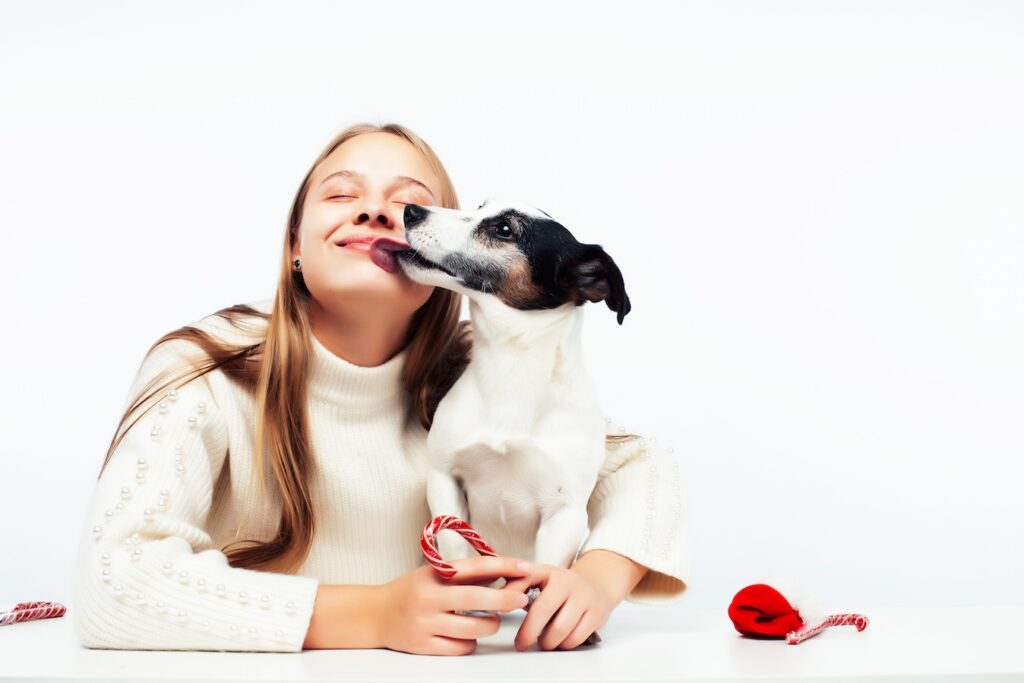
Dogs lick for many reasons, but affectionate licking is a behavior that starts in puppyhood. Puppies lick their mothers and littermates to communicate and bond, and many dogs carry this habit into adulthood.
Known to many pet parents as “doggy kisses,” licks are usually a sign of love and connection. Pay attention to context when your dog licks, as constant licking or licking in uncomfortable situations can sometimes be a sign of anxiety.
7. They lean on you
A dog who leans its full body weight against you is seeking closeness, comfort and reassurance. Leaning is the canine equivalent of a hug, and it shows that your dog trusts you and feels safe in your presence. Some dogs lean when they’re relaxed, while others may press against you during stressful moments because you provide comfort.
8. They sleep near you
Sleep is a vulnerable time for any animal, and a dog who chooses to sleep next to you, on your bed or even in the same room is showing deep love and trust.
Dogs are social animals, and sleeping near their family members is an important part of this structure. If your pup curls up at your feet or claims half the bed, it’s communicating comfort and love.
9. They show you their bellies
Rolling over to expose their vulnerable bellies is a sign of trust, comfort or sometimes deference. Some dogs roll onto their backs when completely relaxed and enjoy rubbing themselves on carpet or grass, while others are simply asking for a good belly rub.
However, dogs who show their bellies while looking away, urinating or licking are displaying appeasement behavior, a social signal that says they are not a threat and they only want to be friends.
10. They raise their eyebrows at you
Dogs are surprisingly expressive with their faces, and they tend to make more facial expressions when their humans are watching. When dogs lift their inner eyebrows, their eyes appear larger, giving them that famous “puppy dog eyes” look. Researchers believe dogs developed this expression specifically to communicate love to humans.
11. They listen and respond to your voice
Dogs are incredibly attuned to the people they love. Although you speak a different language, your dog studies you to learn every nuance about your behavior, tone, words and facial expressions. A dog who perks up when you speak cares about what you’re communicating, and dogs who love and trust their humans are more responsive and engaged.
Love them back through better nutrition

Dogs can’t say “I love you,” but they communicate their love in many other ways each and every day. All dogs are individuals, and recognizing how your pet signals its affection can help you find ways to strengthen your bond.
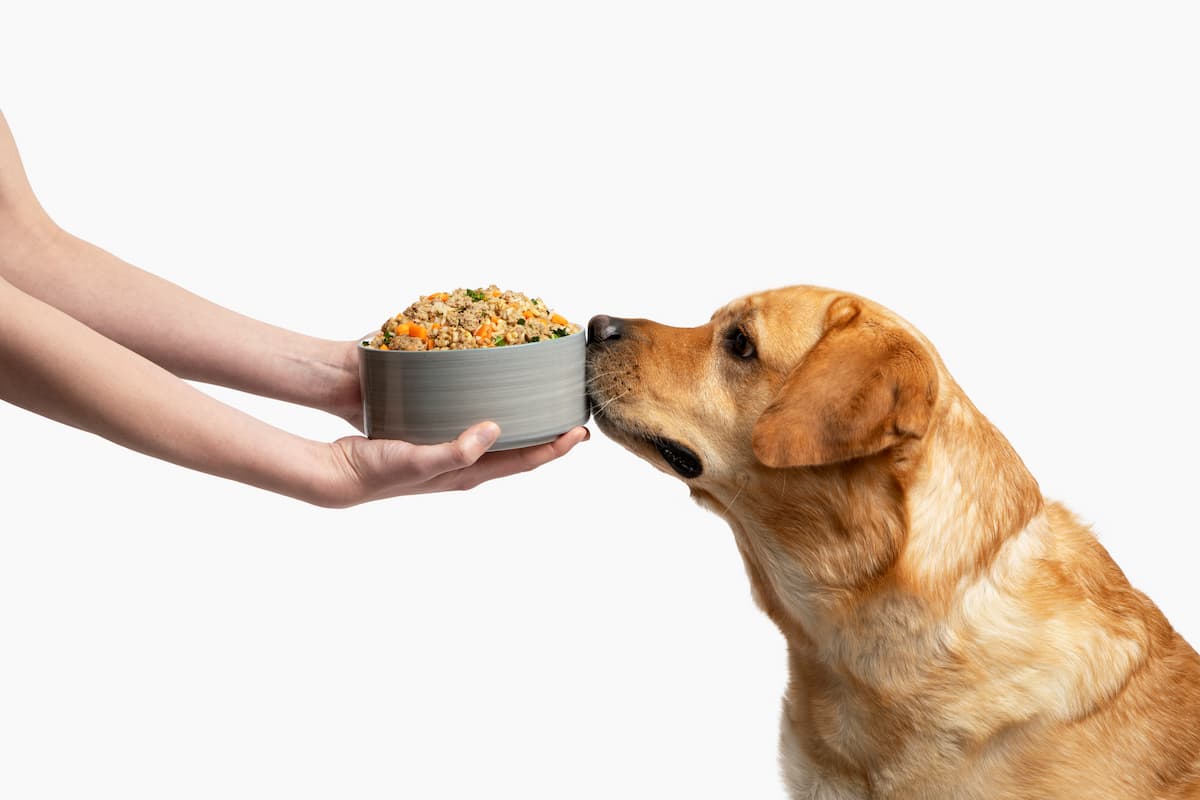
A dog’s love is boundless and unconditional. One of the best ways to show love back to your pet is to provide balanced, high-quality meals and treats that support his or her overall health and well-being.
JustFoodForDogs offers fresh, human-grade dog food to suit pets of all ages and lifestyles. Learn more about our available diets, treats and supplements to show your dog love every day.
Frequently asked questions
Does my dog know I love him?
Dogs may not understand the human concept of love, but science shows they experience very similar emotions and bond deeply with their human families. Speaking in a warm tone; looking into a dog’s eyes; cuddling or sitting near one another; and offering goodies like treats, toys or play are how dogs know owners love them. These interactions release feel-good chemicals in a dog's brain that reinforce the human-animal bond.
Can you strengthen the bond with your dog?
The more time you spend with your dog, either engaging in activity or simply coexisting in the same space, the stronger your bond will become. Walks, play, training sessions, cuddles, grooming and even naps count as spending quality time together, which helps build trust and deepen emotional connections. Sticking to a regular routine also helps dogs feel secure and sets the stage for bonding.
Why does my dog nudge me with its nose?
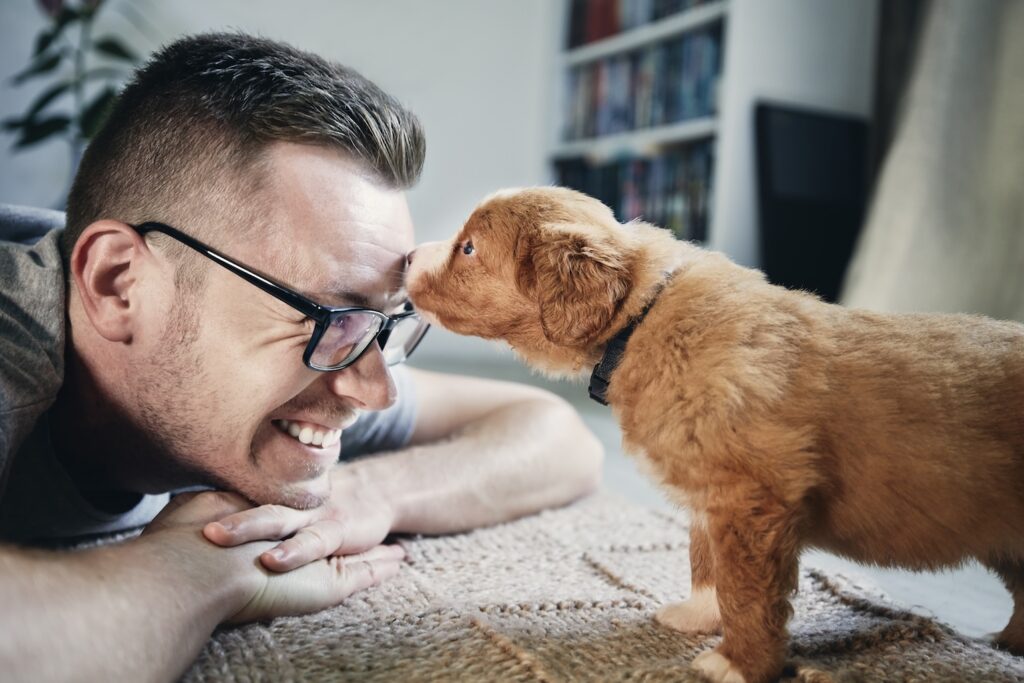
Nose nudging, or “booping” as some might say, is something dogs do to seek attention, ask for something or show affection. A pup who bumps you with its nose is usually looking for interaction, whether that's petting, playtime, food or simply acknowledging its presence. Sometimes dogs learn to nudge in a pushy way to get what they want; consult a trainer if your dog’s nudging becomes disruptive or persistent.